

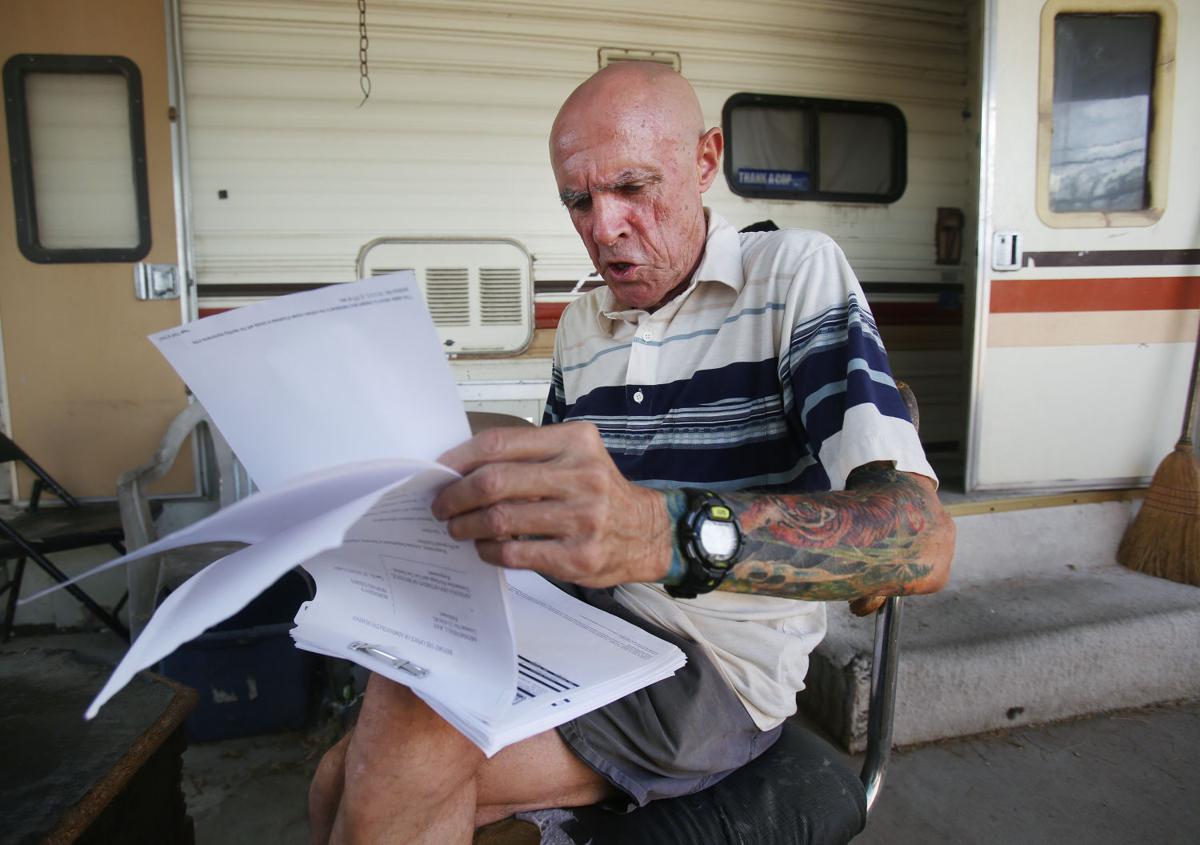
Just before last Christmas, Ray Mendenhall got a shock when he opened his mail: The Arizona Department of Revenue said he owed $4,600 in taxes and penalties for buying cigarettes online.
“It ruined my holiday,” he said.
The bill listed $2,900 in taxes, $725 in penalties, and $950 in interest on purchases from 2007 and 2008. Mendenhall, a 70-year-old retired engineer living on a fixed income, said the bill amounts to about one-fourth of his annual income.
Mendenhall said he was stunned by the bill, particularly by the delay in alerting him.
“It took the state seven years to prosecute little old me?” he said.
Mendenhall’s name popped up when the state received a list from the Bureau of Alcohol, Tobacco, Firearms and Explosives of Arizona residents who purchased cigarettes online from other states without paying taxes, said Revenue Department spokesman Sean Laux.
People are also reading…
The list includes about 30,000 Arizonans who could receive similar bills, although for varying amounts, he said. The agency is sending out notices in phases and Laux said he did not know how many Arizonans have been alerted so far or how much is owed.
Other states are going through a similar process after the ATF sent out information about online purchases where no state tax was paid, Laux said.
Since 2012, Arizona law prohibits the purchase of cigarettes online, according to a revenue department information sheet. Even if it were legal, letting Arizona residents go online and purchase tax-free cigarettes or other goods subject to luxury or use taxes would “create a competitive disadvantage for tax-paying businesses in Arizona,” Laux said.
“That’s not fair,” he said.
Mendenhall contested the bill and the state agreed to drop the $725 late-payment penalty. He was left with a $3,861 bill that collects 32 cents daily in interest.
Now, Mendenhall is appealing the charges through the state’s Office of Administrative Hearings. He says he purchased little cigars, which are taxed at a lower rate than cigarettes, from an Indian tribe. He also said the bill is vague and full of errors, such as one invoice that is addressed to a man in Prescott.
The documents also do not clearly establish the items purchased were cigarettes, whether they were cartons or packs, and the dates of sales in the invoices are inconsistent with the hearing documents.
“There’s a bunch of little things that add up to complete ineptness on the part of the state,” he said.
With regard to the delay in sending Mendenhall the bill, the revenue department said in hearing documents that they were unaware of his purchases until the ATF provided records of sales from Scott Maybee, a member of the Seneca Nation who sold cigarettes online from New York.
Despite the fact that tobacco products sold by an Indian tribe in another state may have lower tax rates, Laux said Arizona statute required the tax to be levied on the purchaser, rather than the vendor.
Aside from dropping the late-payment penalties, there is little the state could do to lower Mendenhall’s bill, Laux said, noting the agency is prohibited from waiving interest payments.
In Mendenhall’s view, trying to collect on purchases made years ago is a sign of the incompetence of the state government. “They’re trying to balance the budget on the backs of the people while slashing education and giving tax breaks to companies to come here,” he said. “Where’s the justice?”
Contact Curt Prendergast at 573-4224 or cprendergast@tucson.com. On Twitter: @CurtTucsonStar

Curt Prendergast
Editor


