

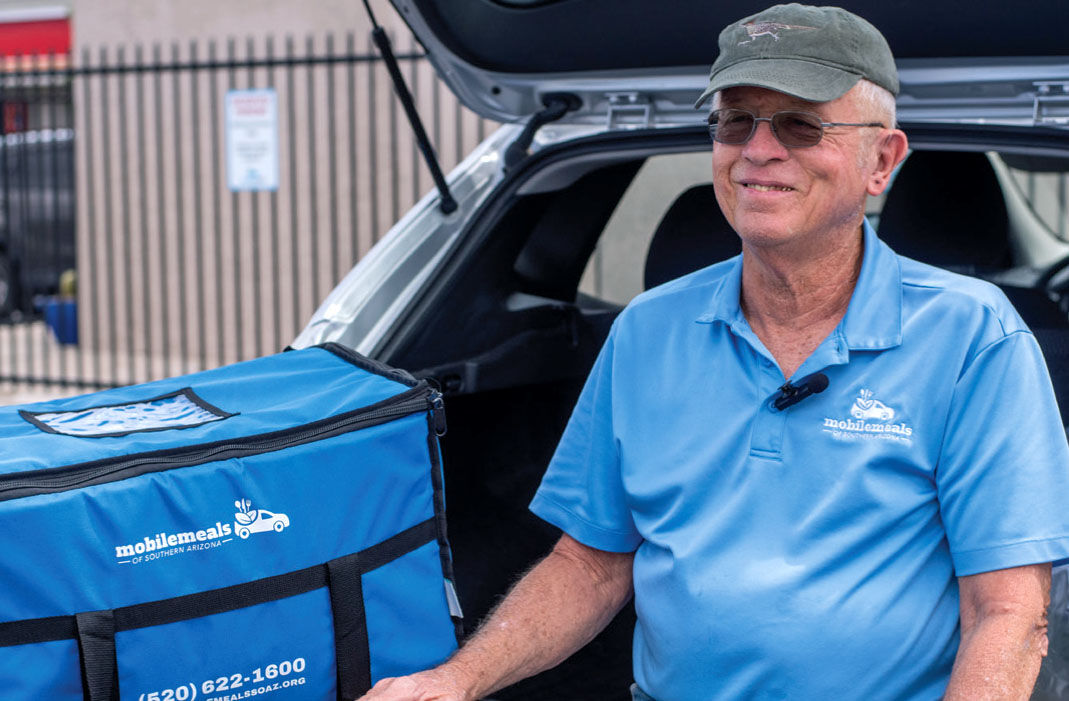
The holidays aren’t just for kids and local nonprofits want to remind Tucsonans that many vulnerable adults need seasonal cheer.
Mobile Meals of Southern Arizona (https://mobilemealssoaz.org) seeks to spread seasonal joy to seniors and adults, many of whom are face food insecurity and isolation in their homes.
“For many clients, our volunteers are the only people they see all day. We’re not just delivering food; we’re delivering companionship and hope. Loneliness and isolation are a national epidemic, and research shows it’s a bigger predictor of mortality than obesity and smoking. We see the devastating effects of this every day, and our work at Mobile Meals is more critical than ever,” said L’Don Sawyer, CEO of Mobile Meals of Southern Arizona.
A team of more than 120 volunteers help Mobile Meals provide in-home delivery of 100,000 meals annually to people who are unable to purchase or prepare their own food. Meals include regular diets as well as special and medically-tailored diets such as diabetic, renal, heart-healthy, pureed, gluten-friendly and vegetarian. The nonprofit also offers Kosher and Halal meals.
People are also reading…
Delivery is offered Monday through Friday and clients can order extra meals for the weekend.
Founded in 1970, Mobile Meals formerly sourced meals from local healthcare facilities. In September 2023, it implemented a new business model and began preparing meals out of the Mobile Meals Kitchen at 3355 S. 6th Ave.
Sawyer said the new model facilitates growth and quality control for the nonprofit, which serves people of all income levels and all ages. Currently about 80 percent of clients are below the federal poverty threshold and a flat fee of $5 per meal is requested from each client.
“It costs us approximately $16 to get each meal out the door; so we rely heavily on donations and from individuals and foundations — and we also have some grants — to help subsidize the cost for clients,” Sawyer said.
Ultimately, Sawyer said that Mobile Meals can allow people to remain independent in their homes, and volunteers — many of whom volunteer one day each week — are a key component of the equation.
Vikki Spritz, 67, has been delivering meals for more than four years and she agrees with that sentiment.
“It became clear right away that it is simple to do from the volunteer point of view, but it is so important to people who are elderly or disabled and really struggle to get food,” Spritz said.
She said that Mobile Meals offers long- and short-term solutions for people who have difficulty with the logistics and/or expense of food preparation.
“While many clients are low income, there are others who aren’t but they are not able to get out of the house very much, so this is a way to have food come to them that is both a manageable price and healthy. Sometimes people are just coming home after a hospital stay or they can’t leave the house because of illness or ailments, while others have ongoing delivery,” Spritz said.
The deliveries also provide opportunities for socialization — and well-checks — for clients.
“We know food is important but the human connection and sense of community is equally important, especially as everything has become more digital and technical,” Sawyer said.
She emphasized that connection can be a huge relief for busy family members and long-distance caregivers.
“It is a real relief that someone is doing a well-check up to five days a week, and often volunteers can see a change in someone if they need help,” Sawyer said.
That sense of connection actually works both ways for clients and volunteers, according to Spritz. She said that several clients have become friends over the years.
“They know things about me and i know about them and we enjoy chatting ... I really only miss volunteering if I am out of town or ill. It is a regular part of my life as well as an opportunity to be part of someone else’s life who doesn’t necessarily see many people,” she said.


