

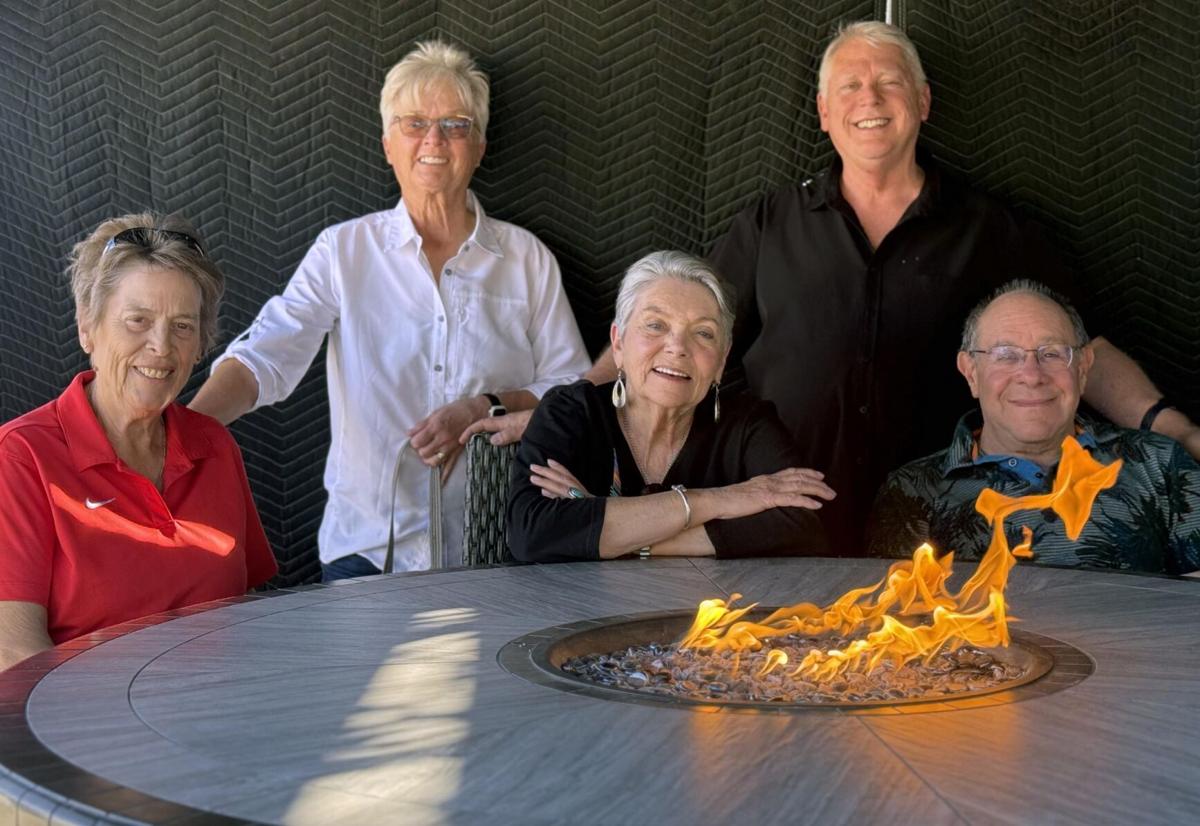
It’s a red-letter day for Scott Blades, who will receive the Center for Help and Hope 2025 Leadership Award at the Red Concert on Sunday, March 9 at Three Canyon, 4999 N. Sabino Canyon Road.
The award is well-deserved by Blades, who co-founded the Tucson HIV/AIDS Network (TIHAN) in 1994 and has been a champion of care for people impacted by HIV and AIDS ever since.
“It is pretty rare that someone has basically made this their life’s work for so many years. Scott’s legacy is the existence of this organization and persevering through both difficult and more fortunate times in terms of being able to provide services to CarePartners (the term for those living with HIV or AIDS who receive TIHAN services) and helping them to live their best lives. That is a pretty cool thing,” said Arlan Colton, a member of the TIHAN board of directors.
Blades, who prefers to remain in the background and deflect attention to others, said that he is honored and touched by the recognition.
People are also reading…
“It is astounding that for three decades, people have contributed to this grassroots nonprofit to help people living with HIV. To sustain that level of support without government funding for 30 years is pretty unheard of, particularly considering that HIV is not the hot-button issue it once was. HIV is on the back burner because many people think there is a cure and they don’t worry about it. We have made so much progress with great medications and even some that can prevent new infections if you are high-risk for contracting HIV, but there is no cure,” Blades said.
TIHAN started as a hospice-like program to support people dying from end-stage AIDS prior to the development of antiretroviral therapy. Much of the support is now provided by Link Specialists (trained volunteers who interface with CarePartners).
Programs have evolved over the years to focus on social, emotional and practical support for CarePartners. Support includes CarePackages, which consist of toiletries, cleaning and household supplies and other basic necessities. TIHAN also offers weekly and bi-weekly check-in calls to connect CarePartners with peers as well as the Poz Cafe, a monthly lunch and social program.
Future plans include a Buddy Program, which will allow CarePartners to request an assigned volunteer “buddy” to provide emotional and practical support. Additionally, Positive Plus will offer a series of educational programs, gatherings and discussions that provide emotional support and social connections. The new programming is a result of national studies combined with a needs assessment that was conducted locally last year.
“The big thing that was clear for people living with HIV is that as they are aging, they need additional support and assistance, particularly for those who may not be as independent,” Blades said.
Every form of support has become increasingly crucial due to concerns about possible federal funding cuts to programs that impact CarePartners, according to Blades.
The majority of CarePartners — about 70 percent — are on fixed incomes and living below the federal poverty level of $1,255 monthly. They are primarily people of color; about two-thirds are over the age of 55; and 25 percent are women. Most are members of the LGBTQ+ community. As long-term survivors, many receive disability benefits and assistance with medications and healthcare through the Ryan White Act. Many also receive SNAP benefits and housing assistance.
“Our folks are among the most vulnerable, and people are nervous and concerned. It is tough being sick and poor and facing stigma and knowing there is lots of talk about cuts to the social safety net. It is a time of uncertainty and fear for many people,” Blades said.
He said that cuts to the social safety net — and any rollbacks in national or global programming that support HIV education, testing, medications and care — will have a domino effect.
“Cutting funding for HIV programs puts people at risk of contracting HIV. It puts people at risk of getting sick again and increasing their viral load (the amount of HIV in a person’s system). So cutting HIV funding impacts people’s health, and also the health and safety of our broader community,” Blades said.
Ultimately, Blades is hopeful that every level of society — local, national and global — will continue to progress in the battle against HIV and AIDS. He said TIHAN is proud to work alongside caring individuals, groups, faith communities and organizations such as the Southern Arizona Aids Foundation, El Rio Health, and the Peterson HIV Clinics to carry out its mission.
“We all have a history of fighting for equality and justice and dignity for everyone — and that means everyone. Even though there may be increased barriers and risks we are facing today, the work is really important,” he said.
In spite of headwinds, Blades is celebrating the many generous volunteers, donors and sponsors who have made the 30-year milestone possible.
He hopes they will come together to enjoy the upcoming concert and recognize TIHAN’s greatest accomplishment: Expansion of the network of support for people living with HIV.
“Without TIHAN, there would be less support services and less people involved and less education and advocacy. There would be fewer ways for people to engage in being part of the solution. I am proud that so many people have stepped up and offered their support in so many different ways,” he said.


