
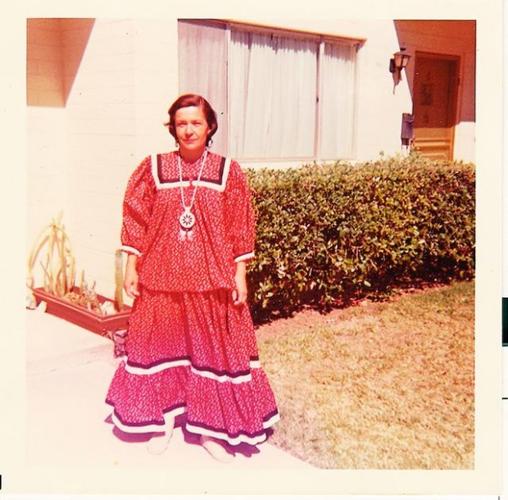
Past, present and future — it all fascinated historian Lori Davisson.
Arizona's bygone days held as much interest for her as did the future of space travel and the next episode of "Lost."
Davisson, who had battled multiple ailments for years, including emphysema, was looking forward to the season premiere of the television series about plane-crash survivors on a mysterious island, said her family, but died on Jan. 28, just a few days before it aired. She was 74.
"I don't think she ever forgave me for not being interested in 'Lost,' " said Davisson's friend of 30 years, Tucson author Jane Eppinga. "I think the three things we did have in common were, we both loved Arizona history, cold margaritas and hot Mexican food."
Eppinga met Davisson at the Tucson branch of the Arizona Historical Society. Davisson was born and raised in Columbus, Ohio, but early on developed a love of the West. She moved to Tucson in 1965 with her husband.
People are also reading…
"I used to read everything I could about Arizona. I subscribed to Arizona newspapers," she said in a 1990 Arizona Daily Star article.
Though Davisson had no formal training in history or library science, and had earned her high school diploma by attending night school, she became a volunteer for the Historical Society and eventually was hired as a full-time researcher.
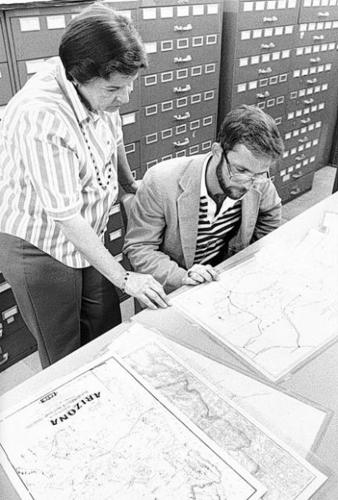
"She started with the Historical Society when one had to answer all kinds of historical questions," Eppinga said. "Nowadays you go into a library and they say, 'Go to the computer screen.' But she just knew where things were and she'd say, 'Well, if you're looking for this, you should be looking at that.' She knew what I should be looking at even when I didn't. She simply made it her business to know where everything was."
As a research historian, Davisson developed an expertise in several areas, said Dave Faust, a museum curator at the Arizona Historical Society who runs the Fort Lowell Museum.
"She was an expert in Scottish history in Arizona, law enforcement history, sheriff's history, and she was also a world-renowned expert in Apache history. You always saw her name as an acknowledgement in many, many books," Faust said. "She helped so many researchers for so many years, and she advanced Arizona history in a great way."
Davisson wanted to make sure her own personal history was recorded correctly, so a couple of years ago, when her health began failing, she wrote her own obituary.
"She figured she knew what she wanted written about her, so she thought she'd write it herself," said her daughter, Linda Bays. Davisson's son, Larry, died in the late 1980s.
Davisson was so prolific in her research for the Historical Society that she was honored by the Arizona Peace Officers Memorial Board for her work in compiling a roster of peace officers killed in the line of duty, which is engraved on a memorial statue at the state Capitol.
In 2002 she received the Sharlot Hall Award, presented to "a living Arizona woman who has made a valuable contribution to the understanding and awareness of Arizona and its history."
The self-taught historian also was instrumental in organizing the Apache Cultural Center and Museum in the White Mountains. It was her work, at the behest of the tribe, that seemed to give Davisson the most satisfaction and establish her credibility as a historian.
"It was a great privilege to go there and work with the Apache in what I consider most important projects," she said in the 1990 article.
In 1972, members of the White Mountain Apache Tribe asked her to help set up a library in a cabin at Fort Apache. A few years later, she was invited back to help establish a museum in a 19th-century cavalry barracks.
"She gathered photos, books, magazine articles, newspaper articles, you name it. She put everything together, and she helped with the text and photo displays for the museum. She knew a lot on Fort Apache history, and she knew a lot about the Apache Indians," said Ann Skidmore, administrative manager for the Apache Cultural Center, who met Davisson in 1976.
"When she came up here, she grabbed a sleeping bag … and stayed at the log cabin and put the library together and the archives. When she came here to Fort Apache, Lori would … touch the log cabin and she would touch the doors. She said it was as if the logs were talking to her. She said it was as if the buildings were talking to her as she walked through Fort Apache. She loved Fort Apache, and she loved the Apache people."
Given her deep interest in the past, it may seem incongruous that Davisson was a fan of futuristic fiction, but she was deeply interested in boldly going where no one had gone before.
"She was a Trekkie," said her son-in-law, Kenneth Bays.
In the 1990 article she said her favorite movies were the "Star Wars" films, and her favorite TV programs were the myriad "Star Trek" series and the "Doctor Who" series from England.
Mixed in with the figurines and paintings of owls and ravens in her apartment, Davisson hung artists' prints of a celestial nature, depicting planets, stars, solar systems and craggy, otherworldly terrain bathed in the soft light of a faraway universe.
"Some people think that's odd. But these shows are like histories of the future," Davisson said in 1990. "I firmly believe that someday we'll be out there and, like researching history of the past, we'll find out it's nothing like we thought it was."
Life Stories
This feature chronicles the lives of recently deceased Tucsonans. Some were well-known across the community. Others had an impact on a smaller sphere of friends, family and acquaintances. Many of these people led interesting — and sometimes extraordinary — lives with little or no fanfare. Now you'll hear their stories. Past "Life Stories" are online at go.azstarnet.com/ lifestories
Find a photo gallery of this Life Story at azstarnet.com/slideshows