

Reid Park Zoo's expanded African elephant exhibit is still nine months away from completion, but the first of several new pachyderms already has taken up residence.
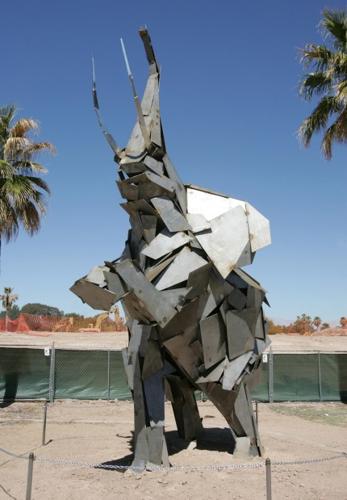
Over the last six weeks two Tucson artists have pieced together a 22-foot-tall, 8,000-pound steel sculpture of the world's largest living land mammal on the corner of East 22nd Street and Randolph Way at the park entrance leading to the zoo.
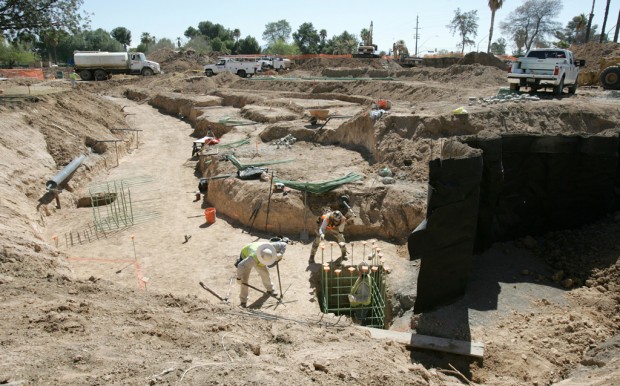
Hidden away behind screened fencing, just yards from the trumpeting beast, dozens of workers are reshaping former soccer fields into a state-of-the-art African elephant habitat - Expedition Tanzania. Work began in January and is expected to be completed within a year. As many as seven elephants will be introduced to the expanded habitat in late February or early March 2012, said Jim Schnormeier, general curator at the zoo.
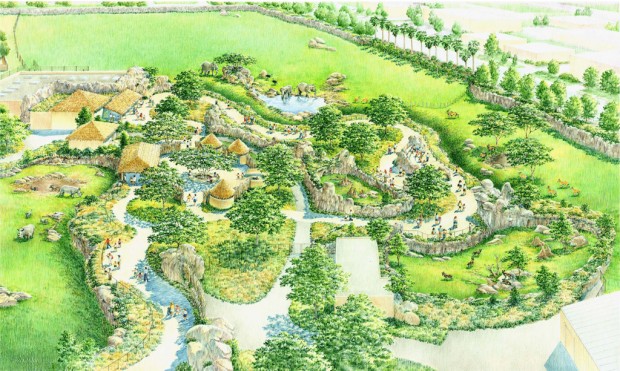
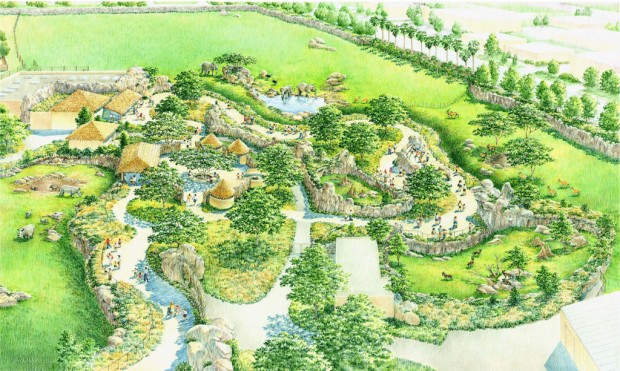
The current elephant habitat at the zoo is only a third of an acre. The new digs will cover three acres and include a mud wallow, swimming pool and enrichment features for the residents. Visitors to the zoo will have access to four acres of walking paths, viewing areas and interactive educational features, including opportunities to touch the elephants.
People are also reading…
The $7.8 million project is the largest undertaken in the zoo's 45-year history. Funds were raised through the park's zoological society and through the city of Tucson, using a combination of bond money, fees and other funds. General funds - those used to hire police officers and fix potholes, among other expenditures - were not used, said Vivian VanPeenen, the zoo's education curator.
Attenborough inspired
David Attenborough doesn't know it, but the British broadcaster whose name is synonymous with natural-history films, is partly responsible for the new elephant sculpture.
Ben Olmstead, who designed and constructed the sculpture with fellow Tucson artist Simon Donovan, said inspiration came from Attenborough's BBC programs.
"I've never been to Africa, but I've seen enough nature shows that I think of that red dirt (elephants) throw, that red mud all over themselves to keep the bugs off them," Olmstead said. He and Donovan designed their creation to rust, giving the appearance red clay dust.
"It's already rusting after one rain," Olmstead said. "If we have a decent monsoon, it will be really rusty in a couple of months. And definitely after a couple of years it's going to be a pretty uniform red-brownish-oxide color."
By contrast, the tusks are made of rust-free chrome, an idea Donovan came up with so they will stand out, as do the ivory tusks of African elephants.
The artists also chose to work with an oxidizing metal to create continuity with the rusted appearance of the police substation just east of the elephant.
"Looking at it purely as a sculpture and as a Tucson aesthetic, rusted steel seemed appropriate," Donovan said.
The design and construction were two years in the making, and, for the last six weeks or so, the duo has been on-site at East 22nd Street and Randolph Way installing the sculpture. In the final weeks of construction, the project was part performance art and part shop class as the artists toiled, sizing and cutting steel plates as needed.
"The style of the sculpture is representational and yet not entirely realistic," Donovan said. "It's meant to look like an improvisation of cascading steel plates that kind of fall into place to form an elephant."
The $108,000 price tag for the elephant is included in the budget for the zoo's expansion. City law dictates that government projects must set aside a small percentage of their budgets for public art.
Donovan and Olmstead next will collaborate on the design of stops along the future route of Tucson's modern streetcar.
Contact reporter Kimberly Matas at kmatas@azstarnet.com or at 573-4191.


