
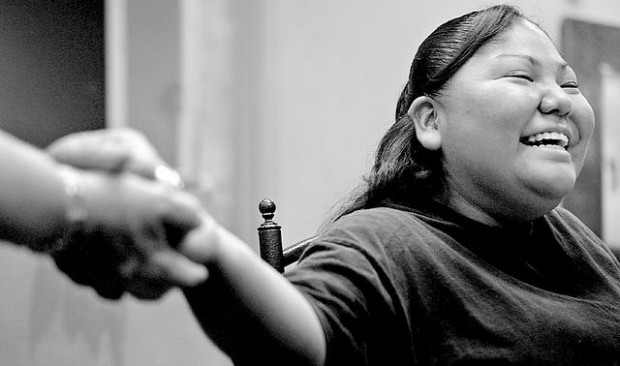
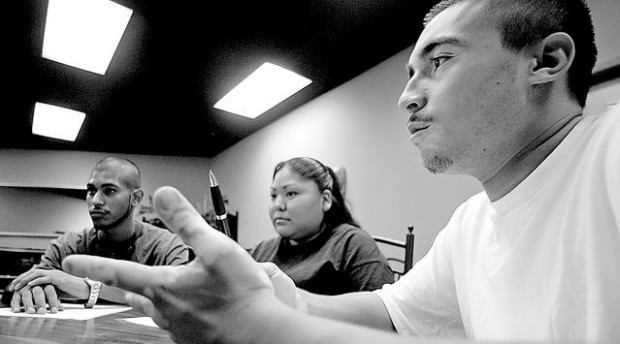
While some teens pressure their friends to drink or use drugs, in this group they help each other stay sober instead.
FreeMind is an unusual Tucson program set up for, and run by, young people recovering from addiction.
With oversight from the Pima Prevention Partnership, FreeMind started two years ago with federal funding from the Substance Abuse and Mental Health Services Administration.
The outcomes here could lead to changes in national policies regarding support programs for teens, said Claire E. Scheuren, deputy director of the Pima Prevention Partnership.
So far, she said, the findings are positive.
About four out of five youths who joined FreeMind after outpatient treatment were still sober after six months.
"What is exceptional about this program is that it verifies how much of a strong role youths can play in helping each other stay sober," Scheuren said.
People are also reading…
About 150 teens have joined so far, with up to 40 taking part on a regular basis. All activities and events are organized by the teens, with help from a professional staff and FreeMind's peer leaders.
FreeMind members are 14 to 18 years old; they can continue participating until their 19th birthdays.
Monthly events are held at three schools, as well as at the Youth Recovery Center, 345 E. Toole Ave. They include recovery sessions, life-skills workshops and other activities such as movie nights, barbecues and socials.
The Pima Prevention Partnership staff handles information and referral services to help participants with health needs, for example, or with finding jobs.
Mia Uentillie, Augustino Martinez and Josh Vasquez, who are all 18, said being sober has helped them realize new dreams and goals.
Uentillie, who started in FreeMind a year ago, is now studying to be a massage therapist. She said she wouldn't have imagined it a year ago.
"I like it a lot. It keeps me busy, especially on the weekends," she said of the program.
Martinez is a peer leader who has been with FreeMind for two years. Since he became sober, he has gone back to high school and is working out in a gym regularly. He also is thinking ahead about what he'd like to study in college.
"Your mind frame expands, basically," he said. "You think of stuff in a different way."
Vasquez, another peer leader who has been with FreeMind for more than a year, will soon start studying to be an auto technician. He said the program has helped him find "different ways and solutions to say 'no.' "
"You make your own choices. You're free. People here just help you make the right choice," Vasquez said. "They're like little tour guides."
As peer leaders, Martinez and Vasquez have visited Baltimore and Washington, D.C., with Luis Bonorand, the program director, to learn more about peer leadership.
"It's like another family to me, basically," Martinez said of FreeMind. "We all know each other real well."
Compared with adults, teens don't have many options when it comes to support groups.
"Helping kids connect with other kids who are sober is critical," Bonorand said.
The focus in typical support programs is often on adults and adult behavior, he said, and adults have a different way of processing things compared with teens.
In FreeMind, Bonorand and program coordinator Rob Bueno provide guidance, but the teens carry out the work.
At an upcoming barbecue, for example, the teens have to reserve the park ramada, plan the food and coordinate the other aspects of the event.
"FreeMind promotes independence instead of dependence on the program," Bonorand said.
Most of the time is spent helping teens learn life skills that they will need to succeed, he said. The participants are encouraged to look ahead to what life now has to offer.
"There are things they used to enjoy before they got into drugs," Bonorand said. "It's about finding joy in that again. That's what we push."


 U of A president declines to sign shared governance contract with faculty