

A dispute over 3,100 homes proposed for the tiny community of Tubac stands as a symbol of a larger conflict over the area's future.
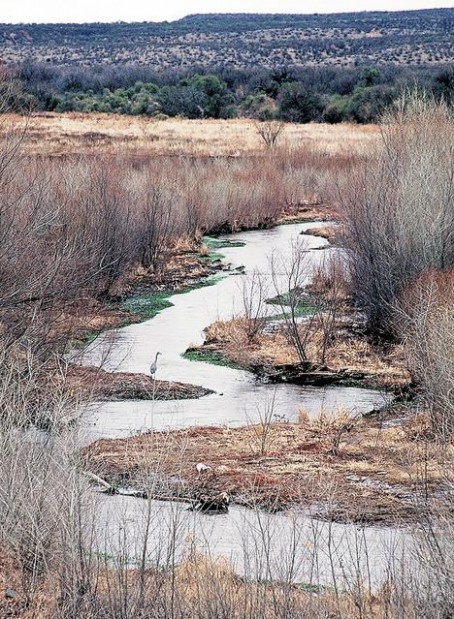
Today, Tubac is a placid, unincorporated village sandwiched between Interstate 19 on the west and the Santa Cruz River on the east, and centered on a string of galleries, shops and restaurants in the area's commercial core. The Santa Rita Mountains on the west and the Tumacacori Highlands on the east bathe the area in beauty.
The 2000 census said it had 949 people. Today, various estimates place the population at 1,200 to 1,800.
But the 3,100-home Las Mesas project lying east of Interstate 19 is one of three proposed major developments pending in the Tubac area that could add 10,000 homes. Together, they would boost the area's population by more than 10 times over the next 20 years.
People are also reading…
Two of those projects and another that died last year have sparked a major public debate over whether Tubac's future lies as a semi-rural or more suburban community.
The debate focuses on the area's Comprehensive Land Use Plan that calls for leaving much of the vacant land around Tubac in low-density, rural zoning to protect the natural beauty.
That is opponents' biggest weapon in their struggle to protect the mesas, grasslands and mountains from encroaching development. Many of them live in the community's core but would like to protect the area's fringes as rural lands.
The question is whether that strategy will work, in the face of the area's growing appeal to large developers promoting huge projects serving people fleeing the Northeast and Rust Belt for warmer, less-harried lifestyles.
Three housing developments
Those projects are:
● Las Mesas, lying south of Chavez Siding Road east of Interstate 19 and straddling the Santa Cruz River.
It is coming before the County Planning and Zoning Commission Aug. 23 for a vote on whether to amend the comprehensive plan to raise the maximum number of homes on the development's 1,244 acres to 3,100 from barely 300 today.
It would also have a resort and about 47 acres of businesses. However, on Saturday the project's attorney, Hugh Holub, said the developers will knock 400 homes out of the plan because the county just changed the floodplain maps and the developer cannot legally put homes in the river's floodway.
● Owners of Sopori Ranch, lying west of the freeway and just south of the Pima County line, want to amend the plan to put about 6,000 homes on 6,000 acres — now zoned for about 1,500 homes. That proposal should come before the planning commission in the fall.
● Montosa Ranch, a 2,500-home, 624-acre project east of the freeway and just south of the county line that the commission opposed in separate 2005 and 2006 votes. Both times, the developer withdrew the project before the supervisors could vote on a request to amend the comprehensive plan to make the project work. It has not been re-proposed this year.
Fourth project also up for vote
A much smaller, fourth project, Tubac de las Montanas, comes before the Board of Supervisors this week on a proposal to put 1,400 homes on 1,027 acres southeast of the Las Mesas project and east of the Santa Cruz River. It already has zoning for the homes and needs the county approval because it wants to move the houses around on the site and put a hotel and golf course there.
Developers of Las Mesas have promoted their project as environmentally friendly in part because it will not need additional water beyond what has been used there until now on a farm to grow hay and produce.
The developers say they'll build a mile of the Anza Trail on their property along the river, donate a 12-acre elementary school site, and employ water harvesting for outdoor irrigation. They will build a bridge over the Santa Cruz and leave about 450 acres as parks and natural open space. They're also going to restore a historical building on the property and use it for a museum to display artifacts excavated during archaeological digs for the development.
They'll also build a wastewater plant that will discharge treated sewage effluent into the river. Their attorney, Holub, said that will extend the river's existing streamside groves of cottonwood and willows that are fed by sewage effluent dumped into the river by the Nogales Wastewater Treatment Plant, upstream.
"Not your ordinary place"
Holub and an official for the real estate company that owns the Sopori Ranch say they're not deterred from pushing their projects by the poor real estate market that has slowed new home sales and building permits, because they don't expect to see the new projects start building homes for three years.
"Whatever is going on in the market today is an immediate thing," Holub said. "We're confident of the market three years from now. You can look at the market across the country — there is still substantial activity going on in quality places. We very much recognize that this is not your ordinary place."
But opponents have taken a do-or-die stance in favor of protecting the comprehensive plan, which was approved in 2004. The plan calls for leaving the land bordering Tubac with no more than about one home every four acres. It does call for putting growth that does occur in areas near major roads and with available water — which both fit Las Mesas.
The Tubac Chamber of Commerce, for instance, hasn't taken a stance on this particular project but has gone on record opposing changes to the comprehensive plan.
"Our area is very much dependent on tourism and the unique aspects of this area. It's the open space, the mountains, the hiking that make this unique," said Carol Cullen, the chamber's executive director.
"The development would create something that would make our community no different than any other Southwest community. It's a double-edged sword," she said. "We want to promote business, but we know that kind of tourism depends on keeping the natural and cultural resources as they are."
Ann Groves has run a gallery and gift shop in Tubac's commercial core for 22 years. She hasn't attended most of the numerous meetings at which the various development projects are discussed but says she feels strongly that preserving the comprehensive plan will be a "win-win" outcome.
"The big growth and development is inevitable. As long as the comprehensive plan is not tampered with, that's the best we can hope for," Groves said. "If you start playing with the plan, the next development that comes along and the next one, there's no stopping it."
Anza Trail group pleased
The developer's plans to dedicate land for the Anza Trail have drawn a positive response from the statewide Anza Trail Coalition that for many years has been promoting construction of the historic trail named after Spanish explorer Juan Bautista de Anza, who came through this area in 1775.
Speaking personally about the development itself, coalition president Richard Williams said he is neither for nor against it but thinks that significant growth is inevitable there in the long term.
"The people of Tubac do regard their area very jealously; they do not want others to come in," said Williams, a Rio Rico resident and real estate broker. "If you want to retain land around the community, then you buy it and keep it rural."
Friends of the River, a volunteer group seeking to protect the Upper Santa Cruz, said Saturday it welcomes Las Mesas' plans for water harvesting. But it is still concerned that rainfall will run off hard-paved areas such as roads and parking lots, and that because it will be clearer than usual, it will pick up sediment once it gets into the river, aggravating erosion downstream.
The group would probably oppose the development plan because it would amend the comprehensive plan, opening the door for future amendments, said its president, Sherry Sass.
The County Community Development Department will release a report this week outlining its recommendations for this project. But the developers can expect to face the same kind of opposition that Montosa Ranch drew, said Rick Hindmann, a county planner.
"The developer has their work cut out for them — this may take a few years," he said. "The bottom line is that the developers have to tell the drafters of this growth plan why they were wrong in making that designation as rural, why they erred, and what is the justification requiring the change?"
Developers defend projects
But this project has many differences from Montosa, said Andy Courtney, Las Mesas' developer. Among them: It has more water rights available. It fronts on the freeway, while Montosa Ranch would have had to send its traffic a mile through a very rural area to get to the freeway. Las Mesas' officials, unlike those representing Montosa Ranch, have spent hours at numerous meetings with a whole range of community leaders and activists since January.
"We are not a bedroom community. We are not in the middle of nowhere," Courtney said.
Sopori Ranch developer Ross Wilson said the ranch's owners, First United Realty, don't plan to build another Green Valley — the retirement community south of Tucson — as they plan to leave 45 percent of the project area as natural open space.
They see an advantage to the master-planned community over rural zoning: Their project will have a community water system and treated sewage, whereas rural subdivisions of four-acre lots rely on individual wells and septic tanks.
But a 27-year resident of Tubac said large-scale developments will permanently change the looks of the area.
"Tubac has to be a little bit more aware and grow up, figure out what they want, and maintain the integrity that they have," said Pixie Geren, who manages the gift shop in the Tubac Center of the Arts but was not speaking for the center.
Find more environment news and features at azstarnet.com/environment
IF YOU GO
Hearing on 1,400-home Tubac de las Montanas development
• When: 10 a.m. Wednesday.
• Where: Before the Santa Cruz County Board of Supervisors at 2150 N. Congress St. in Nogales.
Open house for 3,100-home Las Mesas development
• When: 8:30 a.m. Friday.
• Where: At exit 40 of Interstate 19, the Chavez Siding Road interchange north of Tubac.
Hearing on Las Mesas development before the Santa Cruz County Planning and Zoning Commission
• When: 2 p.m. Aug. 23.
• Where: County building, 2150 N. Congress St. in Nogales.




 New Tucson lounge to embrace dark and cozy


