

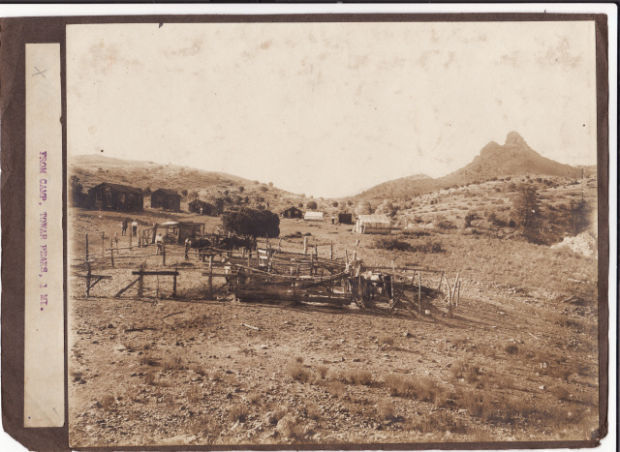
The Twin Peaks district, also known as the Steeplerock district, was composed of 26 claims located on the state line of Greenlee County, Arizona, and Grant County, New Mexico, about 24 miles northeast of Duncan.
This gold-sulphide, lode-
bearing district saw its greatest activity during the early 20th century when prospector Jim Fraser discovered the Twin Peaks mine in 1900.
His brothers Dan, Alex and Joe joined him shortly thereafter using family funds to develop the mine, sinking the discovery shaft to 65 feet. The four Fraser brothers hailed from western Ontario, Canada.
Joe Fraser was the moving force behind the Twin Peaks mining camp, incorporating the Gold Buttes Mining & Milling Co., while obtaining $1.5 million in capital from North Dakota, Iowa and Michigan to fund the development of the mining project on 920 acres.
People are also reading…
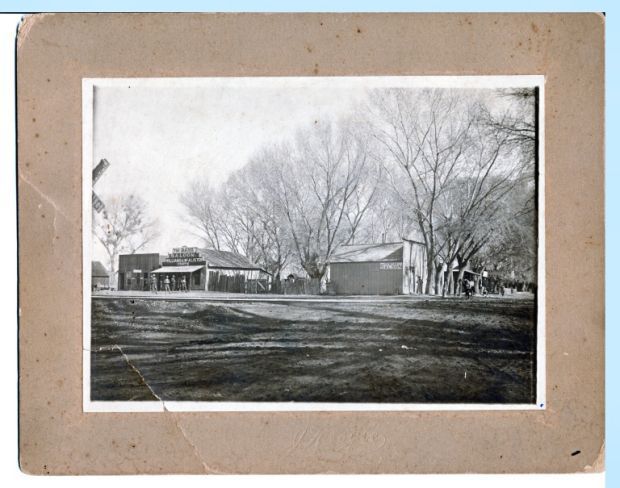
The brothers developed the mine through the sale of their mining stock. At one time, the company had as many as 750 shareholders. Duncan, Arizona, served as the office of the Gold Buttes Mining & Milling Co.
Early assays of the property included gold averaging $32.77 per ton, instigating sensationalized press comparisons to the gold field district of Nevada, the world’s greatest producer at the time of high-grade gold ore.
By 1912, the property was worked in earnest by all four Fraser brothers using power drills to access the gold vein described as traversing the country like a wagon road for several miles.
Joseph Francis Fraser served as president of the Twin Peaks Mining & Milling Co., formerly the Gold Buttes Mining and Milling Co. Joseph’s three brothers were also owners of the company.
A gold bar 15 inches long and weighing 47 pounds was once produced from the Twin Peaks mine. The large bullion was delivered by Deputy Sheriff Chas. Edwards to the Bank of Duncan, where it was sent off to the mint.
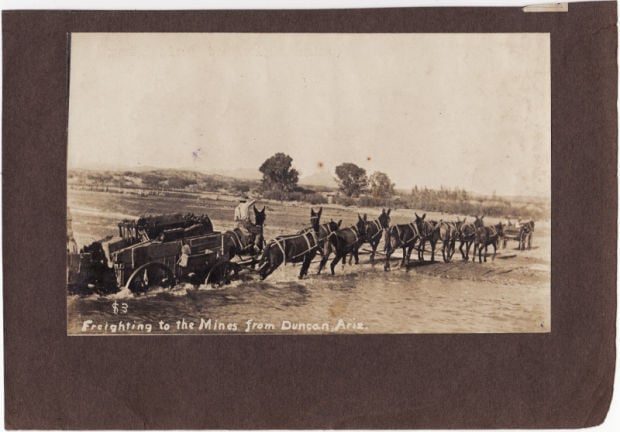
Equipment for the 100-ton concentrator, 2.5-ton mill from Lordsburg, New Mexico, was brought in by the Arizona and New Mexico railroad at York Station and also by freighting mules.
By 1912, a mill at Clearlake was built and cyanidation method employed. Water necessary for the reduction works was acquired from the lower workings of the Twin Peaks Mine and Apache Creek. At the time, the mine employed 25 men.
One major investor, Eugene E. Martin Jr., added his name to what became known as the Fraser-Martin Mines. A wealthy New York real estate man, Martin helped Joe Fraser develop the mining property in the 1960s and continued to operate 13 claims until his death in 2006.
Interested parties in buying the Twin Peaks claim included the Arizona Copper Co. in Clifton, which sent its head geologist and assaying chemist Jim Flynn to investigate the property’s potential value.
He concluded the value of the ore was good, with an estimated 3- to 5-foot wide gold-bearing fissure vein.
According to Joe Fraser, by 1917, ore bodies in the vicinity of the juncture with two porphyry dykes were developed with some samples at $60 of gold per ton with a main shaft in excess of 285 feet with 800 feet of drift work under the fissure vein.
Three of the four Fraser brothers who lived on the Twin Peaks property in a stone house continued to operate active claims until their deaths in the 1950s, though none proved the gold bonanza originally anticipated.
Production figures for the Twin Peaks district between 1906 and 1970 include 500 ounces of gold, 10,500 ounces of silver, 15,000 pounds of copper and 17,000 pounds of lead.

 Historic bank vault now new Tucson speakeasy


