

Under a canopy of cottonwood branches replete with summer foliage, teenage James Glasgow practiced his clarinet on the shore of one of Minnesota's 10,000 lakes.
His rowboat, tied up nearby, rocked soothingly to the rhythm of the breaking waves as the boy launched into the dulcet strains of "Moonglow" and daydreamed of someday meeting his idol, Benny Goodman.
Three decades later, Glasgow's dream was realized when he took the stage with the King of Swing during a Tucson performance.
"The Golden Age for me was when live orchestras were in demand. I happened to be in the music profession at the right time," Glasgow wrote in an essay almost a decade ago.
During his career, Glasgow performed with the Tucson Symphony Orchestra and the Tucson Pops Orchestra. He was still performing in public when his health began to fail a year ago. During his final performance last year, he was the guest soloist when Big Band Express played at the Gaslight Theatre. His final song, the tune Goodman always played at the close of a show: "Goodbye."
People are also reading…
"It was really quite a night," said Tom Patrick, leader of Big Band Express. "Gee whiz — a couple of guys in the band who've known him for years, you could see the tears rolling down their cheeks when he started playing, because they knew what he was going through.
"He came in and he played so beautifully," Patrick said. "I don't think he ever took his clarinet out of its case again."
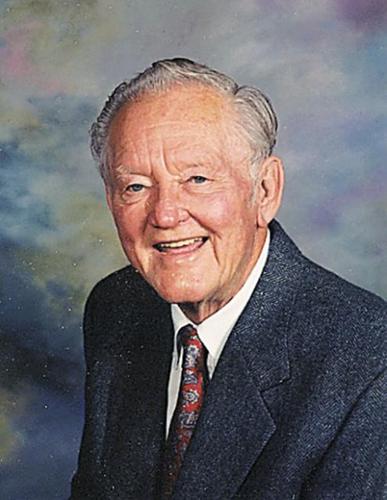
By the time of his final performance, Glasgow had been diagnosed with colorectal cancer. Glasgow, who succumbed to the disease on March 17 at age 88, will receive a musical send-off at 2 p.m. April 13 during a memorial service at Rincon Congregational Church, 122 N. Craycroft Road.
Glasgow was born in 1919 in the little town of Barnesville, Minn., near the North Dakota border. He grew up listening to Goodman on radio programs.
Music classes weren't offered at his elementary school, but when Glasgow was 12, an older classmate who played clarinet helped him learn the instrument.
Glasgow practiced daily, and within two years, he was second chair in the Barnesville City Band. He continued playing through high school and was offered college scholarships based on his musicianship, debating skills and academic record. He opted to attend Luther College in Iowa, where he was the principal clarinetist in the school's orchestra and band.
Four years later, Glasgow returned to Minnesota with a bachelor's degree in education. But within months of accepting his first teaching job, Pearl Harbor was attacked, and he was drafted into the Army.
After basic training in Arkansas, Glasgow found himself on a Tucson-bound train. He soon was playing clarinet in the Davis-Monthan Band. The musicians played for dignitaries, including first lady Eleanor Roosevelt, but Glasgow's most notable assignment came after shipping out to the Pacific Theater in February 1945. The band found itself playing for troops on the island of Tinian, from which the Enola Gay would depart on Aug. 6, 1945, to drop an atomic bomb on Hiroshima, Japan.
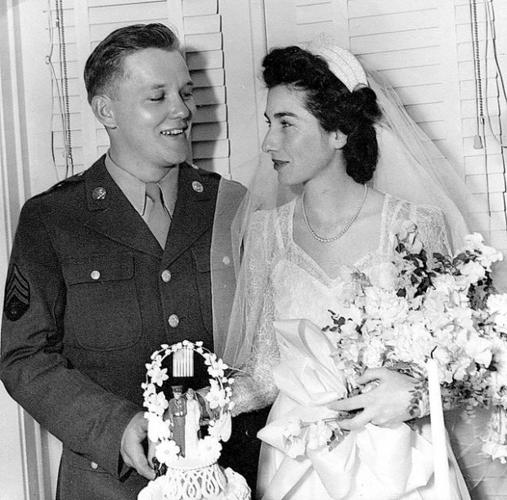
In between Eleanor Roosevelt and the A-bomb, Glasgow met his future wife, Jeanne, in Tucson at a dance for servicemen.
"She danced by, and that was it," Glasgow said in a 2004 Arizona Daily Star article.
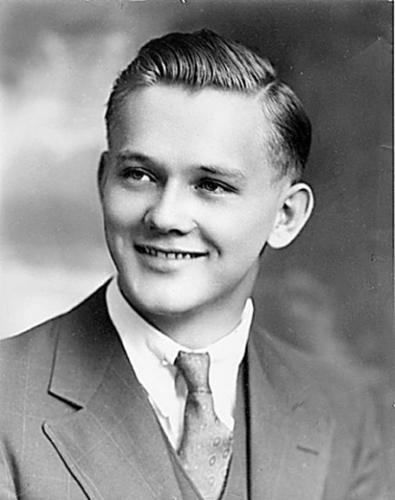
"He was so good-looking, I had to smile at him," said Jeanne, who was dancing with another fellow at the time. Then, the handsome, blond-haired Glasgow cut in.
"I had to write two 'Dear John' letters after I met him," said Jeanne, who had her own successful music career in Tucson as a soprano.
The couple wed in 1944, and Jeanne was pregnant with the first of five children by the time her husband went to Tinian.
After the war, Glasgow returned to Tucson and earned a master's degree in education from the University of Arizona. He taught in public schools, gave private music lessons, and played professionally for whoever needed a clarinetist, saxophonist or flutist. He retired from the public school system in 1981 but continued to give private lessons and still was playing gigs a year ago.
Tino Saccani took private clarinet lessons from Glasgow in the 1950s and '60s, and kept in touch with his former teacher until Glasgow's death.
"He made you appreciate what you could accomplish, and he made you appreciate him," Saccani said. "He was a very gifted teacher."
Steve Harrison, a principal at a California elementary school, is an advocate for music in education because of the lessons he learned from his elementary-school clarinet teacher.
"He gave me a great appreciation for music," Harrison said. "The skills he taught me in music have helped me over and over and over again in life. I'm 58, and I still remember him."
Fellow educator Ray Davies met Glasgow in the 1950s.
"He made music the most pleasurable, fun and happy experience," Davies said. "He enlightened everybody around him. His students so admired him because he was compassionate and he took time to make individual students feel good, and that's the whole business of education. He truly represented the best of the teaching profession."
During his career, Glasgow was principal clarinetist for the Tucson Symphony Orchestra and the Tucson Pops Orchestra, of which he was a charter member. He played for all the big-name singers who came to Tucson, including Robert Goulet, Carol Lawrence Vikki Carr, Natalie Cole, Sammy Davis Jr., Liberace and Johnny Mathis.
But it was sharing the stage with Goodman in 1960 that really gave Glasgow a thrill.
Glasgow met his idol at a cocktail party the night before Goodman's performance. The two men hit it off immediately.
Glasgow chauffeured Goodman around town during the band leader's short stay and put together a jazz combo, at Goodman's request, to play with during the encore. Goodman shocked Glasgow by insisting that the Tucsonan take the lead in one of the encore numbers, accompanied by the clarinet master.
He was equally surprised when Goodman — who had turned down invitations from local socialites — accepted an offer to have dinner at the Glasgows' home.
It was in their living room that Goodman launched into an impromptu jam session with the elder Glasgow and his two oldest boys, Jimmy and Gary. For years afterward, the men maintained a friendship through correspondence.
Frederic Balazs was the TSO's music director at the time of Goodman's concert and remembers the living-room performance too. The next night, he remembers, Goodman showed up at the Glasgows' door for dinner with a six-pack of beer in one hand and his clarinet in the other.
"Old Jimmy and young Jimmy and Benny Goodman were tooting away all night," he said.
In later years, Balazs said of Glasgow: "He'd get dreamy-eyed talking about it. He was a schoolteacher, and I think that's what brought the groceries home, (but) first of all I think he considered himself a musician."
Life Stories
This feature chronicles the lives of recently deceased Tucsonans. Some were well-known across the community. Others had an impact on a smaller sphere of friends, relatives and acquaintances. Many of these people led interesting — and sometimes extraordinary — lives with little or no fanfare. Now you'll hear their stories. Past "Life Stories" are online at go.azstarnet.com/lifestories.

 Tucson's El Güero Canelo for sale


