

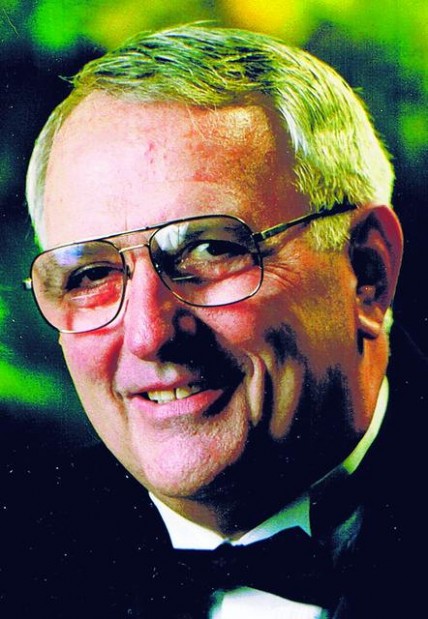
John R. Glenn III's first attempt at wireless communication involved a do-it-yourself ham radio kit and an antenna made of soldered soup cans that he attached to the roof of his childhood home in Douglas.
He parlayed those initial home experiments of his youth into a degree in electrical engineering and a job spanning four decades with the Federal Communications Commission — many of those years spent at the Douglas monitoring station. In retirement, Glenn took his lifelong hobby to a new level, working with emergency responders to provide radio communications for large-scale emergencies in the Western states, including the 2003 Aspen Fire on Mount Lemmon that consumed 85,000 acres of forest and more than 300 homes and buildings.
"John Glenn was very much into emergency communications," said fellow amateur radio operator Dail Terry. "When he was … on an emergency, he was very good at doing his job. He was always working to help. He was good people."
People are also reading…
"Good people" — a sentiment shared by all who attended Glenn's memorial service following his Sept. 1 death from chronic lymphocytic leukemia, a slow-growing cancer. He was 66.
Glenn, the oldest of six siblings, was born in Wisconsin but lived in Douglas — his mother's birthplace — on and off for most of his life.
"He always said Douglas was a great place to live but he wouldn't want to visit there," said his son, John R. Glenn IV of Tucson. "He had this love for Arizona, and he loved the town. It's the place he wanted to be.
"He was always interested in radios, even when he was a kid," said his son. "He turned a room in my grandmother's house into a radio shack."
After earning a degree in electrical engineering from New Mexico State University in the mid-1960s, Glenn enlisted in the Army. After two years of active duty in Germany, he returned to Arizona and an FCC job in Douglas. At the monitoring station where Glenn worked for 35 years, he tracked communications worldwide to make sure radio operators were licensed and using correct frequencies. When the Douglas monitoring station shut down, Glenn took an FCC post in Washington, D.C., for two years until his retirement. It was while working in Washington that he reconnected with a childhood acquaintance from Douglas, Susan, who was also living in the nation's capital.
The couple, who wed, moved back to Southern Arizona after Glenn retired. They first lived in Oracle before moving to Tucson five years ago to be closer to his family.
In Tucson, Glenn was a member of the Cactus Radio Club, with Terry, Chuck Michels and other amateur — or ham — radio operators. The name "amateur" has nothing to do with the men's skills or knowledge. It refers to their licensing as noncommercial radio operators. Susan is licensed, too.
"When we lived in Oracle, he used to use it to tell me he was on his way home," she said of the couple's radio communications. They were married for 11 years.
Glenn tried to share his hobby with his two children when they were young, buying them radio kits and giving them instructional manuals, but their interest wasn't sparked.
"In my teens, he wanted me to become an amateur operator and he gave me the book and I think I fell asleep on Page 3," said his daughter, Sandra Lobring of Michigan.
Added his son: "I remember as a kid, going everywhere, we always had a radio around. We'd go on cross-country trips and he'd always have at least a hand-held radio. I guess it's pretty much like people jump on Facebook now and go on there for hours. I think it was kind of the Facebook of its day. He was a huge enthusiast. It was one of his main loves. He never grew out of it."
Glenn enjoyed using his radio for socializing with fellow hams across the country and around the world, but he also took training and safety courses to become a qualified radio operator during emergencies.
He, Michels and other Cactus Radio Club members volunteered with the Radio Amateur Civil Emergency Service (RACES), a division of the Pima County Office of Emergency Management and Homeland Security.
Amateur radio operators "tie first responders together that normally wouldn't be able to communicate because they don't share the same frequency, said RACES communications manager Tom Long.
Glenn helped facilitate communications at the Tucson Convention Center when it was turned into a temporary shelter for Hurricane Katrina victims in 2005. He was on site to provide backup communications for crews during forest fires in Southern Arizona, California and New Mexico. And Glenn was part of the team providing communications support for big community events, including bike races and golf tournaments. As a member of RACES, Glenn took part in training exercises with law enforcement, military and fire personnel in the Tucson area and Mexico.
"He did a fantastic job," said Long. "He was a good resource. Whatever we needed him to do, he was able to be flexible enough to fill that position. He was the type of person that if something was going on, we could make a phone call and count on him to be able to help us out under adverse conditions."
Glenn kept a cool head in an emergency, and "that's basically what it took, someone who was cognizant in all these procedures and trained in emergency communications to take messages and forward information and all of that," Michels said. "He acted as a radio operator in all these different areas. John traveled all over Arizona and California supporting forest (service) communications.
"He loved to operate radios, and he was there when you needed him."
It was Glenn's "life of service" that his son admires.
"It was one of those lives where he always believed there was more he should be doing for the greater good."
the series
This feature chronicles the lives of recently deceased Tucsonans. Some were well-known across the community. Others had an impact on a smaller sphere of friends, family and acquaintances. Many of these people led interesting — and sometimes extraordinary — lives with little or no fanfare. Now you'll hear their stories.
On StarNet
Did you know John R. Glenn III? Add your remembrance to this article online at azstarnet.com/lifestories

 Tucson's El Güero Canelo for sale


