

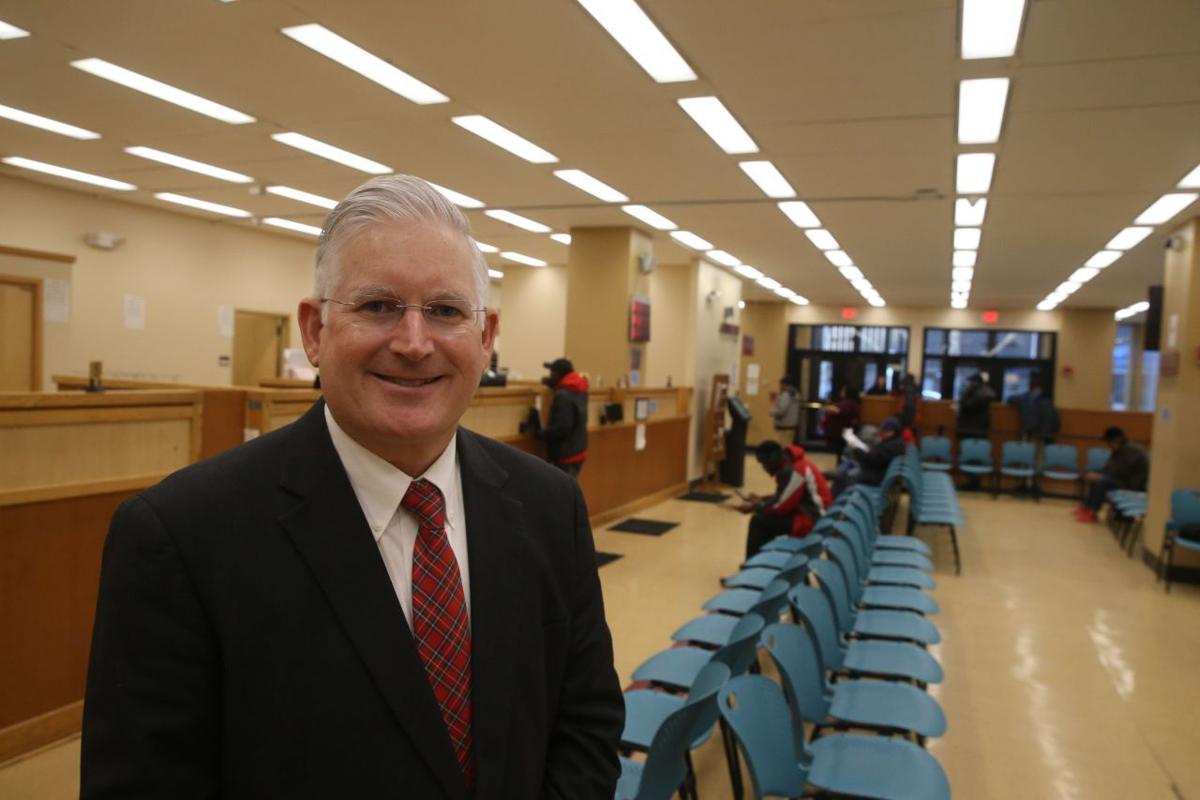
The New York State Attorney General's Office has been asked to investigate money spent by Erie County Clerk Michael "Mickey" Kearns on an outreach campaign that was paid for by county taxpayers but may have aided his political campaign last year.
Kearns was taken to task last fall by the county comptroller for running numerous print and radio ads promoting the work of the clerk's office while Kearns was running for re-election. These weren't technically campaign ads – they didn't mention his 2022 candidacy or ask anyone to vote for him – but they all featured Kearns' face or voice as they touted all the customer services, programs and perks that were available to residents through the clerk's office.
Comptroller Kevin Hardwick said then it was wrong for county taxpayers to foot the bill for marketing material that boosted the profile of an incumbent candidate for office. He also said he planned to come up with some rules to keep this from happening in the future.
People are also reading…
It turned out he didn't have to. A little digging by his staff in December uncovered a state law that already prohibits this practice. Now, Erie County Democratic Party Chairman Jeremy Zellner wants the attorney general to investigate the use of nearly $100,000 in public money on the clerk's outreach campaigns.

Advertising that promoted services offered through the Erie County Clerk's Office was plenti…
Zellner has criticized Kearns, a Republican-endorsed Democrat, over the government-funded marketing campaign that he and Hardwick have called self promotional and illegal. Zellner accused the clerk of "blatantly using incumbency as a political weapon."
Kearns said he was unaware of the law, and so were many county elected officials, including Hardwick.
"I think I’ve been honest and transparent about it," Kearns said. "We obviously made a mistake. If I had known, at the time, it was a violation of any law, we wouldn’t have done it."
Hardwick responded, "If Mickey said he didn’t know, I truly believe him. But the point is, I think it was still wrong. The ethical problem was still there."
The law
The Buffalo News wrote about the concerns raised by Hardwick back in November. Last week, WGRZ produced a report outlining how Kearns had spent more than $99,000 on outreach ads, including thousands of radio spots and a sponsored "Catching Up with the Clerk" show on WUFO radio. All featured his "likeness, picture or voice," which made it ineligible for payment with public money under Sec. 73-B of the Public Officers Law.
Even after the law was made clear to all county officials in January, the clerk's office still submitted invoices for payment that were ineligible under the law, which Kearns said was an unintentional clerical mistake made unbeknownst to him.
The law states "no elected government official or candidate for elected local, state or federal office shall knowingly appear in any advertisement or promotion, including public or community service announcements, published or broadcast through any print or electronic media ... that publishes such advertisement for a fee, if the advertisement or promotion is paid for or produced in whole or in part with funds of the state, a political subdivision thereof or a public authority."
The law does not appear to prohibit the use of an elected official's name in promotional material, nor would it preclude any free publicity received by an elected official.
Hardwick, a political science professor and former county legislator, said he wasn't initially looking at the issue through a legal lens but from a county policy angle.
After learning about the state law, though, he issued a memo alerting all county elected officials on Jan. 5 and warning them that future invoices for paid advertising or promotions featuring an elected official's face or voice would be rejected. Hardwick said he later reluctantly agreed on Jan. 20 to pay for $48,000 in additional invoices for radio ads promoting the clerk's office because those invoices covered periods that predated his Jan. 5 memo.
But then, the clerk's office submitted $900 in invoices for Kearns' Saturday radio show for four weeks in January.
Hardwick drew the line. The four weekly invoices for January were rejected, and Hardwick personally emailed Kearns to warn him that his WUFO shows would no longer be covered by the county unless Kearns stopped appearing on the show.
Kearns said he subsequently discovered that one of his staffers accidentally submitted the invoices for payment and was very apologetic about it. Kearns said he fully expected to comply with the law when Hardwick issued the January memo. Future promotional expenses featuring him will not be paid for by the county, he said, adding that he has given up the "Catching Up with the Clerk" program.
Kearns' defense
Kearns offered several defenses for his use of taxpayer money for promotional purposes.
First, he said, both the Erie County Executive's Office and the Erie County Legislature approved him spending more money on a marketing campaign last year to tout the many services provided by the clerk's office, even though it was Kearns who had say over what the marketing material included.
Second, he said that he never knowingly did anything improper and wasn't the only one to have inadvertently violated the law. The comptroller's office has received other invoices from Kearns' office over the years, including ones with print ads attached featuring his photo. All have been paid without issue. If this were a problem, he said, the comptroller could have raised the issue with him anytime.
He pointed out at that after his radio show launched in 2021, both County Executive Mark Poloncarz and District Attorney John Flynn were guests on his show.
"Do you think they would have done this if they thought it was improper?" he asked.
After Hardwick's memo on the state law circulated, Chief of Staff Jessica Schuster said she received calls for clarification from both county legislators and the district attorney's office.
Kearns accused Zellner of elevating the issue because Kearns' name has been floated as a potential challenger to Poloncarz in the Democratic primary.
Kearns said the information he was sharing was useful to residents and provided them with information involving motor vehicle transactions and other services in the county's most public-facing department.
Hardwick said that might be true, but the sudden spike in print and radio advertising and sponsored appearances around the primary and general elections were clearly meant to benefit Kearns' campaign.
Looking ahead
Now that Zellner has called for the attorney general's office to investigate, it remains to be seen whether Kearns will be subject to fines or be required to make any repayments. The investigation is a civil matter, not a criminal one. But the law says violators are subject to fines ranging from $1,000 to $5,000. The attorney general's office is aware of the situation but had no comment to make about it on Friday.
"We’ll cross that bridge when we come to it," Kearns said. "I think the attorney general has more important things to do, but I can’t tell her what to do. We’ll cooperate with any investigation."
Hardwick, meanwhile, said he's not going to press Kearns to pay back any of the money for promotional advertising that has already been paid for by the county.
"We’ve had a passing thought about that," he said. "In the end, I'd say, I don't want to do that. I just want to move forward, and I want to make sure it doesn’t happen again. We have enough battles, personality conflicts and blood feuds in Erie County as it is. We don’t need another layer of that."
Zellner, meanwhile, said Kearns should definitely be required to repay the county. Since Kearns' actions were illegal, he said, county taxpayers deserve to be reimbursed from Kearns' own campaign funds.
"If he’s as concerned about serving the people and protecting their tax dollars as he claims," Zellner said, "he will do it immediately."


