How it works
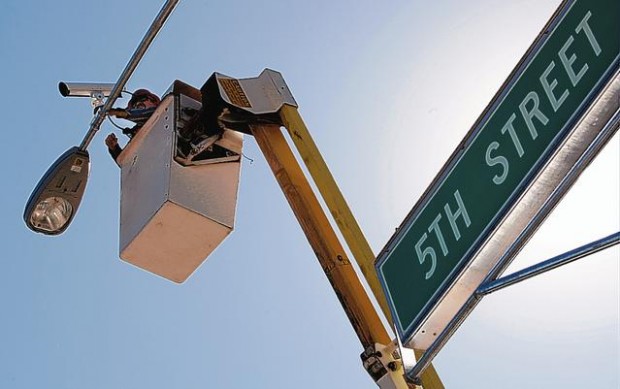
● A video-detection traffic sensor system uses video cameras mounted on the mast arm of a traffic signal to "see" a vehicle approaching the intersection. When a vehicle enters the camera's "detection zone," the image activates a sensor, which sends a command to a controller to give that vehicle a green light in sequence with other lanes with traffic.
● An inductive-loop sensor uses a loop of wire embedded in the pavement of each lane at an intersection to detect vehicles. When a vehicle passes above the loop, it activates a sensor, which sends a command to a controller to give that vehicle a green light in sequence with other lanes with traffic.
Pro and cons
Video detection sensor:
Pro:
Video detection sensors cost about $25,000 to install, compared with $30,000 for inductive loop sensors. Maintaining the video detection system is much easier and less costly. Some studies also suggest the system boosts vehicle flow by 15 percent to 40 percent.
People are also reading…
Con:
Some studies show the system can, under some conditions, increase delays for motorists at night and cause other safety problems.
Inductive loop sensor:
Pro:
A dependable technology that has been in use in the United States since the 1960s. Works well in all weather.
Con:
The wire loops break relatively often due to heavy traffic, utility repairs, and road work. Repairs are relatively costly and time-consuming.
Numbers
● Video detection systems have been installed at 180 of the city's 330 intersections since the mid-1990s. It likely will take about the same amount of time to convert remaining intersections.
● County transportation officials also are installing video sensors as intersections are built or reconstructed. They've been placed at about 25 percent of the 83 intersections in unincorporated Pima County.


 Second wall planned across Arizona as Trump administration doubles down on border