
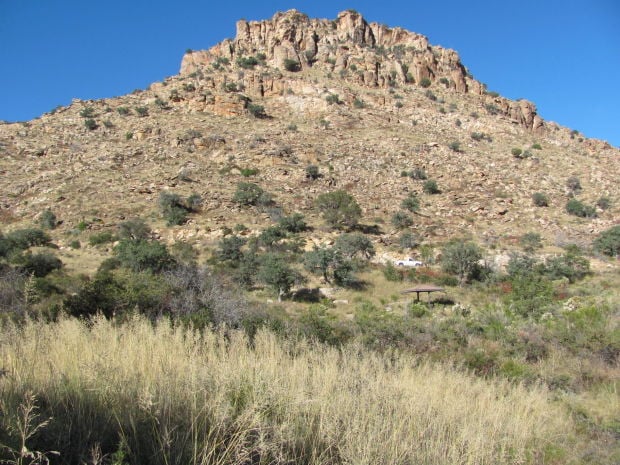
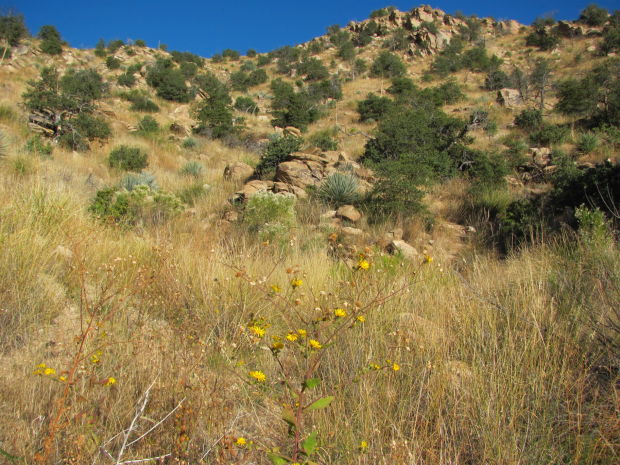
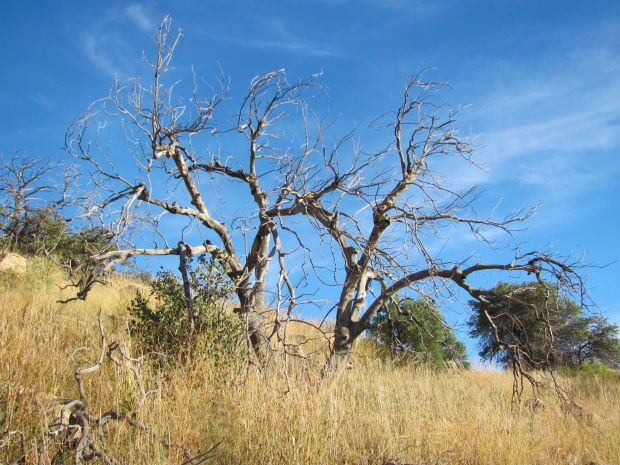
Abundant monsoon rains brought brilliant wildflowers and lush grasses to the Catalina Mountains and other ranges around Tucson — but all that overgrown vegetation will dry out and provide fuel for potential wildfires in the coming months, national forest officials warn.
A drive up the Catalina Highway northeast of Tucson reveals roadsides and slopes bristling with tall, dense stands of native and invasive grasses — known as “fine fuels” to firefighters.
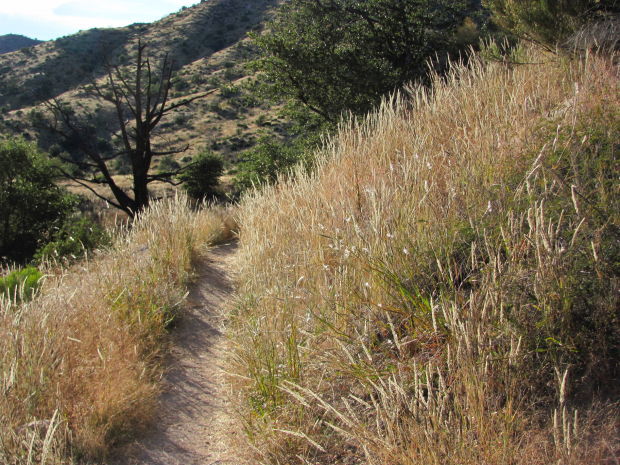
Take a hike on a trail such as the Bug Spring Trail, beginning at a trailhead between mile markers 7 and 8 on the highway, and you’ll find the route hemmed with high grasses and other dry vegetation.
“There is an abundance of grasses and other fine fuels across the forest resulting from the bountiful monsoon that brought significant rainfall to Southeastern Arizona in recent months,” said Heidi Schewel, spokeswoman for the Coronado National Forest. “These plants are dry now and will be available as fuel for wildfire through the winter and into the spring and summer.”
People are also reading…
That mention of wildfires in the winter might come as a surprise to some, but Schewel emphasized that it is a real possibility — especially if someone’s carelessness ignites a fire in an area of dense vegetation.
“The potential for winter wildfire on the Coronado National Forest exists,” she said. “The fuel is present. An ignition source could cause a wildfire to burn. Weather, topography and fuel amount and condition would affect fire behavior.”
Schewel said people should be cautious with fire year-round because “we are in fire season all year.”


 Second wall planned across Arizona as Trump administration doubles down on border