

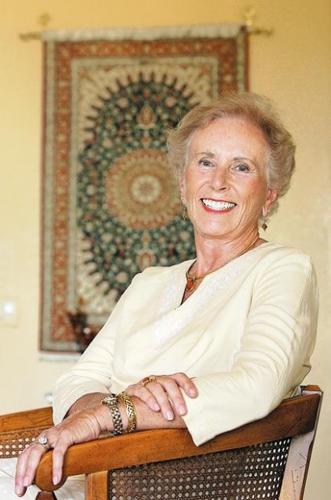
It was one of those "Have you lost your mind?" moments. Fourteen years ago, Ann "Randy" Westrope was 59 and working as a senior vice president at a hospital in Kansas City, Mo.
"I had a wonderful job, a nice house, a great salary." But something was missing. "I had worked myself out of challenges," says Westrope, who now lives in Green Valley.
Then she got a call from a headhunter, asking if anyone would be interested in a job as an administrator at the King Faisal Hospital, in Riyadh, Saudi Arabia.
Turns out, she was. Two of her three kids, all grown and gone, were "Go for it, Mom." One was ambivalent.
Not so her husband, Tom. "He wanted to live in Phoenix. I told him, 'You can go someplace that's warm and dry and good for your arthritis.' When I said it was in Saudi Arabia, he said, 'Have you lost your mind?' "
People are also reading…
About two-thirds of her friends asked the same thing. The other third said, "What a great adventure!"
Westrope thought so, too. Passport, shots, criminal background check and one extensive physical later, she was on her way, landing in Riyadh on July 20, 1995.
"It was hotter than blazes, but it had been 105 degrees in Kansas City," she recalls.
The pay, she says, was "not that huge." But the perks were nice. "You don't pay taxes in Saudi Arabia. You get free housing, utilities, health care and a car and driver."
Ah, yes, a car and driver. Of course, since women in Saudi Arabia aren't allowed to drive.
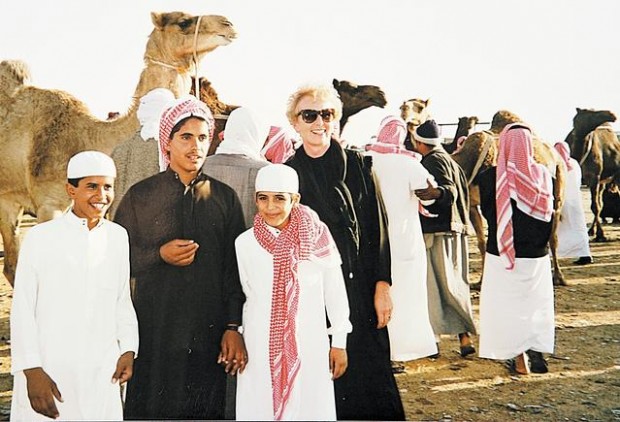
She wore long skirts and long-sleeved tops to work, but her head remained uncovered. Everywhere. "I had a head covering, but I never wore it."
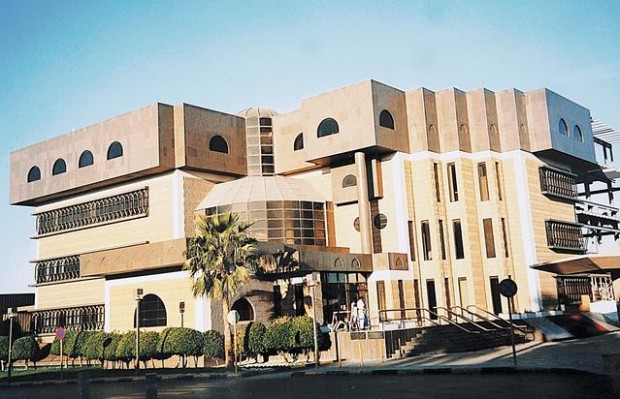
The 600-bed hospital, equipped for everything from liver transplants to pediatric cardiac care, was partly staffed with Saudi (pronounce "Sah-oo-dee") physicians, but also depended on workers everywhere from Ireland to Jordan. About 25 percent were from the Philippines.
"Everybody had to speak English," says Westrope, who was trained and educated as a registered nurse.
Translators, however, were used to talk to the patients. Here is where Westrope came up against Saudi Arabia's tribal culture.
"We were hiring men to be ward clerk interpreters. We asked them, 'Do you have trouble taking orders from women?' They said, 'No,' they know it's the Western way."
Yet half of the new hires were leaving their jobs within a week. She found out why after hiring a young Saudi man to look into the problem. His findings: Nobody would take orders from a lower tribe during orientation. After he started doing the hiring and placement of the ward clerks, things dramatically improved.
"The tribe is everything," says Westrope. "People only marry within their own tribe or at the same level. Even educated people."
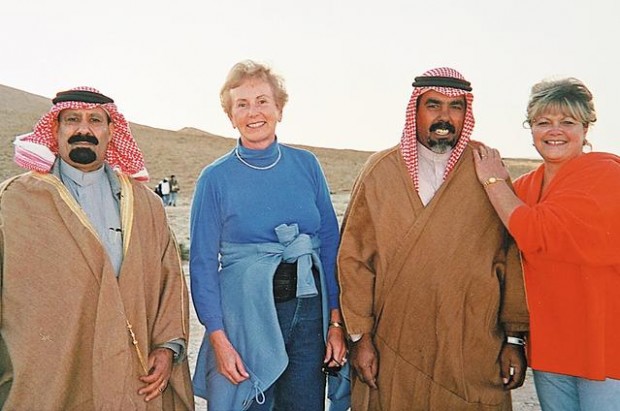
In November 1995, her husband joined her — and loved it. "I couldn't get him to go home," Westrope jokes. They went to parties, traveled during her monthlong vacations and shopped.
"They have great malls, but what we loved was shopping in the rows and rows of little shops. They sold gold jewelry, carpets, fabulous fruits and vegetables, and the best lamb I ever had."
But no pork chops or bacon, not even at the nearby Safeway. No alcohol, either. "Everyone made their own wine," says Westrope.
Males and females are totally segregated in Saudi Arabia — on the street, at parties, in school.
Strangely enough, while all Saudi women wear the abaya, which totally covers them, the most popular show on television when Westrope was there was "Baywatch."
Calls to prayer came five times a day. "In the shops, everything stops," says Westrope. But in the hospital, stopping to pray was optional — and out of the question, of course, during surgery.
Family is equally important. "There are young men who will never go anywhere, say, on Thursday nights," says Westrope. "It's the night they eat with their mother and father. And during religious holidays, everyone goes back to their family."
While she was there, she met members of the royal family. "We staffed clinics at the palaces in Riyadh and at Jeddah by the Red Sea.
"At the clinic in Jeddah, all the faucets are gold-plated; there are Waterford crystal chandeliers and Waterford crystal lamps in the nurses' lounges. All the walls and furniture are covered in damask silk. There is opulence everywhere."
Yet wealth does not always equate to health. "They have a lot of diabetes. They eat a lot of dates with high sugar content. Exercise is not valued." And, she says, "if a woman needs surgery, her husband has to approve it."
In 2000, Westrope returned to the United States. Her husband, who died last year, was ailing. "It was time," she says.
For a while, she had trouble adjusting. "Everything was the same, but I had changed. I was a different person. I did not look at things the same way," says Westrope, who occasionally gives talks about her years spent in Saudi Arabia.
She also volunteers for a slew of causes, ranging from literacy tutoring to hospice care.
As for those five years in Saudi Arabia: "I met so many people, learned about so many different cultures. I have a different perspective of the world. It's the richest experience I can imagine."
DID YOU KNOW
Some 60 degree-seeking students from Saudi Arabia were enrolled for the fall semester last year at the University of Arizona.




 New Tucson lounge to embrace dark and cozy


