

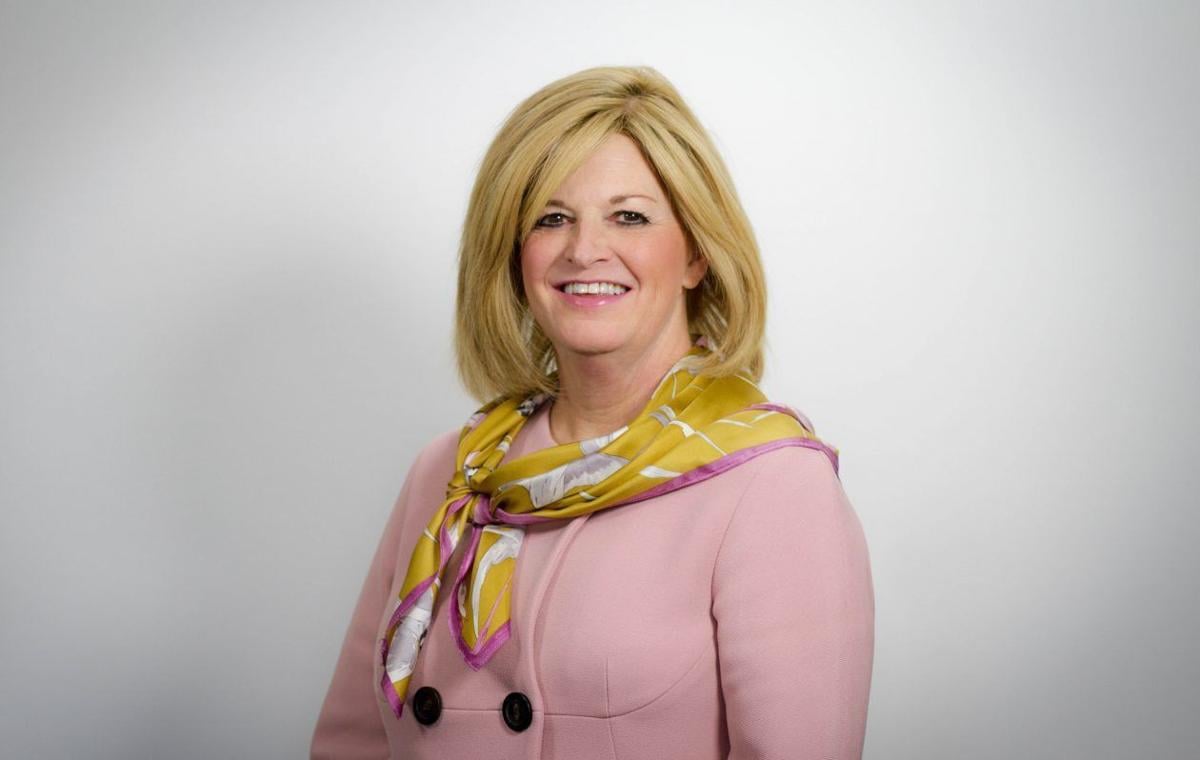
Eight times in two years, Lorrie A. Clemo was a finalist to be president of a college or university.
SUNY Potsdam considered her in 2014, as did Minot State University in North Dakota. She was one of four finalists for the top job at SUNY Brockport in 2015 and one of two finalists this past May to be president of Edinboro University in Pennsylvania. In hindsight, Clemo - a State University of New York at Oswego provost and vice president - is glad those other opportunities didn’t pan out for her.
After being introduced Tuesday as the next president of D’Youville College, Clemo talked glowingly of the Buffalo college’s long tradition of service, reputation for innovation and the extraordinary legacy of leadership by its past president, Sister Denise Roche.
“This was by far the best fit for me of any of the places I ever interviewed,” she said in an interview with The News. “From the moment I met the search committee, it just felt like I was home. And that feeling I think went back to my roots of really wanting to be at an institution that had a culture of caring that I connected with.”
People are also reading…
Clemo will be installed in January as D’Youville’s 15th president and the first lay leader in its 108-year history. The college’s board of trustees picked Clemo from among more than 60 applicants for the job who were whittled down to four finalists. Board Chairman John P. Amershadian said Clemo’s wide range of experience in higher education helped set her apart in a group of excellent candidates. That experience includes budgeting at the highest echelons of a college even larger than D’Youville, as well as a broad understanding of the higher education landscape through her most recent work shepherding a U.S. Department of Education project aimed at increasing degree completion among minority and low-income students.
“It was just the whole package is I guess the way to describe it,” he said.
Clemo showed a strong commitment to upholding the college’s Catholic heritage, including its emphasis on community service, while at the same time displaying a strong willingness to continue innovating, he said.
“She gives us a real sense that she gets how D’Youville got here,” Amershadian said.
The board was not put off by Clemo’s prior interest in the presidencies of other colleges. Instead, board members viewed it as “good preparation” for the D’Youville post, Amershadian said.
“She was already thinking like a president, and we saw that as a plus,” he said.
Clemo has been provost and vice president at Oswego since 2010. She has been on leave from the position for about a year, while overseeing the “First in the World Program,” an Education Department funded effort to boost graduation rates. Prior to entering administration in 2006, Clemo served on the Oswego faculty in the department of political science for 18 years.
At roughly 8,000 undergraduate and graduate students, SUNY Oswego is more than double the size of D’Youville, while offering many more academic programs and employing 1,200 full-time faculty and staff, three times the amount at D’Youville.
Clemo said in her introductory remarks that D’Youville was “ripe for becoming a world-class institution of higher education” and that after her installation she would embark immediately on a series of “creativity sessions” with students, faculty and staff aimed at building a more dynamic learning environment on campus.
In a brief interview, she said that her familiarity with the state's higher education landscape would be a big help moving forward.
"It will benefit the institution that I come prepared understanding the politics of the state, understanding the students, and I have a regional network that I can tap into that I think will immediately help move things that are on my agenda."
Born and raised near Syracuse, Clemo grew up Catholic and attended a Catholic college, LeMoyne, where she earned a bachelor's degree in political science. She received her master’s and doctoral degrees from Binghamton University. Still a practicing Catholic, Clemo said she understood that the transition to lay leadership is a dramatic change for the college.
“I’m going to have to work hard to make sure the Catholic identity is preserved here,” she said.
Clemo said she planned to consult with Linda LeMura, who became the first female lay leader of a Jesuit college in the U.S. when she was named president of LeMoyne in 2014.
Roche, who was president for 37 years prior to stepping down in June, was not part of the search committee and did not play a role in the selection of Clemo.
In remarks prior to Clemo’s introduction, Roche encouraged the incoming president to carry forward the legacy of service at the institution.
“The people here are wonderful,” Roche said. “I entrust you with them and I know that you will preserve the kind of goodness and inspiration that you will find here.”


