

A warm start to spring has resulted in increased sightings of aggressive bees in Southern Arizona.
Steve Thoenes, an entomologist who has helped make, and been interviewed on, nature documentaries for the National Geographic Channel and the Discovery Channel, said bees are particularly active this year.
Thoenes, who is president of the bee-removal company BeeMaster Inc., said bee-swarm activity is above average this year because of significant rainfall in the fall combined with a wet, warm winter.
"The result was lots of flowers," Thoenes said, "and lots of flowers mean a lot of bees, making bee problems. ... The perfect conditions for creating swarms have occurred."
On April 4, a Sells man died after several bee stings.
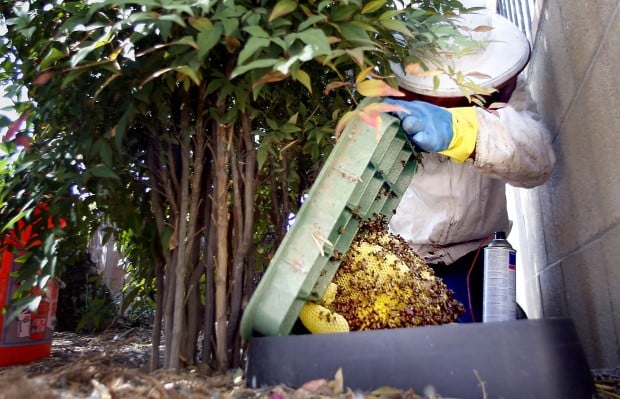
Recently, Thoenes removed a swarm of bees from the east-side home of Sheryl and Jim Major. The couple's first sign of a problem was when a bee chased Jim inside during a weekend barbecue. They later found a hive living in their yard around a sprinkler-control system.
People are also reading…
Sheryl said she has kept their dog, Henry, inside out of fear he'll be injured.
Thoenes said bees aren't typically aggressive when swarming in search of a new place to nest. Instead, they usually avoid conflict in such situations. Bees get defensive, however, when they've established a hive and feel threatened.
"Where they're dangerous is when they're defending homes," Thoenes said. "They have to defend hives and nests at all times from predators."
Bee Bustin owner Chris Brinton says his call volume has doubled.
Just about every day in the past month, he's removed hives buzzing with as many as 40,000 bees.
Feral-bee colonies are almost exclusively Africanized bees, which have negative consequences for local ecology, Thoenes said. Africanized bees reproduce 10 times faster than native bee species, crowding them out. As a result, certain plant species struggle to survive because Africanized bees don't pollinate them.
Thoenes said bees will be less active once the heat starts to rise, only to return in the fall.
"There's another burst in October," Thoenes said.
Brinton said he's noticed a particularly nasty streak in this year's class of bees.
"Some years they're as gentle as can be, and some years they're testy and really mean," Brinton said. "They're most aggressive this year."
DID YOU KNOW?
African "killer" bees, which were imported to Brazil in the 1950s to enhance honey production, migrated north and entered the United States in the 1990s. The African bees bred with European bees to produce aggressive Africanized bees, which were spotted in Arizona as early as 1993. Just about all feral bees in Arizona are Africanized.
KEEP BEES OUT
• Use mesh screens to cover attic openings, irrigation-control boxes and water-meter boxes.
• Fill holes and cracks in foundations, walls and roofs.
• Remove trash that bees could adopt as shelter.
• Cover or fill in animal burrows.
• Keep shed doors maintained and tightly closed.
Source: Carl Hayden Bee Research Center
Contact reporter Phil Villarreal at 573-4130 or pvillarreal@azstarnet.com


