Floods in Ohio, Kentucky, Illinois and Indiana this week were caused by a hurricane that came ashore 1,000 miles away.
Atlantic storms like Hurricane Ike almost never affect Tucson's weather, though we did get some flooding this summer, courtesy of Hurricane Dolly.
Our biggest floods have come from Pacific tropical storms. A new report from the National Weather Service tracks 26 storms that drenched Southern Arizona between 1965 and this year, including five that entered Arizona as full-blown tropical storms.
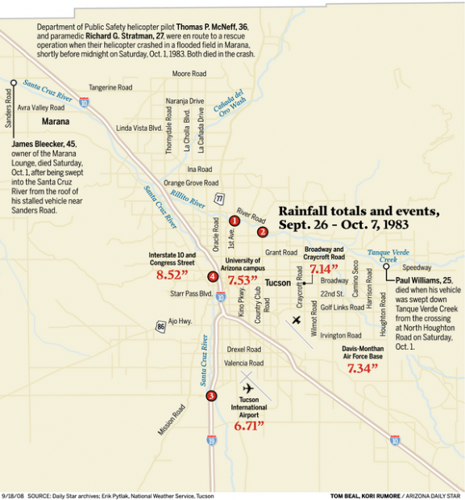
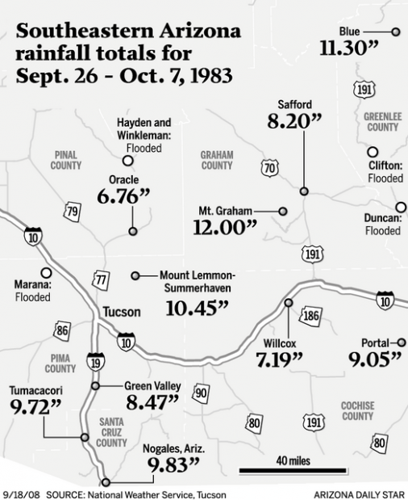
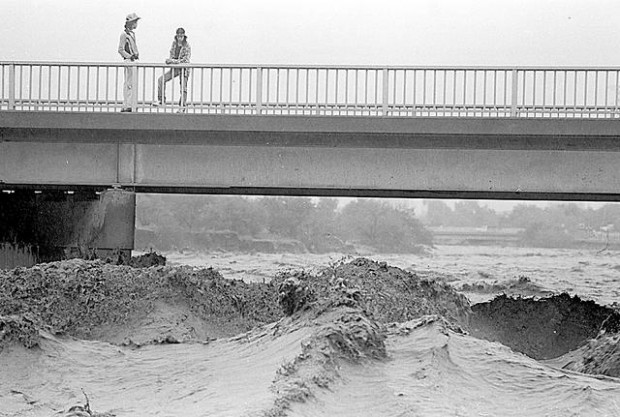
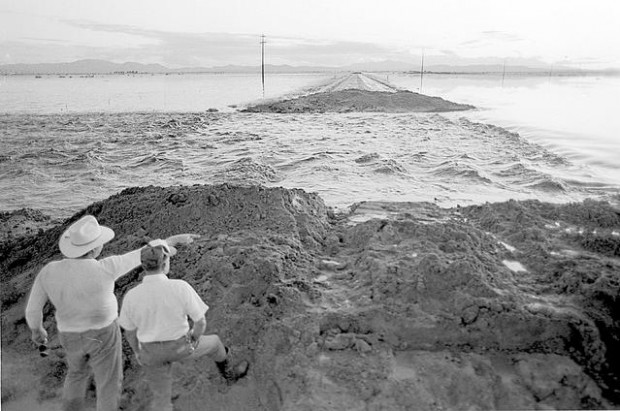
The deadliest and most destructive occurred 25 years ago this month. Octave was no longer a tropical storm when it hit Arizona, just a mess of moisture that combined with a low-pressure storm front to drop up to a foot of rain in three days on an already saturated landscape.
The resulting floods killed 13 people in Arizona, including four in the Tucson area.
People are also reading…
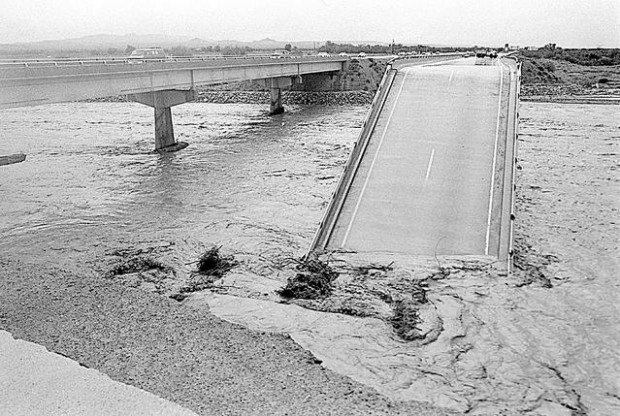
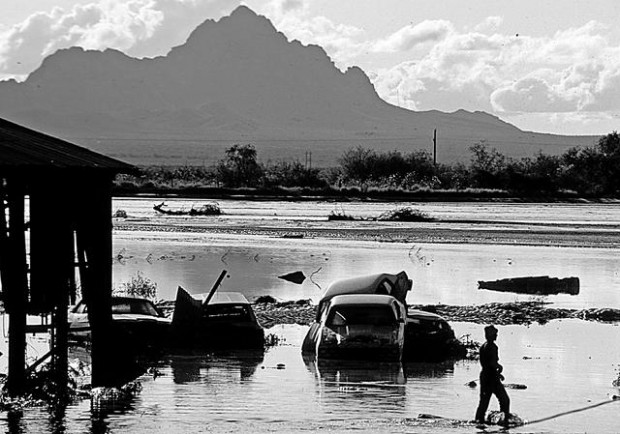
Floodwaters inundated large parts of Clifton, Marana and Winkelman, and isolated Tucson, as its rivers rose to take out bridges and topple buildings from their banks.
After the storm, Pima County began fortifying the channels of the Pantano Wash, the Rillito and the Santa Cruz rivers, adding the linear parks that still await completion along their banks.
Tucson has never been hit by a hurricane, said Erik Pytlak, meteorologist with the National Weather Service in Tucson. Five full-blown tropical storms — Katrina (1967), Joanne (1972), Kathleen (1976), Lester (1992) and Nora (1997) — have entered Arizona since 1965. A tropical storm, he said, has sustained winds of 39 mph, or more, and heavy rains.
Pytlak, author of the technical report to be released this week on the Weather Service Web site, said the most dangerous storms are those that, like Octave in 1983, linger off the Gulf of California and feed moisture into low-pressure systems that develop west of the California coast.
Tucson received significant rain from two tropical storms this monsoon season, he said.
Dolly, which made landfall at South Padre Island, Texas, as an Atlantic hurricane, lost much of its power over land, but its rains caused flooding in New Mexico, where it was blamed for two deaths, and in Arizona, where parts of Tucson received up to 2 inches of rain on July 25.
Tropical Storm Julio was the source of significant rainfall in parts of Arizona this past Aug. 24-26.
"Despite its inland location, decaying tropical depressions move off the tropical Eastern Pacific into southeast Arizona about once every 5 years," Pytlak's report concludes.
We're more likely to lose a tree or an awning to one of the numerous microbursts that accompany our summer thunderstorms, but tropical storms and the floods they can cause remain a real weather threat in Southern Arizona, said Pytlak.
DID YOU KNOW
"Twenty-five years ago this fall, southeast Arizona experienced perhaps its worst weather-related disaster in recorded history. The Flood of 1983 killed 13 people and injured hundreds in a five-day period.
"Dozens of homes, businesses, roads and bridges were destroyed or heavily damaged in the Tucson Metropolitan Area alone. The towns of Clifton, Duncan, Winkelman, Hayden and Marana were almost entirely submerged by floodwaters.
"Over 10,000 people were driven from their homes. Over 1,300 homes were either destroyed or heavily damaged. Total damage across Arizona reached $500 million in 1983 dollars, which today translates to a little over $1 billion."
— Erik Pytlak, science and operations officer, National Weather Service, Tucson

 Faculty concerned about changes to U of A admissions policy