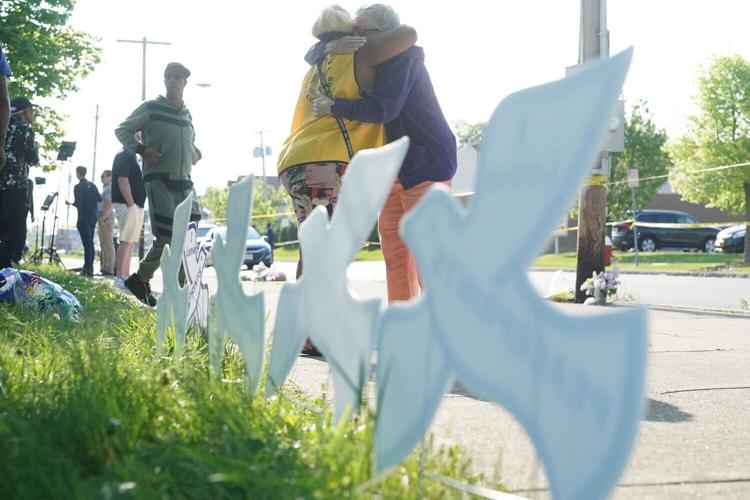
Employers are sorting out how to help their employees cope with the aftermath of the racially motivated mass shooting at a Tops Markets that killed 10 people.
Employees may be feeling fearful, anxious or angry – or a combination of all those emotions.
And employers may be unsure how to broach a sensitive subject with their workers.
In the wake of the shooting, the Buffalo Niagara Partnership hosted a virtual panel discussion by mental health experts, with ideas about how employers can respond to a crisis:
Help employees feel safe. Employers should assess the physical safety of their buildings and review their emergency policies, said Anne Constantino, president and CEO of Horizon Health Services.
People are also reading…
"In all of our buildings, we walked (our employees) back through all the safety devices and mechanics that we have," Constantino said.
The walk-throughs were voluntary, and many employees took advantage of them, she noted.
"A sense of safety is very important for people to know we're there for them," Constantino said.

Anne Constantino, CEO of Horizon Health Services.
Some BestHealth Behavioral Health employees live in the Jefferson Avenue neighborhood where the attack happened and were afraid to shop for groceries last weekend, said Elizabeth Woike-Ganga, CEO, BestSelf Behavioral Health.
"Their teams got together and sent them groceries, or sent them DoorDash cards so they could feel safe in that way," Woike-Ganga said.
Show empathy for employees. Company leaders shouldn't be hesitant to speak up just because a situation feels uncomfortable to them, said Malene K. White, a program manager with Spectrum Health and Human Services.
"That is a great opportunity to be able to step out," White said. "That fear of not knowing what to say, that fear of not knowing what to do, that is the time to get uncomfortable and open your mouth and do something."

Malene White of Spectrum Health and Human Services.
Constantino said leaders shouldn't "hide that tearfulness." She's had to speak with the entire company and struggled with the words at different times.
"I think that humanness and authenticity is way more important than the exact rightness of what you might be doing," she said.
Build connections with employees. Supervisors should let employees know they can come forward for help, even if it's not right at that particular moment, White said.
"Let's put a plan in place to support each other in our time of need," she said.
Constantino said some employers may not have built those kinds of relationships with their staff, but added it is not too late to try, so that when something bad happens, there is the knowledge of that genuine caring and support."
Support remote workers. Employers with remote workers should check in on them and offer opportunities to talk, either one-on-one or in group online discussions – just as employers would with employees in an office, Woike-Ganga said.

BestSelf CEO Elizabeth Woike-Ganga.
Make resources available. Mental health experts say it's important to remind employees about resources available to them to cope, like Employee Assistance Programs, or to suggest using personal time or taking a break at work, depending on what they need.
In this Series
Complete coverage: 10 killed, 3 wounded in mass shooting at Buffalo supermarket
-
Updated
Hochul pledges pursuit of justice after shooting, calls on sites to crack down on white supremacist content
-
Updated
Sean Kirst: In Buffalo, hearing the song of a grieving child who 'could not weep anymore'
-
Updated
Recently retired police officer, mother of former fire commissioner both killed in Tops shooting
- 307 updates

 Faculty concerned about changes to U of A admissions policy