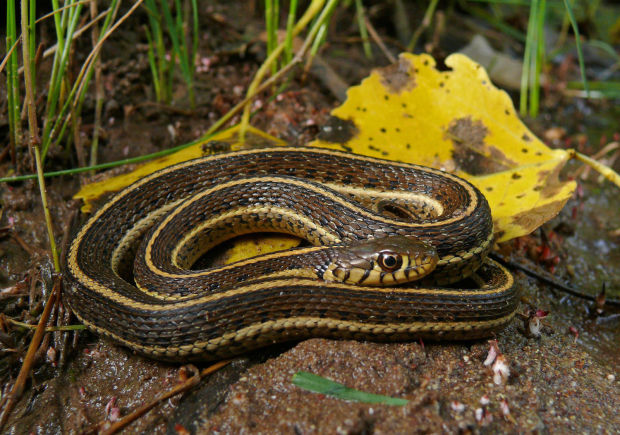
A rare gartersnake subspecies that exists across Southern Arizona gained federal protection Monday.
The northern Mexican gartersnake and the narrow headed gartersnake, which lives mainly in central Arizona’s Mogollon Rim and southwestern New Mexico, were listed as threatened species Monday by the U.S. Fish and Wildlife Service.
A snake that reaches 44 inches long and relies on native frogs and fish for food, the northern Mexican garternake’s listing is the latest federal protection action triggered by a 2011 lawsuit settlement between the wildlife service and two environmental groups, including the Tucson-based Center for Biological Diversity. The settlement and the suit itself were aimed at speeding up federal decisions on listing of imperiled plants and animals.
The northern Mexican gartersnake was known to occur in all 15 Arizona counties. But its range and population densities have been reduced significantly in the past 30 years, the wildlife service said.
People are also reading…
The main culprit has been invasive, nonnative fish such as sunfish that eat the snake, along with declines in its prey species, such as native fish and Chiricahua and lowland leopard frogs, said the wildlife service’s Jeff Servoss.
“Their prey populations are starving while they’re getting eaten. It’s a one-two punch situation,” Servoss said Monday. “They like frog ponds — frogs are like strawberry cheesecake to them.”
Habitat damage from dams, groundwater pumping and other forces that reduced stream flows also contributed to its decline, the service says.
The federal government is in the early stages of reviewing potential impacts on this species from the proposed Rosemont Mine. The snake lives in Cienega Creek, whose flows could be reduced by the lowering of the groundwater table nearby that’s needed to dig out the copper mine’s open pit, some federal biologists and environmentalists have said. It’s one of five imperiled species including the ocelot that are part of this review.
The gartersnake exists at very low population densities in up to 90 percent of the areas it has occurred, the service said. It’s considered viable at only five of 29 known locations in Arizona and Southern New Mexico, the service said. In nonviable areas, it’s not easily found with even moderate survey effort, and is in danger of being driven out.
Cienega Creek, southeast of Tucson, is among the places where its population isn’t considered viable. Cienega and the San Rafael Valley have the highest densities of the snakes in Southern Arizona, said Servoss, a wildlife biologist.
In the past few years, authorities made several releases of the snakes into Cienega and neighboring wildlife ponds in the Las Cienegas National Conservation Area, most recently in May 2014. But it’s still “very uncommon” there, said Jeff Simms, a Bureau of Land Management wildlife biologist.
Environmentalists now hope and expect the wildlife service will prepare a recovery plan for it, as is typically required for protected species, said Colette Adkins Giese, a Center for Biological Diversity attorney.
But while a recovery plan is a top priority for the snake, the service is currently mired in finishing listing decisions and has been hurt by staff losses due to the 2013 federal budget sequestration, Servoss said.
“We can’t keep up with the workload,” he said.
Contact Tony Davis at tdavis@azstarnet.com or 806-7746. Follow him on Twitter@tonydavis987, or on his blog at azstarnet.com/desertblog

Tony Davis
Reporter