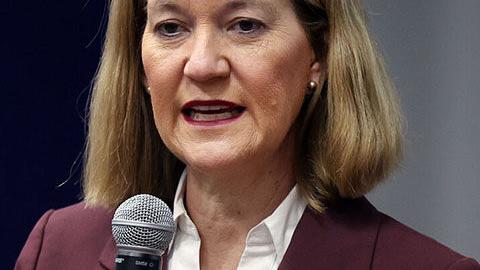
Josefina Cuevas has lived in Tucson for 10 years. She is here illegally and is under a deportation order.
But the 42-year-old mother of four children, one with a serious illness, hopes new federal guidelines mean she will be able to stay.
"I don't know what would happen to my family if I am sent to Mexico," said Cuevas. She is one of an untold number of undocumented immigrants who could remain in the country under rules being developed by the White House and Department of Homeland Security. The government instead will focus on deporting criminal aliens. (Illegal entry is a civil violation.)
"I have done everything I can to show this country that I deserve to stay here," said Cuevas.
Supporters welcomed the changes. "I applaud President Obama and Secretary Napolitano's decision to align our immigration enforcement priorities with reality and our nation's values," Congressman Raúl Grijalva, D-Tucson, said in a press statement.
People are also reading…
Critics blasted the administration. The announcement "clearly demonstrates the Obama administration's defiance of both the constitutional separation of powers and the will of the American public in its relentless effort to gain amnesty for illegal aliens," Dan Stein, president of Federation for American Immigration Reform, wrote.
But Cuevas is not interested in politics. Her concern is her family.
On Aug. 2, a South Tucson police officer stopped her two blocks from her home as she and her 5-year-old son returned from the supermarket. The officer stopped her because the plastic covering of a rear light was busted.
He asked for a driver's license. She asked for a lawyer. He asked again, and she again asked for a lawyer.
Immigrants' rights activists say that since Arizona enacted SB 1070 in April 2010, police are stopping motorists they suspect are illegal immigrants for minor traffic violations.
Cuevas knew she didn't have to answer the officers. She is active with Border Action Network, a grass-roots organization that, among other activities, educates undocumented immigrants about the law and their rights.
Cuevas, in fact, has given legal lessons to others.
She said the officer asked her if she was a legal resident. She refused to answer and asked for a lawyer.
However, under continued pressure by the officer she relented. Within minutes a U.S. Border Patrol vehicle arrived. Cuevas was handcuffed and made to sit on the sidewalk.
A neighbor picked up her traumatized son and despite protests that she had to return home to care for her sick, U.S.-born 8-year-old daughter, the agent drove her to the Border Patrol station at South Swan and East Golf Links roads.
Refusing to sign a self-deportation order, Cuevas demanded a judicial hearing. Next April she has a hearing before an immigration judge.
She prays the new rules will let her stay in Tucson. She wants to raise her kids here and continue to help at their school.
"Just because I do not have papers," she said, "does not mean I cannot contribute to my community."
Contact Ernesto Portillo Jr. at netopjr@azstarnet.com or at 520-573-4187.

 Second wall planned across Arizona as Trump administration doubles down on border