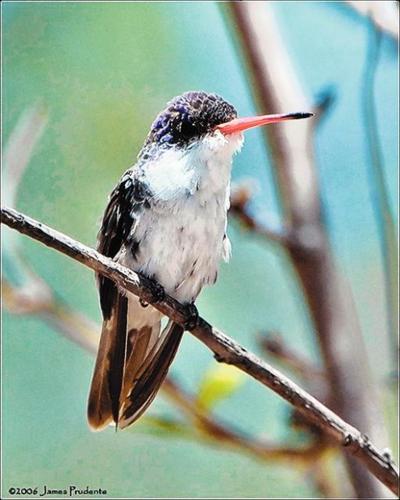
A new survey confirms what Tucson birdwatchers have long known: that Southern Arizona is a primo place to take a pair of binoculars.
Five of the 20 bird species that readers of Birder's World would most like to see live in Southeast Arizona, according to a survey published in the magazine's December issue.
And with the California condor living in the Grand Canyon in Northern Arizona, that gave the state six birds on the list, more than any other state.
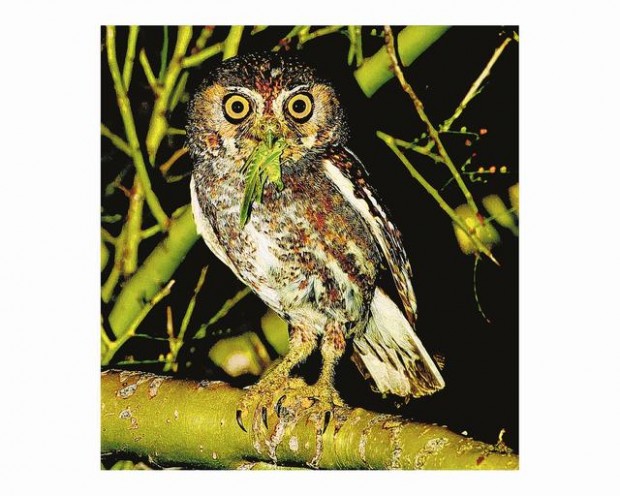
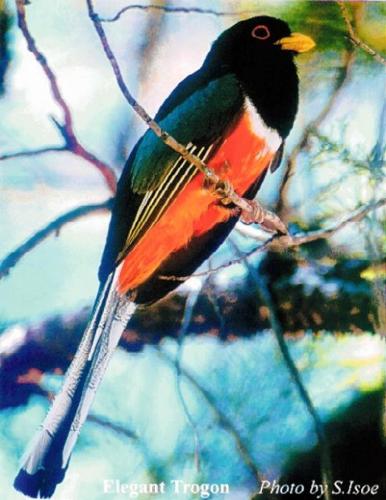
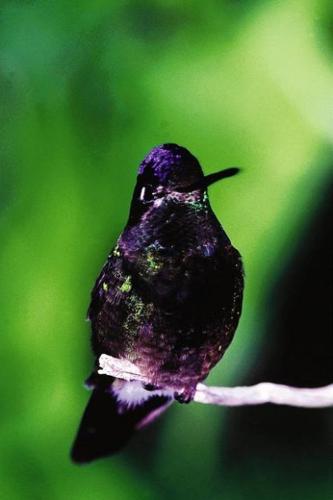
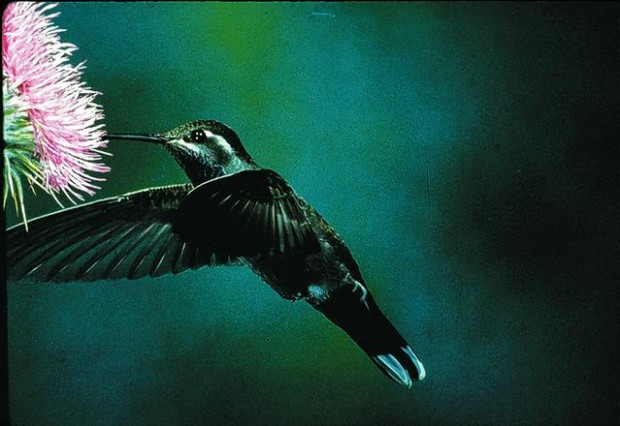
The elf owl, violet crowned hummingbird, magnificent hummingbird and elegant trogon ranked eighth through 11th; the blue-throated hummingbird ranked 20th; and the condor ranked fourth. Topping the list: the ivory-billed woodpecker, thought extinct until 2004 when scientists discovered it living in eastern Arkansas.
Naturalists have long considered Southeast Arizona a birding hot spot because it is an ecological crossroads, where the Sonoran Desert meets the Chihuahuan Desert and where the rugged mountains of northern Mexico collide with the southern Rockies.
People are also reading…
"The trogon and violet crowned — I love them every time I see them — they are strikingly beautiful," said Mark Stevenson, who has watched birds in Southeast Arizona since 1988. "The violet crowned, when you see one, it really catches your eye."
The violet crowned and the trogon typically live in Arizona during the summer, but the hummers are seen regularly in winter in the Patagonia area, while a solitary male trogon troops every year into Patagonia Lake State Park. For two years it came with a female, but the past five years it has traveled solo, said Jennifer Parks, a park ranger.
"Maybe he is just a bachelor, hanging out here," Parks said.
Males and females are both striking, with the males' rose-colored under parts contrasting with a glossy green breast.
The birds nest in Arizona but typically live here only from late spring to late summer.
Formerly known as Rivoli's hummingbird, this hummer is about 5 and 1/4 inches long. It is the longest hummingbird in the United States.
It nests and summers in canyons in the Santa Ritas, Huachucas, Chiricahuas and in southwestern New Mexico, and is occasionally seen in the Catalinas. It winters from Central America to South America.
The United States' smallest and Arizona's most abundant owl species, this bird, just more than 5 inches long, roosts and nests in woodpecker holes in saguaro cavities and trees.
Primarily a summer resident, the elf owl is easiest to detect from March to June when it makes a weird laughing call. It's common in Madera Canyon, Catalina State Park, Sabino Canyon and other areas.
Its crown is indeed violet. Its presence has long been a summertime fixture at bird-lover Marion Paton's home in Patagonia, next to The Nature Conservancy's Patagonia-Sonoita Creek Preserve.
It also visits both the Paton home and the preserve during winters. It has not established a regular presence there this month, but visitors are welcome to stop at the Paton home.
Turn west off Arizona 82 onto Patagonia's Fourth Avenue, drive two blocks and turn left (south) onto Pennsylvania Avenue. Cross Sonoita Creek. Paton's driveway lies 100 feet away.
The male's call is a loud, high "seep." It, like the magnificent hummingbird, summers at the feeders at the Santa Rita Lodge in Madera Canyon. It also nests in the Huachuca canyons. It winters in southern Mexico.


 Second wall planned across Arizona as Trump administration doubles down on border