

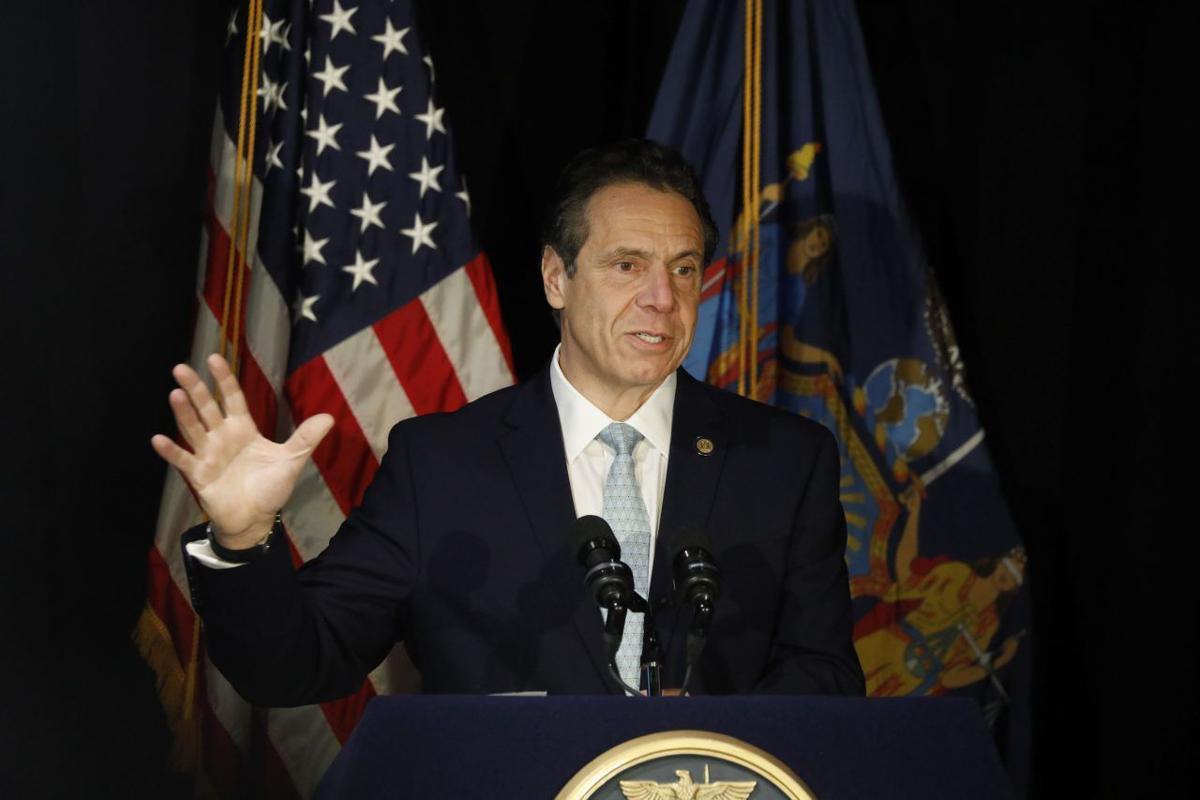
ALBANY – Officials with cash-strapped Niagara Falls were gleeful when Gov. Andrew M. Cuomo announced that the state would advance the city $12.3 million to help it avoid a red ink budget during an ongoing casino revenue sharing dispute between the state and the Seneca Nation of Indians.
Ten months later, an initial flow of that promise – $5 million – has just been transmitted to the city by the state Gaming Commission.
Why the partial payment and why now?
"There's an ongoing dialogue between our comptroller's office and the staff at the (state) office of the budget. It has to do with cash flows in and out of the city account," said Niagara Falls Mayor Paul Dyster.
Dyster said the Cuomo administration asked that the city give a couple weeks notice when it wanted to tap into the $12.3 million that Cuomo promised during an election year in 2018 to cover what the mayor described as any "rough spots" during Niagara Falls' fiscal year.
People are also reading…
"We're hoping that the Seneca Nation will comply with the arbitration ruling and this would be unnecessary," Dyster said of an arbitration panel's ruling against the Senecas earlier this year that ordered it to resume casino revenue payments to the state. The state has shared a portion of the payments with local government entities in the region.
Dyster said he hopes the remaining $7.3 million of Cuomo's advance funding vow will not have to be tapped. The governor and mayor are both Democrats.
The Cuomo administration said this week that the recent payment by the state to the city was driven by Niagara Falls’ financial needs as expressed by city officials.
Freeman Klopott, a spokesman for Cuomo’s budget office, said state officials have been working with the city since Cuomo's announcement last September to ensure services are not affected by the state's ongoing dispute with the Senecas.
“New York State sent a $5 million advance to Niagara Falls as part of our commitment to the city as we wait for the Seneca Nation to fulfill its obligation as determined by the arbitration panel. We remain in contact with the mayor’s office and will advance future funds as necessary," Klopott said.
That the budget division spokesman used the word “advance” twice in his statement illustrates the obvious: that the state will be getting the money back from Niagara Falls if or when the dispute between the state and Seneca Nation is resolved. The advance will likely be paid back by the city by the state lowering Niagara Falls’ share from any settlement funds the state might receive from the Senecas – if the tribe’s legal routes are exhausted without success.
When that might be is now anyone’s guess.
In a trip to Buffalo last September, Cuomo predicted the stalemate would be over by the end of 2018.
Yet, it drags on.
Two members of a three-person arbitration panel earlier this year said the Seneca Nation was wrong to stop revenue sharing payments with the state. It later ordered the tribe to repay the state $255 million. That tab has only grown by tens of millions of dollars more since then.
The Seneca Nation in 2002 agreed to pay the state what would eventually be 25% of its revenues from slot machines at three tribal-owned casinos in Niagara Falls, Buffalo and Salamanca. In return, the Senecas were given the exclusive right to operate full-blown casinos in a huge area of Western New York.
But the tribe, in 2017, announced to state officials that they had made their final payment – covering the final quarter of 2016. Seneca officials said their reading of the compact was that revenue sharing payments were not specifically outlined in the original compact after 2016.
The dispute, per the compact’s terms, went to an arbitration panel. Though billed as binding, the panel’s decision was brought by the tribe to the U.S. Department of Interior with a complaint that the ruling amount to a change in terms of the original compact. Rebuffed because the state needed to sign off on the Interior review – which it would not do – the Senecas in June then filed a lawsuit in federal court in Buffalo to get the arbitration award overturned.
Last Friday, the state – in the course of its regular operations – reported making 20,783 separate payments totaling $404 million to a host of private and public entities. Buried in those payments was a single line item: $5 million to the city of Niagara Falls by the state Gaming Commission, the regulatory body with oversight of all gambling ventures in the state.


