

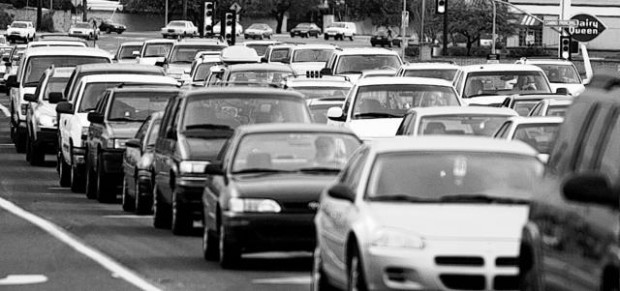
Tucson traffic is getting more congested faster than other cities of similar size, according to a report released Tuesday.
The average American living in a midsized city like Tucson spent 28 hours in 2005 sitting in congested traffic, while the average Tucsonan spent 42 hours tied up in traffic, according to the 2007 Urban Mobility Report, released by the Texas Transportation Institute.
That makes Tucson the 25th-most-congested urban area among the 85 included in the report released Thursday. Phoenix, with 48 hours of annual traffic delays, ranked 15th.
At the No. 1, or worst, spot is Los Angeles, where the average driver wasted 72 additional hours in congested traffic in 2005, the most recent year of data in the report. Tied at the best spot are Brownsville, Texas, and Spokane, Wash., where drivers spent eight extra hours a year stuck in traffic.
People are also reading…
The report shows the congestion forced drivers in Tucson to use an extra 10 million gallons of gasoline, which lands us at No. 41 for excess fuel consumed.
But one of the more concerning figures is the increase in total delay. Compared with other medium-sized cities, those with 500,000 to 1 million people, Tucson's is growing at a much faster pace than average.
In the data for 2004, the average Tucson driver spent 38 hours in traffic jams, meaning it went up four hours in a year,
"Congestion is a problem in America's 437 urban areas and it is getting worse in regions of all sizes," the report says.
The report also shows with the use of improvements such as freeway incident management, arterial street signal coordination and arterial street access management, Tucson drivers save 896,000 hours that would have been otherwise spent in congestion.
Since the Texas Transportation Institute report was first released with data from 1982, Tucson drivers have seen an increase of 18 additional hours per person in congestion.
The calculations in the report assumed each city had the national average of people in each car — 1.25 per vehicle — and that commuters traveled to work 250 days a year.
They were also taken during "rush hours," which were considered to be from 6 to 10 a.m. and from 3 to 7 p.m., so cities could not receive credit for being uncongested at off times, such as 3 a.m., the report says. The rush hours are considered to carry about 50 percent of the total traffic on roadway systems.
Some of the solutions to the problem nationwide include adding capacity to streets, which Tucson has planned in several of its Regional Transportation projects; changing usage patterns or staggering work hours so workers can come in before or after the typical shift begins, to stagger the flow of the traffic and planning development so it doesn't add to the problem.
Buses and other mass transit also help reduce the amount of travel time in congestion and dollars spent on congestion, the report says.


