

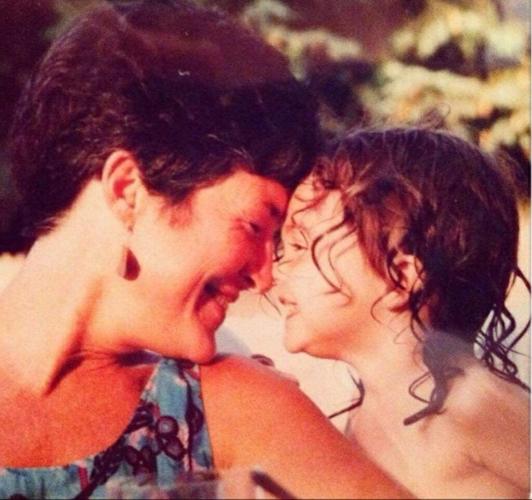

From the time when Alison Lyon was a toddler in Hamburg, her mother maintained the same emphasis at Christmas: Marcy Lyon always said the best kind of present is one you make yourself, a philosophy that gradually became such a family ethic that Alison and her four grown sisters and brothers now pick names and spend months each year making gifts for one another.
To Marcy, the ultimate statement on that ideal is a letter Alison received, a few weeks ago.
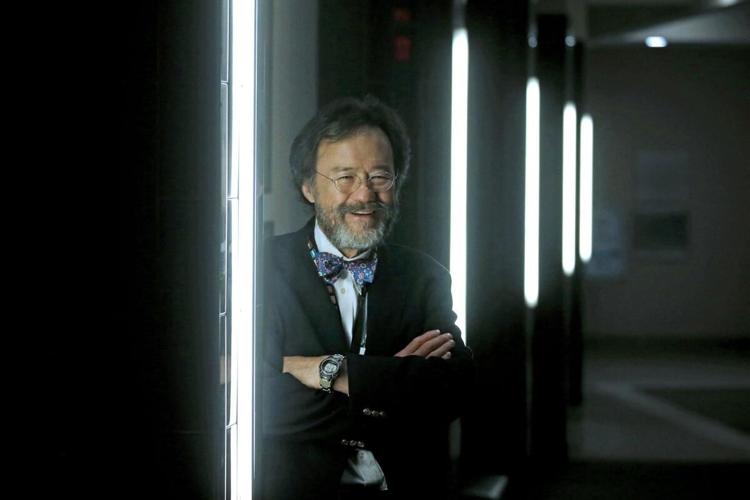
The message was anonymous and its point of origin unknown, because the rules say it must be that way for at least a year. It was from a mother and father whose baby had a bone marrow abnormality that created the chance of life-threatening blood cancer, according to Dr. Philip McCarthy, longtime director of the blood and marrow transplant program at Roswell Park Comprehensive Cancer Center.
At the heart of the note to Alison was this thought, which she hopes might inspire others to join a registry of potential marrow donors:
People are also reading…
“You’re the reason our little boy is with us right now and is able to celebrate another holiday season with our sweet family.”
McCarthy, who has overseen hundreds of transplants and will shift into a role as director emeritus of that Roswell program in the New Year, said the idea defines Christmas, at least as it ought to be.
“This is probably the most selfless thing you can do, to give life to someone else,” he said.
Alison, not yet past her 30th birthday, said she agrees with the general notion – though she said that standard, as she will explain, best applies to someone else.
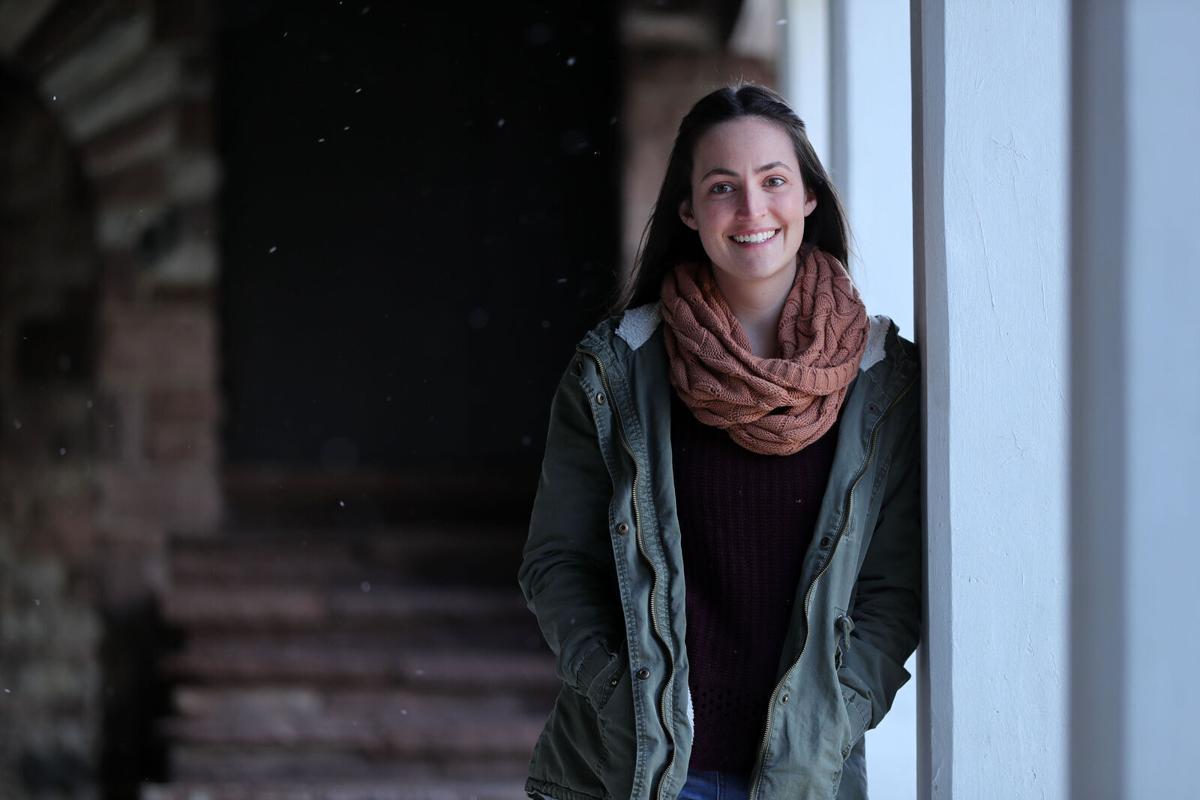
She was working for a construction company last summer when her cellphone buzzed as she put down tiles in a bathroom. It was a representative of Be the Match, the National Marrow Donor Program, saying she was a close match to a patient in urgent need of a transplant.
Alison and her younger sister Emma, a nurse at the Oishei Children's Hospital, had signed up for the registry a few years earlier, to show support when a family friend needed a transplant. The call came as an utter surprise. Emma, it turned out, was also a strong match, and her initial hope was to be the donor.
Yet the call came on the brink of her wedding to Sam Sortisio, and there was no way to take part – and to recover from soreness that can last a while – without disrupting reservations and travel plans many people had set long ago. One main factor made the decision easier.
Alison immediately said yes.
“She jumped in and she didn’t even tell us right away,” said Marcy, who only learned of her daughter's choice when someone else mentioned it in passing.
It was not until Alison arrived at Roswell for testing and preparation that she found out, through McCarthy, how the recipient was not even of toddling age. While McCarthy is constrained from revealing too much about the situation, he could offer this:
Without the transplant, which involved harvesting a small amount of marrow from Alison’s pelvis while she was under anesthesia, the child would have been at high immediate risk.
“What she did is give the gift of life to a little kid,” said McCarthy, a point emphasized by the parents, in their letter.
“We’re only a couple of months post-transplant,” they wrote to Alison, “and we still don’t know what the future holds for our little guy, but you’re the reason that we’ve had more time.”
Erica Sevilla, spokesperson for the national marrow program, said about 12,000 people are waiting for marrow transplants, and that a match – if it happens once someone agrees to a simple cheek swab by visiting bethematch.org – is based upon millions of entries in the registry.
“When you’re matched with someone, you might be their only chance for a cure,” Sevilla said of the magnitude of Alison’s decision. “And obviously, this was a young family that would have been bereft without their child.”
Marcy Lyon said her daughter’s choice reaffirms how Alison has always approached the world. “She sees a need, she quietly observes and she fixes things,” said Marcy, who recalls – when she needed new brakes on her car – how Alison studied up and did the job herself.
Going forward with the transplant, then, was no surprise, but Alison turns her mother’s point around: That is a code she learned at home, and it speaks to the power and meaning of the way her family is gathering this week for Christmas.
One of Marcy Lyon’s passions in life, at 65, is gardening. As she tended her plants during the fall, a nagging ache in her back would not go away. Last month, her doctor ordered routine X-rays. The technicians saw a mass. Marcy has lung cancer, which she called "a total shock."
She has gone through a round of radiation treatments, and is now into a form of chemotherapy by pill. She moves ahead by looking toward great events in 2022: Emma is pregnant with Marcy’s first grandchild, and next summer Alison will marry Nico Zarcone, a musician Marcy calls "the love of her life."
More immediately, there is Christmas. Marcy's sons, Drew and Lucas, live in Colorado. Daughter Elyse moved back to Buffalo in July from Minneapolis, and Marcy said this will be the first Christmas in at least five years when everyone is home at the same time.
They are all vaccinated and boosted, and they intend to be cautious and wear masks around their mother, amid another Covid surge. Still, Marcy said her gift is simply having everyone home, a full gathering confirmed when Drew called a couple of weeks ago to say he would be here.
“It might have been in the works between them,” she said of her children, “but if so, I wasn’t informed.”
Alison, whose parents divorced when she was a teenager, said she sees Marcy’s example in each of her siblings. “She raised five kids and she was just always very selfless and she definitely influenced my perspective: If there’s something you can do for someone else, you do it,” Alison said.
To learn of her mother's cancer – only days after reading the letter of gratitude – offers deep and aching proof of what Marcy taught them about this time of year since they were born. The tradition of creating gifts for each other has reached a point where Lucas is in charge of choosing names in early fall, and then the siblings spend months on their projects, leading to an exchange Christmas morning that again brings them all home.
The gifts might involve silk screening or handmade tea towels or a piece of furniture or even the 3D image of a beloved dog, a ritual that totally avoids the sense of manic stress intertwined with last-second trips to the mall. The point, Marcy said, is how the Yuletide becomes “deeply thoughtful and deeply meaningful, just to see what the kids do for each other and how they give of themselves.”
All of it comes together as Christmas, including a daughter who saved a stranger’s life based on everything she learned from her mom.


