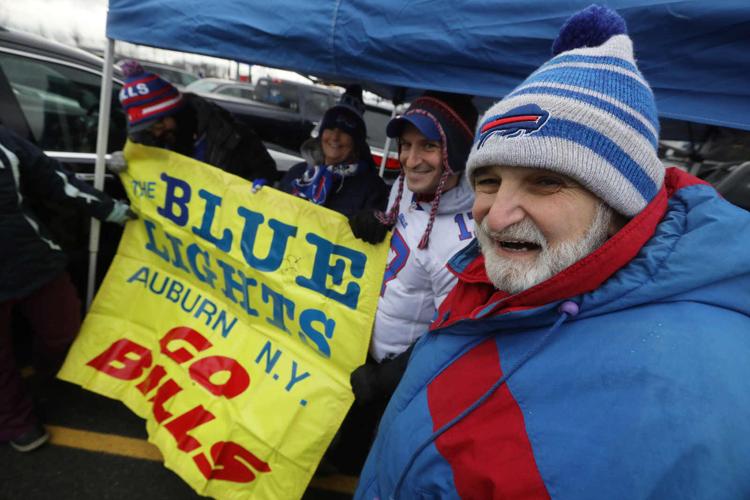
The Blue Lights of Auburn.
Heard by phone, the words triggered a flash of memory for Tom Weston, but it took a moment or two for him to nail it down – a reaction I suspect many graying Buffalo Bills loyalists will share.
Given a second, he came up with it. Yes, in the stands behind the visiting bench, near midfield! At what was then called Rich Stadium, they were the regulars with that sign everyone saw.
Weston, 81, worked for years as an Erie County sheriff’s deputy. After retiring, he helped provide security at Bills games, where his duties included making sure the opposing coach could get on and off the field, without worries.
“It was a different time,” Weston said. This was a solid 30 years ago or more, when things felt a little looser along the sidelines. Once, before a game, Weston brought along a chipper and killed time by knocking a few golf balls through the goalposts. He also built a rapport with a collection of fans who sat in the row closest to the visiting team's bench, the ones who always hung their sign in a high-profile place:
People are also reading…
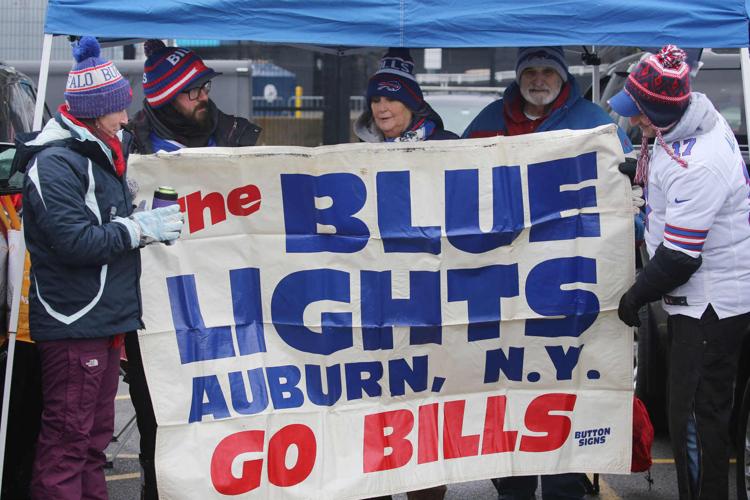
"The Blue Lights. Auburn, N.Y. Go Bills."
Despite what it might seem, it had nothing to do with beer. The Blue Lights, it turns out, were a Cayuga County wedding band. Weston was friendly with the regulars who routinely drove 125 miles for front-row seats. He used to let them through a little gate and onto the field to tie down the kind of banner no longer allowed on field-level walls in National Football League stadiums.

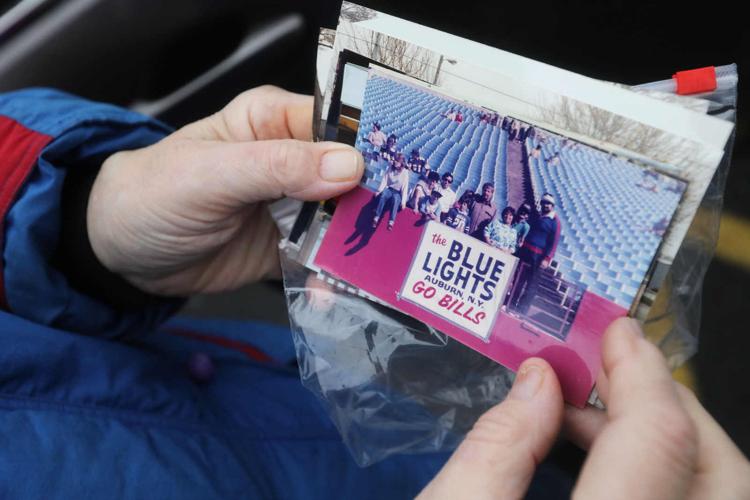
Salvatore "Sam" Giangreco,, of Auburn looks through photographs from the heyday of the Blue Lights sign at then-Rich Stadium.
“They were good guys,” said Weston, who immediately asked me what became of them.
For decades, I had wondered the same thing. I was a teenager when I first noticed the sign, and it was only through an 89-year-old reader and correspondent named Mike Ricci, who grew up in Niagara Falls and became an educator, umpire and writer in Auburn, that I learned of the folks I had to call: The couple responsible for the banner – Salvatore “Sam” Giangreco and his wife, Sheila – are both in their 70s and still season ticket holders who will be there in the cold at the game against the Patriots Saturday night.
Sam, a barber's son, is a longtime Auburn School Board member and a retired school custodian. Sheila is a retired insurance broker. They are great-grandparents who laugh about how they met when they shared the same divorce lawyer in the 1970s, leading to a marriage well beyond 40 years.
Their Bills caravan is typically down to just them, though at peak it included 10 regulars who helped make the Blue Lights into a familiar part of the stadium vista through the golden age of the 1990s.
If you need proof, take a look at how prominently the sign shows up in footage of the great 1993 comeback against Houston.
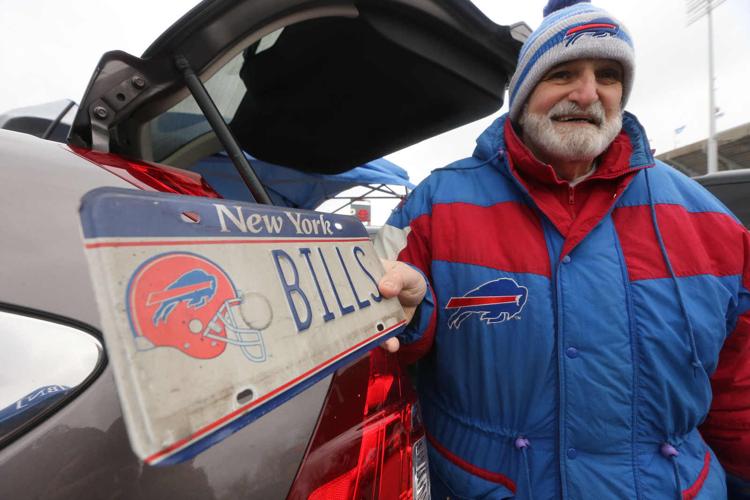
Asked about the couple's Bills allegiance, Sheila – who has already borrowed a grandson's snowpants for the game – said simply: "Oh my God!" They are happy to pull out vintage New York Bills license plates from that space in time when the team used red helmets. Even so, few who see them bundled up Saturday night will realize how this couple carved out a unique piece of the fan landscape long before the rise of today's Bills Mafia.

Sheila and Salvatore "Sam" Giangreco, of Auburn, third and fourth from right behind the sign, with one of their vintage Blue Lights banners. Their daughter-in-law Jessica is to the left, their son Kevin to the right, and a friend, Bill Alferi, is also behind the sign.
The Blue Lights came together when Sam and his friends were teenagers at Auburn's old Mount Carmel High School. Guitarist Bob Spadafora said it was his father who suggested they model their name after "Blue Light," a short-lived 1966 television show starring Robert Goulet. Before long, a band featuring Giangreco, Spadafora, Mick Savino, John Bertonica and the late Ron Garropy was a hot ticket at proms, parties and many, many weddings. Their signature tune was “I Want to Do It,” inspired by Bobby Comstock and the Counts, though Giangreco said, yes, they absolutely played "Shout."
Except for brief reunions, the band dissolved years ago. While Spadafora said the other Blue Lights were occasional travelers to Bills games, the team was really a Giangreco obsession. He and Sheila were close with another Auburn couple, Ken and Diane Kudla, who were regulars since the Lou Saban era, a time when creative banners earned big attention. With front row seats along the 40, Giangreco had an inspiration.
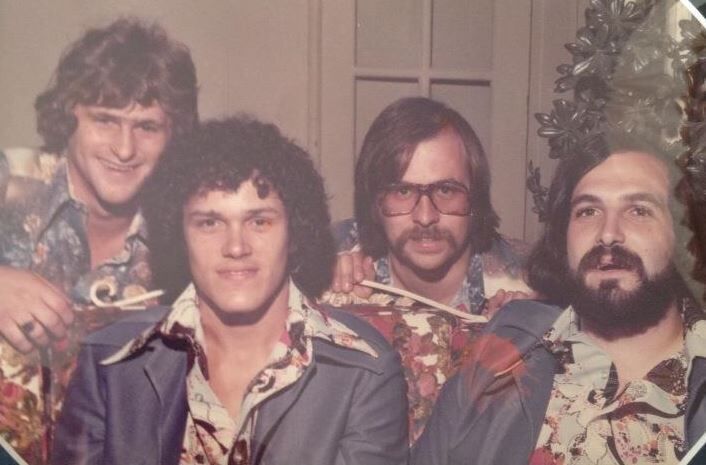
The Blue Lights of Auburn, in the 1970s, with Salvatore "Sam" Giangreco to the right.
He went to Roger Button, an Auburn signmaker, and paid maybe $60 for two signs, one yellow and one white, as wise an investment as ever made by a wedding band. As Giangreco hoped, countless Bills fans at some point over the years had to wonder:
Who and what were the Blue Lights?
That banner turned into a stadium constant. It was on the wall when Jerry Butler, Joe Cribbs and Joe Ferguson led the Bills in 1980 to a big win over the defending champion Pittsburgh Steelers, and during the 1988 season that was such a breakout year, and for the 1993 comeback that remains one of the most electrifying days in football history. It stayed there, Giangreco said, until the band finally broke up and sign policies changed.

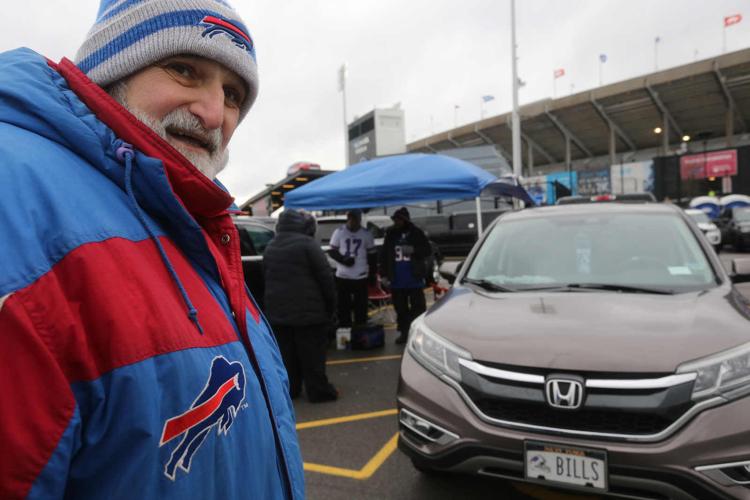
Sam Giangreco, of Auburn, has been a fixture at Bills games for decades, even having the custom license plate "BILLS", which he acquired in the 1970s.
The Giangrecos kept going. True believers, they journeyed to the first three of four Buffalo appearances in 1990s Super Bowls. They had tickets to the fourth one in Atlanta but figured – in the kind of mystical reasoning well-known to the faithful – that maybe staying home would provide a cosmic jolt to help change the team’s fortunes.
Now they hope whatever luck they stashed away that year will pay forward in this rubber game against the Patriots.
They offer many tales about Bills games and the power of the sign, about legends who wandered over for a few moments of conversation, about people who saw the banner on television and called from the far side of the country to recall memorable weddings. But of all those stories, they say one means the most.

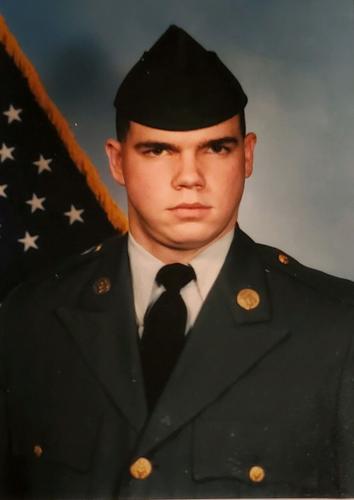
Jeff Campbell, during his service with the Army.
In the mid-1990s, a young soldier from Auburn, Jeff Campbell, was serving with the U.S. peacekeeping mission in Bosnia. He contacted his parents, Jim and Renee Campbell, in excitement: He had been watching a Bills game in a faraway place through the American Forces Network, when suddenly he noticed a sign along the stadium wall.
It was for a wedding band everyone knew in his hometown.
An emotional Campbell told his family how he felt a sudden, overwhelming sense of upstate loyalty. He would eventually return to Cayuga County, where he married his wife Jennifer and followed his dad, a state trooper, into a career in law enforcement with the New York State Park Police. Campbell died in 2020, at 45, after years of struggle with an autoimmune deficiency that his mother said the government connects to his time in Bosnia.
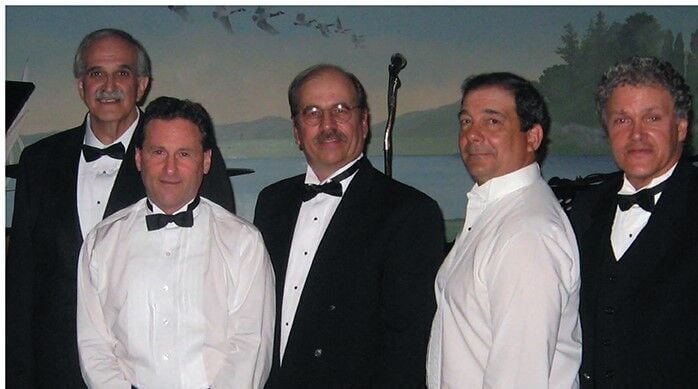
The Blue Lights at a more recent reunion, Salvatore "Sam" Giangreco to the left.
“He was a Bills fan,” she said, remembering that moment with the banner, “and when I think of those guys, I think of what they meant to Jeff when he was overseas so long ago.”
That sign is now long gone from the stadium, totem of another time, but Sam and Sheila Giangreco promise you this: If the Bills find a way to someday win it all, the last of the Blue Lights might just have to gather for one more song.