

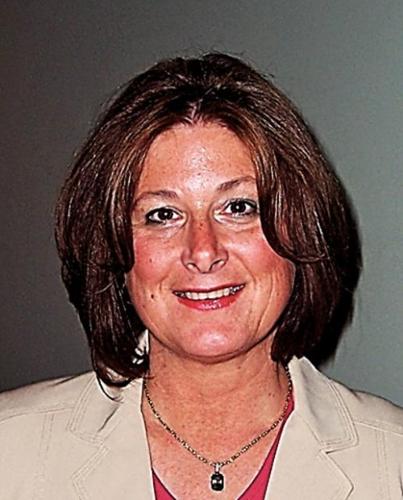
When Jackie Semar became interested in adoption almost 30 years ago, she had no idea she would become a champion for poverty-stricken children around the globe.
Now, as executive director for the International Child Foundation, the Tucsonan advocates for international adoption, supports children's welfare and educates people about the economic plight families and children in many developing countries face.
"International adoption has a great deal of complexity with respect to learning about the cultures, politics and economics of other countries and how all those factors affect children," Semar said. "I know that adoption is a band-aid, and every day I try to see why children are destitute and what will solve the problem at its source."
Semar helped found the International Child Foundation in 2003. The non-profit group facilitates about 20 international adoptions a year of children from countries including Haiti, Guatemala, China and Kazakh-stan.
People are also reading…
It also provides financial support to subsidize nutrition at an orphanage in Haiti, which the World Health Organization ranks the poorest country in the Western Hemisphere. About 65 percent of the Haitian population lives below the national poverty line; more than half the people live on less than a dollar a day, according to the United Nations World Food Program.
Semar has felt compelled to provide as much help as possible to Haitian orphanages where the majority of children have been orphaned due to poverty, as opposed to the social issues more common in many other countries. She believes many Americans are unaware of Haiti's history and current humanitarian crisis.
Though it was the first republic of people of African descent, the country has been marked by political strife for centuries, and now the infrastructure, economy and government are in chaos as the country faces a major food shortage.
Deforestation, corruption and global economics have made it virtually impossible for Haitians to make a living from the once-profitable sugar-cane and agricultural market, Semar said.
"Haiti is constantly undercut by the U.S. and other countries so people can't make enough money to live even if they work 15 hours a day," Semar said. "If the U.S. and other nations would raise the price of our sugar even 2 cents a pound, it would change the world for Haiti."
With the world shrinking due to technology and the increasingly global economy, Semar views social responsibility as fundamental to human welfare.
"We are trying to help individual children and promote economic awareness about what will help poor countries," she said. "Certain policies are detrimental, and if we have an awareness that neighboring countries are suffering for reasons that are not too painful to fix, it is the right thing to do. Then families can press their representative to make decisions in Congress that will not be detrimental to other countries."
Semar is doing her part by offering financial support to provide food to Foyer de Sion orphanage in Port-au-Prince. Proper nutrition in Haitian orphanages often becomes a challenge when children graduate from infant formula to solid foods; peanut butter is a high-protein staple for diets that would otherwise consist mostly of carbohydrates such as beans and plantains.
Overall, she believes that providing good nutrition, loving homes and education will benefit not only each child, but individual communities and eventually entire countries. Failure to do so will take a toll on society.
"The outcome for our country or any country where children grow up in institutions or are marginalized is very grim. … It is just so sad," she said. "It is the loss of a life."
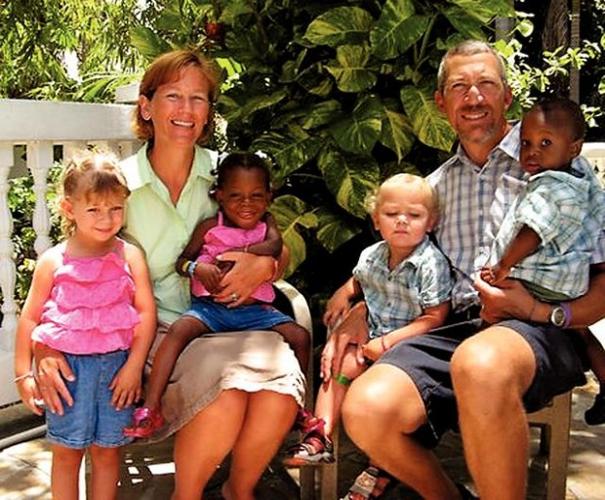
Heather Lacey and Eric Harper and their children, Julia and Mason, are responding to the increasing need for international adoption. The Longmont, Colo., family is in the process of adopting two Haitian children, Clara and Emerson. Lacey said the experience has changed their thoughts about the world, bringing new perspective to complaints such as high domestic gas and food prices.
"We go to Haiti and say, 'American life is so easy.' Unless someone is mentally ill or doesn't wish to receive services, they are not likely to starve or die of TB or have intestinal parasites; in Haiti that is all common," Harper said. "It makes us grateful for what we have here and frightened for the way that the rest of the world lives that many of us have no clue about."
How you can help
Support Haitian Orphans through the International Child Foundation.
The International Child Foundation is collecting tax-exempt donations to buy fortified peanut butter for children in Foyer de Sion orphanage in Port-au-Prince, Haiti. All donations directly benefit children; no contribution will be used for administrative costs, and the nonprofit organization will match donations up to $700.
For more information on this project or international adoptions, go online to www.childfound.org or call 531-9931.
Donations may be mailed to 302 E. Suffolk Drive, Tucson, AZ 85704.




 New Tucson lounge to embrace dark and cozy


