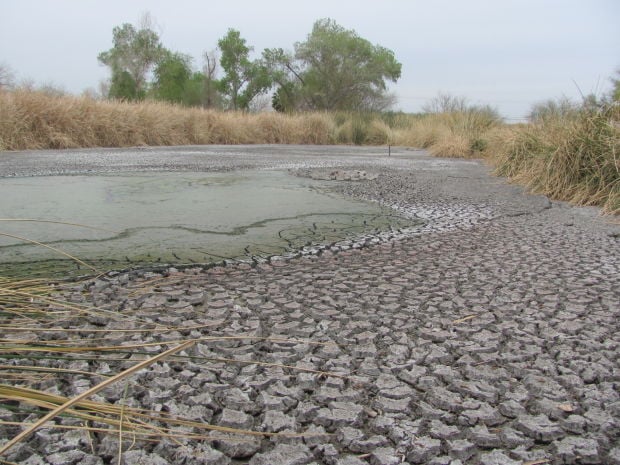
Large expanses of the ponds at popular Sweetwater Wetlands are bone dry, leaving some visitors disappointed — but in this case drought isn’t the culprit.
Tucson Water officials say they’ve allowed water levels at the wetlands — which serve both as a water treatment facility and recreation site — to drop dramatically. The reasons: to accommodate a controlled burn of vegetation at the site and switch water sources from an old wastewater treatment plant to a modern reclamation facility.
Water levels are expected to rise in March as the wetlands, which are northwest of Prince Road and Interstate 10, get water from the new facility.
A STARTLING SIGHT
“This looks horrible,” said wetlands visitor Norm Newton as he and his wife, Cecilia, looked out at a dry expanse of pond bottom. “We’ve been here in years past when there was plenty of water, and the place was just loaded with ducks and shorebirds. Now, there’s just a little water left in low pools.”
People are also reading…
Startling as the sight might be to lovers of the wetlands, it’s all part of a plan, said Fernando Molina, a spokesman for Tucson Water. The agency oversees the wetlands.
The sharp drop in water levels “is primarily due to the fact that we’re getting ready to do a controlled burn of vegetation as part of a mosquito-control program,” Molina said. “It involves drying it out (by reducing flows from water treatment facilities) so we can do the burn. ... If it’s totally dry, that’s what we want.”
Burning excessively thick vegetation is necessary to allow mosquito-controlling larvicide to be spread evenly, he said.
This year’s controlled burn is scheduled for Tuesday.
The second reason for the low-water levels is explained by a notice posted on the Sweetwater Wetlands website.
“The scheduled and much-anticipated transition from the old Roger Road Wastewater Treatment Plant to a new, modern treatment facility is resulting in temporary reduced flow to the Sweetwater Wetlands,” the notice says. “Because of the reduced flow, the water level in the wetlands ponds will be lower. By mid-March 2014, water levels should rise as the wetlands receives the new, higher quality water from the treatment facility.”
A LOW-WATER BENEFIT
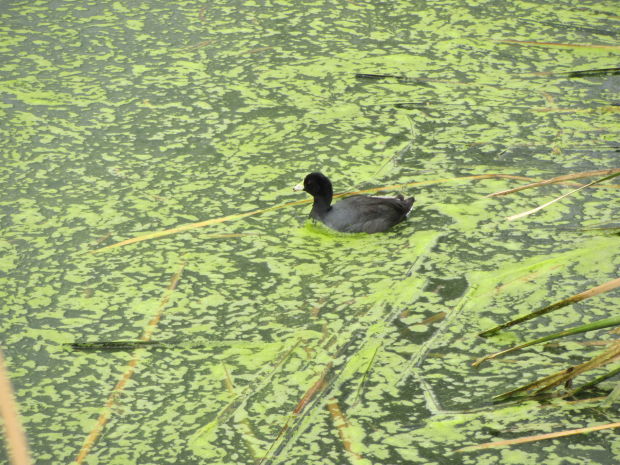
One benefit of the lower-than-usual water level is that some species sought by bird-watchers came out of dense vegetation this week to get nearer to the water.
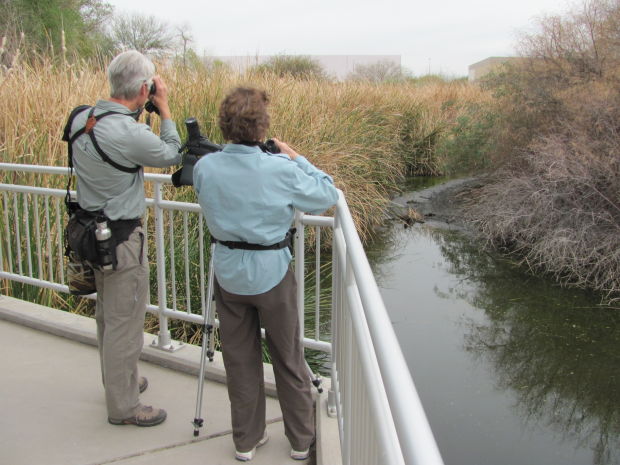
“Sora,” said bird-watching guide Laurens Halsey as he and Heather Smith used binoculars to spot a small elusive waterbird of that name near a remaining patch of water.