

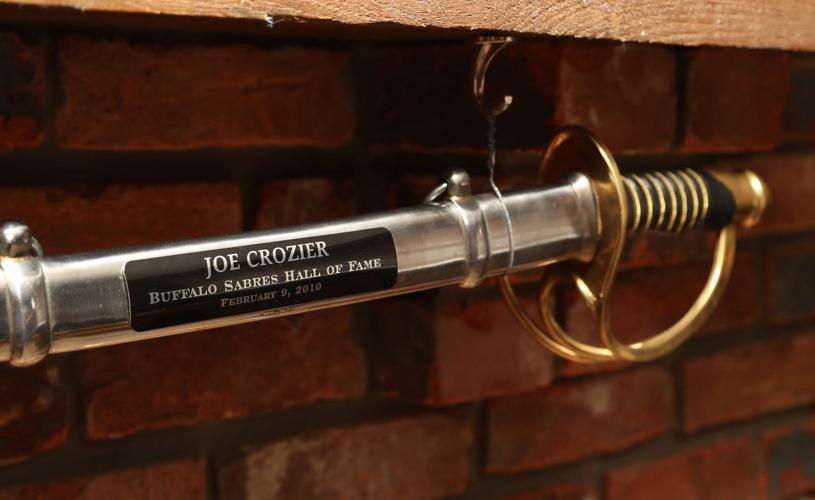
Joe Crozier’s memories were established over almost 90 years. A few, in mysterious ways, explode toward the surface.
One tale is especially dominant, three words he shared last week, repeatedly, even as I shook his hand in his Amherst living room.
Thank you, Sabres.
“Oh, it was the greatest thing going, the greatest thing ever,” said Crozier, 89, who began to show the first signs of an accelerating dementia about five years ago.
His son, Rich Crozier, an educator and longtime hockey coach at St. Joseph’s Collegiate Institute, suggested the interview for fundamental reasons.
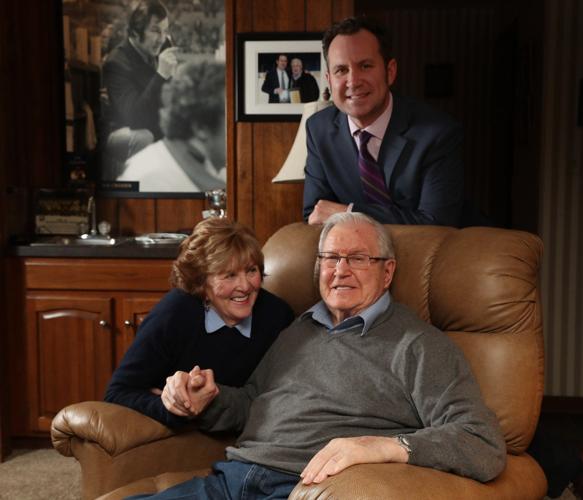
Rich wants the community to understand the appreciation that he and his brother Greg feel toward their dad. He wants to emphasize the love and gratitude their mother Bonnie lives out every day, when she brushes Crozier's hair or buttons his shirt or reassures him if the world seems overwhelming.
People are also reading…
“He took care of us,” Bonnie said. “He went to work for us. He sacrificed for us. Taking care of him now? That’s an honor for me.”
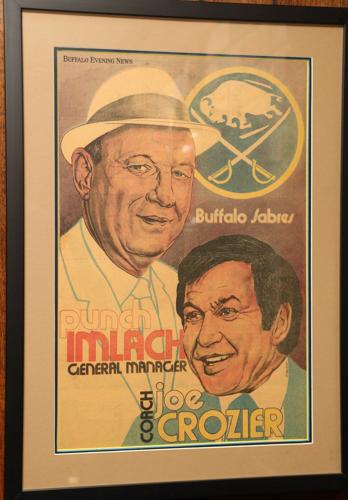
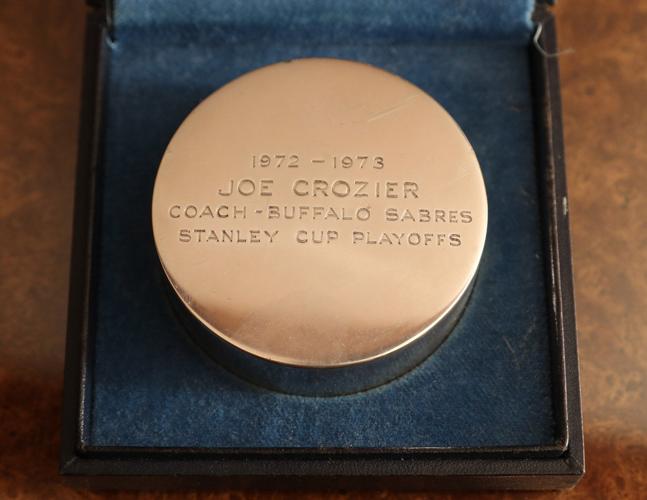
The tale of the "thank you" chant brought Crozier forward in his chair. He was coach of the Sabres in the 1972-73 season, succeeding hockey legend George "Punch" Imlach, the team's general manager. Imlach was both a friend and a tumultuous mentor. The Sabres were in their third season, at a time when expansion clubs were historically awful.
It was different in Buffalo. Crozier put together three brilliant guys on a line that came to be known as the French Connection. His team won 37 games and made the playoffs, earning a kind of competitive booby prize against a great Montreal club that had lost only 10 games all year.
The Canadiens won three straight and seemed prepared to sweep. But the Sabres pulled out a 5-1 win at home and a 3-2 overtime win at the Forum in Montreal. The startled sports world took notice.
In the sixth game, at the old Memorial Auditorium, the soon-to-be-champion Canadiens finished the deal, 4-2. In the final minutes, in a lasting image in Buffalo sports history, a chant boomed from the sellout crowd. Buffalo was caught up in hard economic times, and the crowd expressed how this team had served as a rejuvenating tonic.
Thank you, Sabres.
Crozier was focused on the game, frustrated by impending defeat, when the full power of those words soaked in.
“They would not stop,” he said. In a sense, the chant never left his head. It was enough, years later, to make a hockey pilgrim glad to return to this city that embraced him.
"Anyone who goes to Buffalo, they're the happiest people in the world," Crozier said.
He was born in Winnipeg, one of eight children. His father died when he was a teenager, and life often equated to struggle. Crozier and his friends played hockey on frozen roads, creating makeshift shin pads from Sears catalogs, using frozen horse droppings as pucks.
At 18, Crozier joined the Brandon Wheat Kings, a juniors team, the first stop in a career as a defenseman that included a quick appearance with the Toronto Maple Leafs. By 1963, he was a coach, a profession that led to three Calder Cup championships with Rochester of the American Hockey League.
The playoff run with the Sabres represented a new peak. Yet he left a year later to become general manager, and then coach, of Vancouver of the upstart World Hockey Association.
That league and his career were soon engulfed by tumult, touching off another multi-city pilgrimage that included a short return to the NHL with the Leafs, before he won the Memorial Cup, a juniors championship, in Kitchener, Ont.
"He was always a teacher," said Bonnie, who met Crozier decades ago, when she worked behind the desk at Toronto's Royal York hotel. Years later, what began as a conversational friendship turned into something else when the then-Bonnie Sheehan asked the coach for a character reference.
How could he speak to her character, Crozier wondered, if he barely knew her?
They went to lunch, beginning a courtship that led to their 1974 wedding. It was a second marriage for Crozier, who has three older children. Bonnie would soon give birth to their two boys. Greg grew into a standout hockey career that included an NHL appearance with the Pittsburgh Penguins, before he settled in Rhode Island.
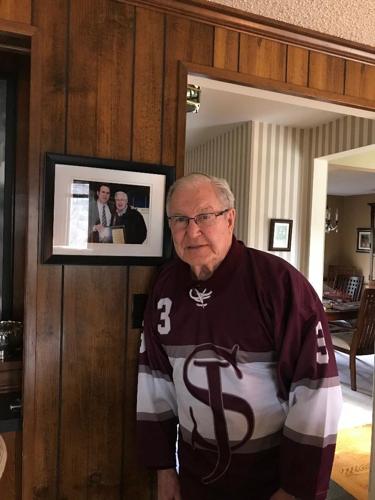
Rich became a teacher, then an assistant principal at Smallwood Drive Elementary School in Amherst. He also coaches at St. Joe's, where his teams have won five state championships. Before every game, his father – a believer in the power of ritual – puts on a St. Joe's jersey and Bonnie texts the image to their son.
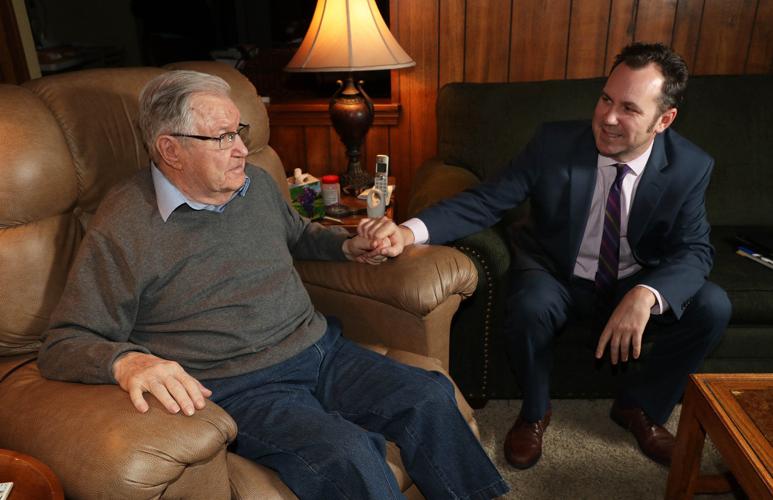
In his living room, at the stage of dementia where emotions are an open book, Crozier looked up last week as Rich described some lessons from his father, who took it in and said exactly what was on his mind.
“I love you very much,” Crozier told his son.
Bonnie and Rich speak frankly of how Crozier sometimes struggled with depression, a condition for which he eventually sought treatment. They hope that experience underlines just how prevalent depression is, that it helps others going through the same thing, and the tale made a larger point:
While they were surrounded by hockey mementos and photographs, Rich Crozier was not really there to discuss hockey. He wants people to know about his father's lasting and selfless gift.
Rich was born amid a professional whirlwind that caused Crozier to take eight different jobs in 13 years. Finally, in 1983, Sabres coach and General Manager Scotty Bowman asked Crozier to again coach in Rochester, and then brought him back to Buffalo as an assistant.
In 1986, Bowman was fired. Crozier, at 57, faced a hard decision about whether to hit the road again. “He gets to a point in life where everything is hockey, everything is about winning,” said Rich, who knows his dad dreamed of a crescendo involving the Stanley Cup.
Instead, he looked at his wife and sons and stepped away.
“I knew it was time to go into other things,” said Crozier, who acknowledges the pain of that decision. Buffalo sports historian John Boutet speaks of Crozier as a central figure in lifting the early Sabres into hockey prominence. Since he was a boy, his entire life was built around fierce competition.
In his late 50s, Crozier let it go. Rich was in elementary school. He said some of his childhood classmates are still among his closest friends, one example of how his father's choice gave the family a new and enduring normalcy.
Crozier stayed with the Sabres. He did some scouting and then moved into the ticket office. He never formally retired, working until his health made the job impossible. He and Bonnie remain loyal to the club – they were as overjoyed as anyone by the early season winning streak – and they are astounded at how many people around Buffalo recall their name.
"The hockey's all past," Crozier said, "but they know who I am."
Many graying players keep close tabs on their coach. Bonnie and Rich noted how Gilbert Perreault, the great Hall of Famer, drove 10 hours for a visit not long ago. As for the fans, a clerk in a store asked Bonnie the other day if she is related to Coach Crozier, and she replied that she married him. The kid’s face made her realize:
He was speaking of her son.
Rich said a day will come when he retires from education, and he dreams about carrying on the family legacy as a coach at that point, on the pro level.
For now, his mission is giving new power to the words so vivid in his father’s mind. More than 45 years after a chanting crowd inside the War Memorial reaffirmed that champions do not need to win it all, a son has a simple message for a dad who left the bench:
He says thank you to Joe Crozier, for knowing when to stop.
Sean Kirst is a columnist with The Buffalo News. Email him at skirst@buffnews.com or read more of his work in this archive.


