

WASHINGTON - A team of top government lawyers has quietly begun studying legal strategies for the Obama administration to mount a challenge to Arizona's new illegal immigration law, including the filing of a federal lawsuit against the state or joining a suit brought by others who believe the bill unfairly targets Latinos.
President Obama and Attorney General Eric H. Holder Jr. have denounced the law, leading to expectations that the administration will take action soon.
Obama said Wednesday that the law, which allows police to demand proof of citizenship, threatens the "core values that we all care about."
Attorneys from the Justice Department and the Department of Homeland Security are examining legal options and hope to make suggestions by mid-May, before the Arizona law takes effect sometime in mid-summer, officials said.
People are also reading…
Adding urgency to the process, the White House voiced concern that other states may adopt laws like Arizona's. A Utah lawmaker already has proposed such a measure there.
Grounds for a possible U.S. challenge could include charges that the Arizona measure unlawfully pre-empts the federal government's role in securing the country's borders. Or, federal officials could file a civil rights challenge, claiming that the law encourages racial profiling.
"There are multiple options that the administration has," Omar Jadwat, staff counsel with the American Civil Liberties Union's Immigrants' Rights Project, said Thursday. "They can and should pursue every option within their authority."
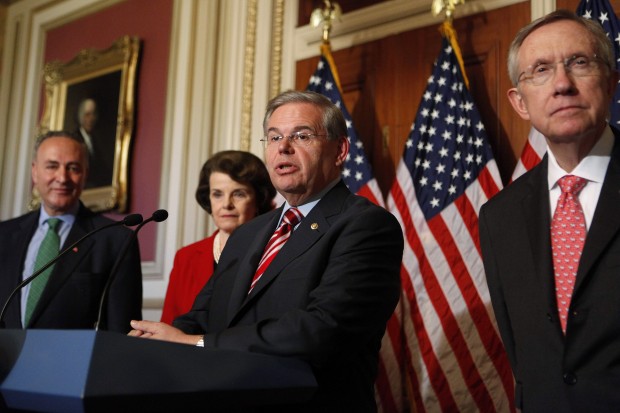
The legal deliberations come as the Obama administration and congressional Democrats hash out plans to overhaul federal immigration laws. Democrats on Thursday outlined their own approach, proposing that benchmarks for securing borders be followed by steps to allow undocumented immigrants to remain in the United States.
The administration believes that a court challenge in Arizona would send a message that Arizona should reverse course, and that other states should not follow Arizona's lead.
"In the absence of some sort of coherent national policy, there's always going to be an impetus for this kind of thing - particularly in states that are border states or near the border where there's been a great deal of activity," White House senior adviser David Axelrod said in an interview.


