

Drunken-driving arrests are down and the percentage of DUI-related crashes are up since the Tucson Police Department cut its DUI squad in half last year in response to budget cuts, officials said.
Tucson police made 3,206 arrests during the 2009-2010 federal fiscal year, which starts Oct. 1, Tucson Police Department statistics show.
That number dropped to 2,388 during the same time period in 2010-2011, which translates into a 26 percent decrease in arrests.
Meanwhile, the percentage of DUI-related crashes rose from 4.4 percent of all crashes during the 2009-2010 federal fiscal year to 5.3 percent in 2010-11.
Police officials say the decline in arrests and rise in DUI-related crashes are the result of slashing the DUI squad from 14 to seven officers last December.
"We try to supplement that with overtime, but it's not enough to cover every day of the year," said Sgt. Chris Andreacola, supervisor of TPD's DUI squad.
People are also reading…
As a result of the cuts, DUI officers now work four days a week, Wednesday through Saturday nights, instead of seven, Andreacola said.
The squad also didn't conduct any DUI checkpoints this year, focusing instead on saturation patrols that let officers monitor places with a high rate of DUIs, he said.
Police officials say the traffic division, which includes the DUI squad, will see an increase in officers as the department hires new officers. Andreacola said he expects to add an eighth officer next month.
The Tucson Police Department was the only area law-enforcement agency to cut its DUI squad.
Anti-drunken-driving activists, lawmakers and even DUI lawyers say the officers are valuable because of their specific training and experience.
"Not all officers are trained to conduct DUI investigations," said Cyra Trujillo, a victim advocate with Mothers Against Drunk Driving (MADD). "It puts us at risk because there may not be any justice because they may not be cited for DUI."
Despite the cutbacks, however, Andreacola says drunken drivers shouldn't assume they won't get caught.
"That doesn't mean we're not out arresting people," he said.
A cold Friday night
The reduction of the DUI squad was one of many cost-saving measures the police department enacted last year in the face of budget cuts.
Other measures included responding to collisions only if someone was injured, a driver seemed impaired or a crash was blocking the roadway, and discontinuing night motorcycle patrols.
Many officers working on special units, such as the DUI squad, were moved to regular patrols as TPD sought to keep enough officers on the streets.
Tucson has hired 58 officers in the past year, with 34 positions paid for with federal and state grants, said Sgt. Matt Ronstadt, a police department spokesman.
Despite the cuts, the remaining DUI officers still roam the streets during the busiest times for partygoers: weekends and holidays.
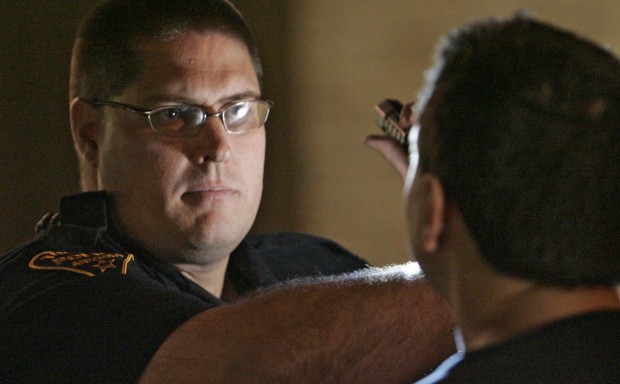
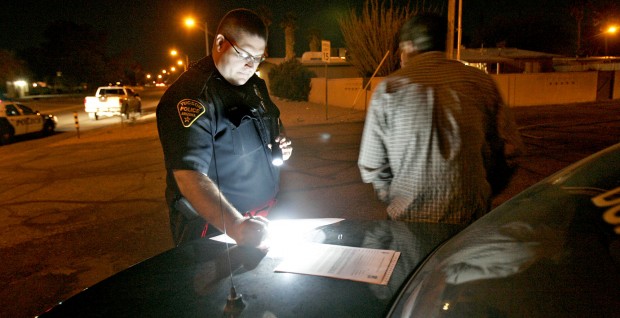
DUI Officer Jeff Hawkins deployed with the rest of the Southern Arizona DUI Task Force on a cold Friday night during Thanksgiving weekend.
Minutes after leaving the westside police service station, Hawkins received a report of a possibly intoxicated cabdriver who had an altercation with the cab company owner.
Hawkins carefully patrolled the dark, shadowy streets of the north-side neighborhood near West Grant and North Oracle roads before finding the cabbie.
The man, who was not driving when he was caught, tossed a plastic baggie to the curb before surrendering.
A patrol officer who arrived to assist Hawkins eventually found the small bag, which contained a grainy, shardlike substance resembling crystal meth.
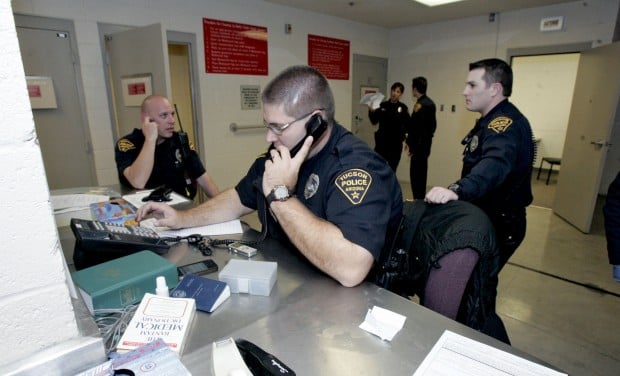
After a series of tests that included taking nine steps forward and nine steps back, and staring at a light shining from a pen, the man was taken back to the station for more tests.
He was eventually arrested on suspicion of DUI and felony drug possession charges.
The Thanksgiving deployment was one of 13 special weekend DUI saturation patrols this year, Andreacola said.
That's one more than last year, he said.
"We will actually go out as much as last year. There's just not as many officers to deploy," he said.
Andreacola still uses some former DUI officers for deployments on certain days when there's money to pay for overtime.
"The only thing we've been able to do is seek federally funded overtime through grants," he said. "There really isn't anything you can do other than that."
However, the amount of grant money the DUI squad receives continues to shrink, he said.
The department received $100,000 for officer overtime and another $50,000 for its sobriety checkpoint program for the 2011-2012 federal fiscal year.
Last fiscal year, the department received $167,000 for overtime, he said.
DUI officers are lauded by police departments, victim advocates and others for their training and ability to recognize drunken-driving behaviors.
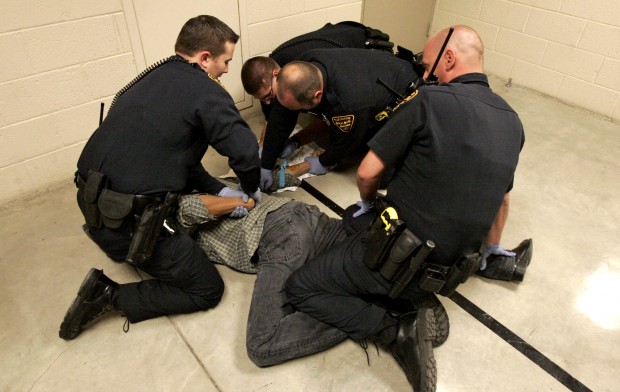
The officers are trained to draw blood from drunken-driving suspects and to conduct numerous tests to determine a person's sobriety.
Their vehicles are equipped with breathalyzers.
Eye movements monitored
Any patrol officer can attend advanced impaired driver enforcement training, and some TPD patrol officers are already trained phlebotomists, drug-recognition experts or have other training, Andreacola said.
All officers are expected to conduct DUI investigations, he said.
The DUI squad is a special assignment with a selection process that includes an oral board and a review of training, he said.
Any officer chosen for the squad must have undergone special training in monitoring the eye movement of DUI suspects.
Most DUI officers become instructors in these areas of training, except for phlebotomy, he said.
The officers' experience and training serve as an asset when a case goes to trial, said DUI lawyer Joe St. Louis of Nesci & St. Louis.
"If it's a close case, how an officer testifies can really make a difference," St. Louis said.
An experienced officer's testimony will likely result in a conviction or a judge upholding an arrest, he said.
DUI cases are already stressful for families who have to cope with the loss of a loved one or victims who suffer serious injuries or become disabled, said Trujillo, the MADD victim advocate.
She and other advocates have handled cases where victims may lose their jobs because they have to plan a funeral or suffered an injury in a crash that prevented them from returning to work.
A case where the DUI charge is dismissed can add to the stress experienced by the victims or their families.
"It turns their entire world upside down within minutes," she said. "It's a ripple effect."
Contact reporter Jamar Younger at jyounger@azstarnet.com or 573-4115.


