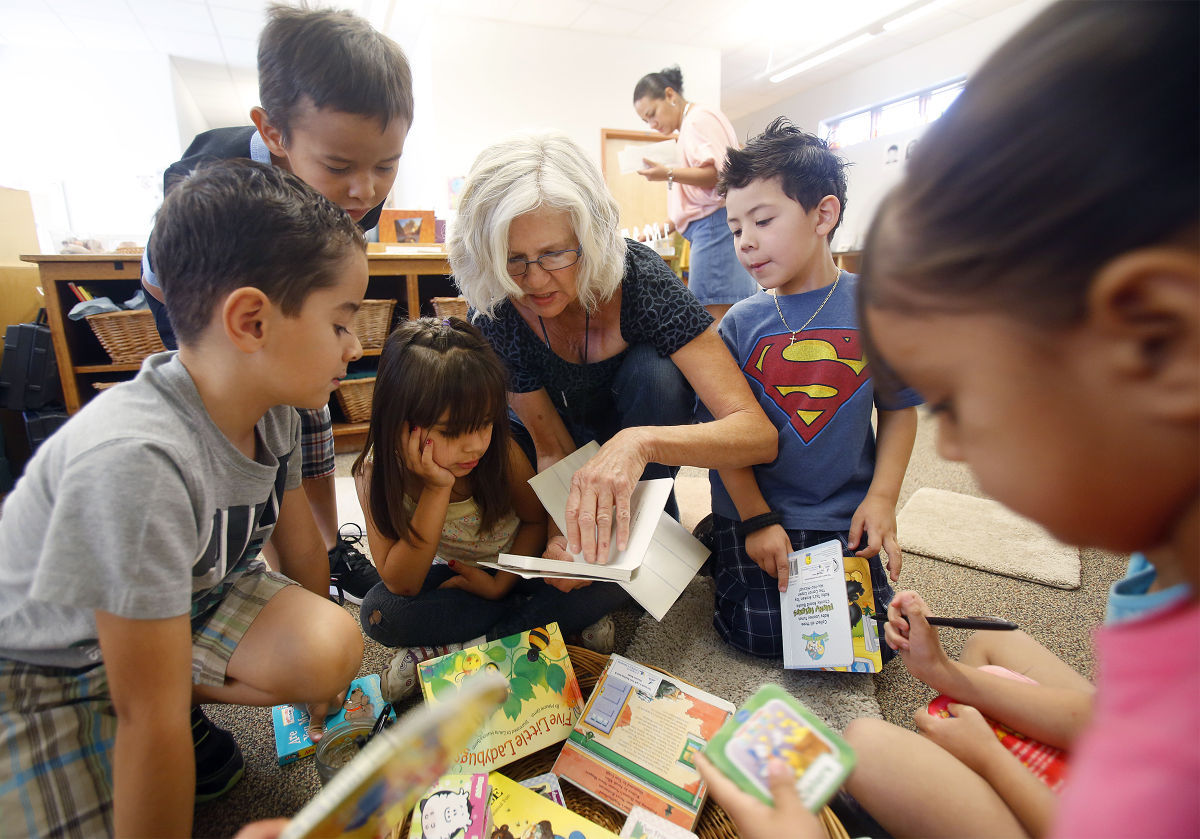
For years, TUSD’s disjointed preschool program has sent parents every which way looking for the right fit for their kids. But all that will soon change.
In addition to its fee-based traditional preschool, the district has four themed free preschool models catering to target populations — low income, disabled, minorities and blends of those groups — each with their own different criteria and schedules.
But not every special needs model is available at every location. And coordination between locations has been scant.
It is not uncommon for parents to seek out early education for their child only to be turned away at one location without ever being told there is another location just up the road that could meet their needs.
Tucson Unified School District’s effort to streamline the process is aimed at correcting that deficiency and letting the district reach nearly 400 more children at an earlier age.
People are also reading…
The effort also focuses on providing a better experience for children with special needs, placing them in more inclusive environments that allow for interaction with their non-special needs peers.
The change, to a system already in place across the country, should make a big difference for Tucson families and children stuck on waiting lists during what experts say is a crucial time for brain development.
Though some have expressed concern about what the changes will mean for well-respected programs such as the Parent and Child Education program, or PACE, TUSD administrators say they have no plans to take away from that success. But maintaining the status quo isn’t ideal.
“This is not an effort to reduce costs and it’s not expected to cost us anything more,” said Ana Gallegos, TUSD assistant superintendent of elementary and K-8 leadership. “This is about leveraging resources to provide services for more students and being more inclusive.”
“I know that the transition and changes are going to be difficult,” TUSD Governing Board President Adelita Grijalva added. “Periodically we go down this road and it’s pushed off another year and I don’t think our children can afford to have it pushed down anymore.”
The existing structure doesn’t serve as many children as it possibly could. Of the district’s various free preschool offerings, only one model — Partners/Explorers — is designed specifically to blend special needs and mainstream children, and that serves only 180 children.
The lack of blended offerings has resulted in 75 percent of special needs children being placed in self-contained classrooms when they might thrive in a setting that allows them to interact with and learn from their mainstream peers before heading off to kindergarten, said Scott Hagerman, TUSD director of exceptional education.
Earlier this month, a TUSD parent shared with the governing board the success her son had in a mainstream classroom after spending a school year in a self-contained model.
Having already had two daughters go through the PACE program, the mother felt her son, who has speech issues, was lacking models from typically developing peers and would be better prepared for kindergarten in an inclusive setting.
PACE is a model designed for lower-income residents.
“PACE offered a mix of children, both typical developing and delayed, and I felt that my son really benefited from this structure,” she said. “It helped him catch up developmentally as he modeled the behavior and actions of his peers, who also helped him when he would struggle.”
While the self-contained Project Able model will continue to be an option for families, TUSD hopes to flip the situation, placing 75 percent of special needs children in inclusive environments instead.
The program that will undergo the most change is PACE, a four-hour, five-day-a-week program with a strong emphasis on parental involvement.
PACE is geared toward 4-year-olds from low-income families. Each classroom reserves seats for only two special education students a year, said Rachell Hochheim, director of community schools and preschool programs.
The district is looking to add an afternoon session for 3-year-olds, which will allow teachers to not only identify student issues earlier on, but provide more time to implement interventions, possibly eliminating the need for services by the time they enroll in kindergarten.
Both the morning and afternoon sessions would include a one-hour family engagement piece, but the program would be scaled back to four days a week.
The classes would start out smaller than they traditionally have been to ensure there are seats for special needs students throughout the year.
What will not change is the use of certified teachers. A curriculum designed to prepare children for kindergarten will be used in all of the district’s preschool programs, although it is not clear whether that will be what PACE currently offers.
The United Way of Tucson and Southern Arizona has expressed support for the changes to the preschool program, noting research indicates inclusive education programs tend to serve children with disabilities very well.
The organization has also offered to help support the initiative financially, should it be awarded grant funding it has already applied for.
“UTWSA is sincere in its efforts to help TUSD,” a letter from the organization states. “Including all children in pre-kindergarten classrooms, with the appropriate supports, is the right thing to do.”
Contact reporter Alexis Huicochea at ahuicochea@tucson.com or 573-4175. On Twitter: @AlexisHuicochea

Alexis Huicochea
Team leader