

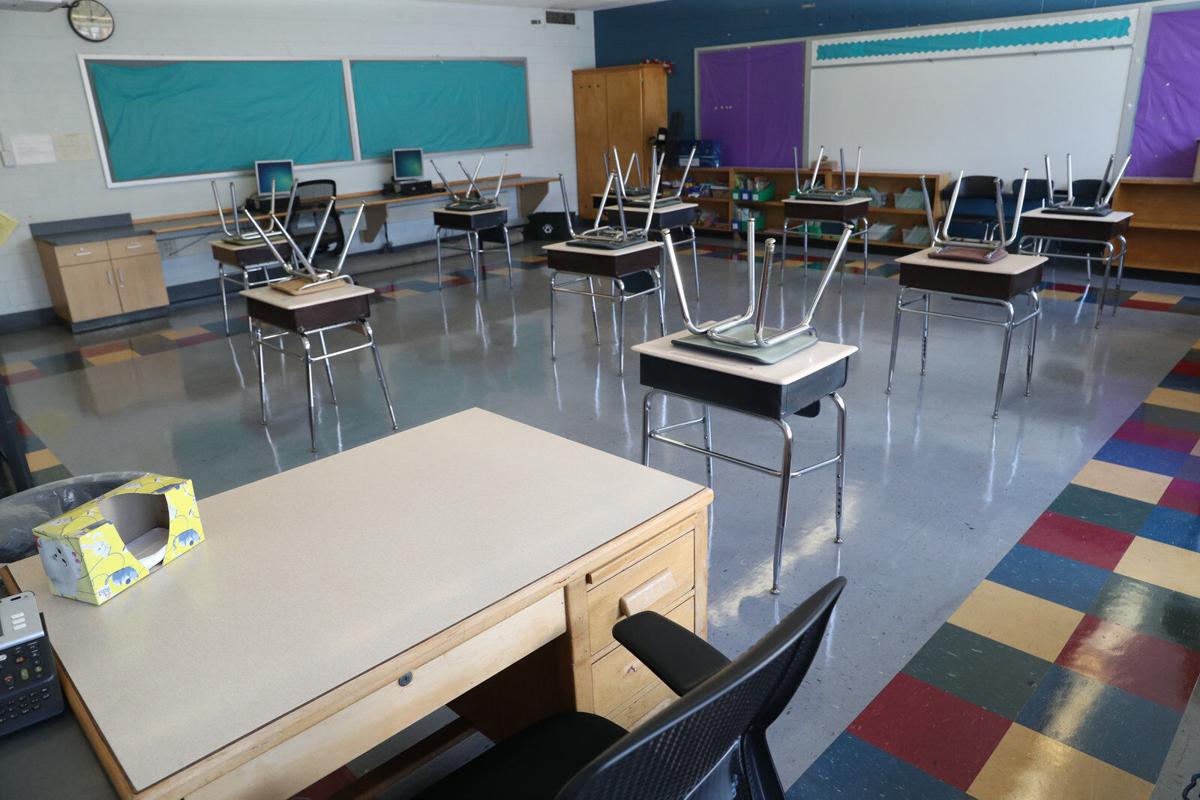
When in-person learning returned in the fall following a school year when most students were learning remotely for most of the year, Buffalo Public Schools officials looked forward to charting a course to address the uneven experience that resulted from remote and hybrid education.
But that plan depended on students returning to the classroom. And many have not.
The dramatic drop in attendance last year in Buffalo Public Schools is continuing this school year, with two-thirds of students missing more than 10% of school in the first semester, according to data from the school system.
And 38% of students have missed more than one in five days of school since September.
The numbers are higher for students of color. Half of Hispanic students have missed more than 20% of this school year. Nearly 40% of Black students are in the same severe absenteeism category, while 29% of white students missed more than 20%, or more than one in five school days.
People are also reading…
Absenteeism is a harbinger of how well students will learn to read, and later, if they will remain in school and graduate.
“The connection between instructional time and achievement is intuitive, and there is extensive research in the area of absenteeism that indicates missing 10% of school days tends to be the ‘tipping point’ when student achievement declines,” according to a 2016 memo from the state Education Department to school leaders.
Superintendent Kriner Cash said students can't learn what school has to offer unless they are in class. And the factors affecting attendance are many, he said.
He believes part of it has to do with society in the era of Covid-19. Many people are showing a great hesitation to rejoin their work and social communities throughout the country, he said.
"This fear of contracting Covid in school is a big issue for the Black and Brown community in particular," Cash said. "The schools are a microcosm of what goes on in the community, and I'm seeing that."
Staffing shortages, from bus drivers to clerks to cafeteria workers, also play a part because they affect the organization and its ability to function as a whole, he said.
The superintendent said transportation, with the shortage of bus drivers causing some buses to be late or miss pickups, is an issue for the district as a system, but he doesn't see it affecting attendance.
"They don't get dinged, we do. If they can clearly state and let us know they didn't get to school for transportation issues, they don't get marked absent," Cash said.
He does not think absences due to Covid-19 account for a large percentage on the attendance rate. That's because children who are quarantined, and those who have tested positive for the coronavirus, can access school remotely if they are not too sick, he said. But some parents told the district they were afraid to send their children to school, particularly during the Omicron wave last month, he said.
The district will soon start a campaign to hear from parents on why they send their children to school, and why they are not sending them to school, the superintendent said.
"I want parents to help me find out why they're not coming to school so I can see if it's a barrier we can control or if it's a barrier or issue somewhere else," he said. "For kids not to be in school is equally accountable for the school system and the parent and the child, there's accountability across the board."
The number of children whose absences are deemed chronic or severe is 65% this school year, about the same as last year. In the 2018-19 school year, before the pandemic, the rate was 44%.
Attendance is divided into four categories: satisfactory where the student is absent less than 5% of days; at risk, absent 5% to 10%; chronic, absent more than 10% to 20%; and severe, absent more than 20% of school days.
The number of Buffalo students attending school regularly dropped dramatically last year, when many students were learning remotely at home.
The average daily attendance was 75.8% last year, compared to 91.9% in the 2019-20 school year and 87.7% the previous year. The average daily attendance so far this year is 79.5%.
But the average daily attendance shows just part of the picture. Education experts believe students who are chronically and severely absent are at much greater risk for poor outcomes.
In the 2019-20 school year, the rate of chronically and severely absent children in Buffalo schools was 25.8%. And in the 2018-19 school year, 43.78% of students were chronically or severely absent.
A report by McKinsey & Co. said that absenteeism rates have risen throughout the country during the pandemic, and if “historical correlations between chronic absenteeism and high school graduation hold, this could translate into an additional 1.7 million to 3.3 million eighth–12th graders dropping out of school because of the pandemic.”
It's not just academics that suffer, but social emotional well being as well, according to Dia Bryant, executive director of Education Trust-New York.
“When children are not with their colleagues, counterparts and peers, they struggle to get those social skills that are necessary to be able to sort of navigate through society," she said.
Course failure in the future can eventually result in the student not being able to get a job with a family-sustaining wage, Bryant said. And children who miss a lot of school in the formative years of kindergarten through fifth grade could find school being “perpetually hard” for the rest of their academic careers, she said.
“When students are missing school in those early years, some of the academic issues they have become persistent over time,” Bryant said
Bryant suggests offering students different learning modalities, including remote schooling.
“Yes, in-person is the best learning, but if they're not coming, we also have to find a way to get the learning to them,” Bryant said.
Cash said he wanted to have a remote-only path this year for a limited number of students who do better with it, but he wanted to have children in person this year to address their social, emotional and mental health. He did not rule out a remote school for next year.


