

The Buffalo Public Schools' broad $289 million plan for spending federal stimulus money met with mixed reviews and lingering questions from parent leaders and family advocates who previously offered input on the blueprint.
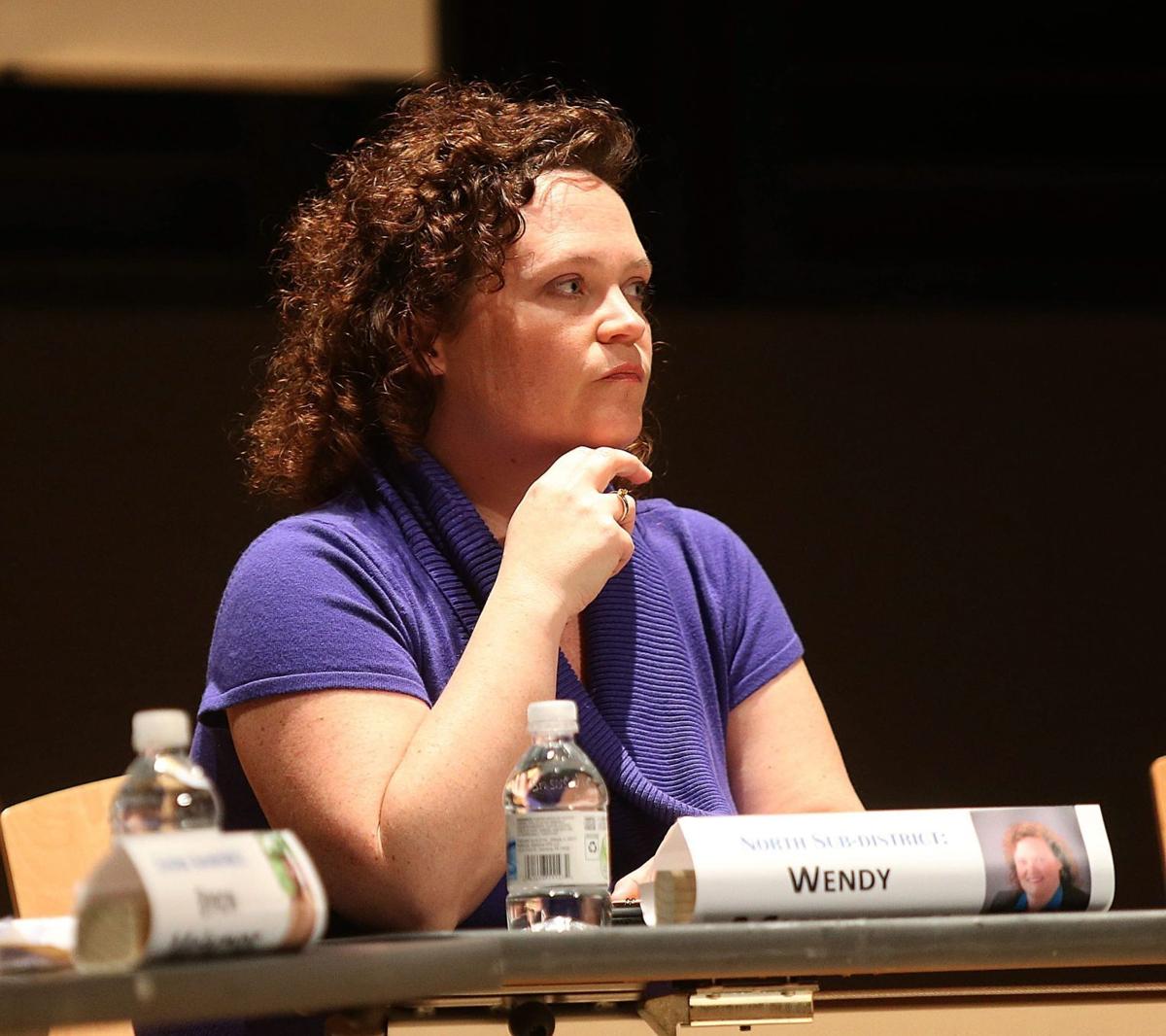
"I felt a lot of the plan I was reading was lacking in the specifics," said Wendy Mistretta, president of the District Parent Coordinating Council. "There were a lot of blank pages. How are they working on this?"
Rachel Fix Dominguez, co-chair of Buffalo Parent Teacher Organization, said her group was happy to see that 60% of the funding – or $173.4 million – is supposed to be allocated to expanded instructional programs, but more information is needed about how that will be broken down.
"Now that this plan has been formulated, we’ll have another opportunity to come in and dig more deeply about how that money will be allocated," she said. "This is the Phase I, just to provide the bigger picture of where we intend to go."
People are also reading…
Superintendent Kriner Cash announced the spending plan on Thursday. The plan covers two waves of federal American Rescue Plan funding, one in 2021 and one in 2022. All the money must be allocated by 2024.
Christopher Murgia, coordinator of the Credit Recovery Program for grades six to eight at Niagara Falls High School, describes how it works.
Although the district spending plan is 169 pages, much of the document was devoted to background, academic concepts and guiding principles, not price tags, cost analyses or payroll needs for specific new academic and enrichment programs or construction-related expenses.
Some concepts, such as plans for improving districtwide athletics, were outlined in great detail. Others, like the creation of two "innovative single-sex high school programs," were limited to a brief mention. The plan lists 10 broad, strategic investments for the use of American Rescue Plan dollars, but the pages for them were left empty for future data.

The district plans to spend $173.42 million for expanded instructional initiatives, $38.93 million to open schools safely; $38.92 for student emotional and social well being and support services, and $38.12 million for information technology upgrades and digital resources.
Jessica Bauer Walker, with the Community Health Worker Parent Association, said she would have liked to have seen more detailed references to how the district will bring comprehensive health education and student recess back into schools, things her group have been advocating for years.
"I continue to see missing foundational pieces," she said.
Also unclear in the plan is how many additional district positions will be funded with this stimulus money, and whether and how the district will continue to support these recurring payroll costs after the stimulus money runs out.
The plan refers to the "significant added payroll," including additional money for overtime and extracurricular work time, and the possibility of those people being laid off when the stimulus money expires.
"I know that was brought up again and again," said Dominguez. "We can’t just invest in people who will then go away in three years. That’s not a long-term, sustainable plan. At the same time, because of Covid, I do think there are short-term needs."
The social and emotional needs of children who are transitioning to full-time instruction for the first time in 1 1/2 years will need to be addressed with additional staff even if they don't stay, she said.
But with no ongoing source of funding after the $289 million is spent over the next few years, Mistretta said she's skeptical of the "transformational" tag that district leaders have given the plan.
"It really does feel like it’s oversold," she said.
That's not to say there aren't things to like in what the district has put forward.
Parents expressed excitement about the district's plans to make significant investments in school music and sports at every school, both areas where the city school system compares poorly with suburban districts.
Student advocates also praised district plans to invest in a new student registration "Welcome Center" with more trained staff to give families a more inviting and convenient way to get their children signed up for class. The current Central Registration building on Ash Street has been repeatedly criticized for frustrating families and being ill-equipped in terms of space and personnel.
Parent leaders said they were also encouraged that the district spending plan refers to the need to improve communication with families, which they said is sorely needed.
Khadijah Hussein, a community health worker and family advocate who has pushed for improvements to services that affect multilingual families, said many of these parents feel disconnected from the district and aren't aware of the spending plan. She was glad, however, that the district listened to those expressing the need to improve food services at schools.
The plan also refers to more opportunities for academic acceleration; more school technology and technology security; more support staff such as a wellness coordinator, nurses, counselors, social workers, psychologists and attendance teachers; more middle school and junior varsity sports; stadium turf replacements; shuttle services for parents to designated school district locations; and full-day summer school.
The district's plan for beefed-up parent engagement includes better utilizing parent liaisons at every school and paying them to improve outreach to other school parents, participate in school-based decision-making and assist with translation services. Their work would be boosted from 30 hours a month to 30 hours a week.
Many parent liaisons at each school continued to work with other school families in need even after they were laid off by the district in March of last year due to the health crisis, Mistretta said.
"I think those relationships are going to be key," she said.
She and Walker also said they hope the district's spending plan will provide individual pots of money for each school to spend according to its own targeted needs instead of having all the money prescribed by the central administration. Parents should have a say in how the money at each school is used to benefit students, they said.
"We see a lot of top-down here, and we want to see more bottom-up," Mistretta said.
Dominguez said the district is supposed to hold more stakeholder meetings regarding the plan next month.
"It is so much money that the planning that needs to happen, it really does have to be thoughtful and thorough," she said.


