

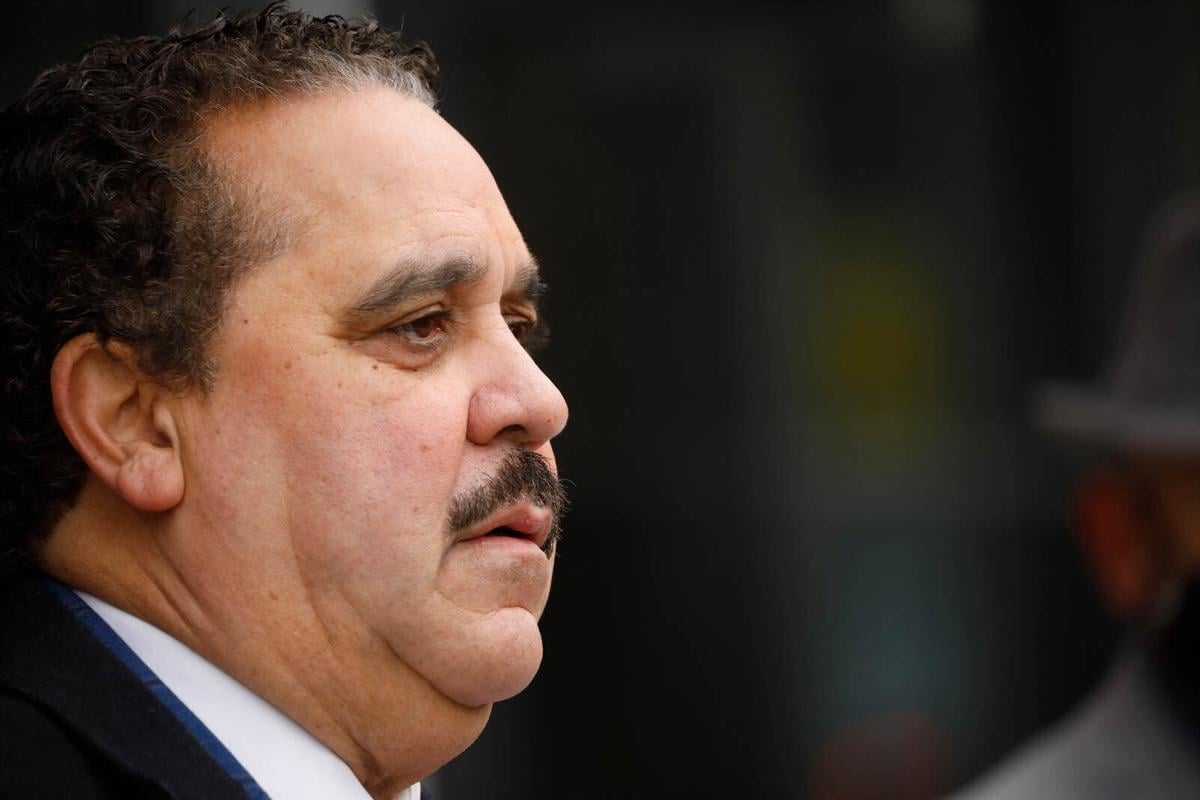
Kriner Cash can claim some successes as Buffalo's schools superintendent over the past seven years but the time is right for him to make way for fresh leadership.
Optimism surrounds Cash's interim replacement, Buffalo native and district veteran Tonja M. Williams, but Cash leaves behind substantial challenges to address.
School security, the lingering Covid-19 pandemic and student attendance all are pressing issues in the district. But Buffalo has an unprecedented opportunity to leverage nearly $300 million in federal funding to address those and other priorities.
These are some of the observations from a group of community stakeholders asked to comment Friday on Cash's abrupt departure from his job and where the district goes from here.

Board members said they see Tonja Williams' hometown upbringing and knowledge of the district and community as a plus.
"The new superintendent, unfortunately, is going to have a lot to clean up," State Sen. Sean Ryan, D-Buffalo, said.
People are also reading…
They agreed Cash's successor, whoever it is, faces a considerable challenge in running a large, urban school district that is fundamental to Buffalo's future growth.
"It can be done, but it's multifaceted," said Thomas Beauford Jr., the Buffalo Urban League's president and CEO. "And it requires leadership – great leadership – and collective leadership as well."
'Dire straits' in 2015
Cash came into a challenging situation in the Buffalo schools in 2015. He was the seventh superintendent or interim superintendent in the district within a four-year stretch, following a lengthy, disjointed search overseen by a fractured Board of Education.
Teachers were working under the terms of a contract that had expired a decade earlier. Several schools were among the lowest performing in the state, with English and math proficiency below 10%. And students were graduating from district high schools at a rate hovering around 50%.
"The district was in dire straits when he got here," said Assembly Majority Leader Crystal Peoples-Stokes, D-Buffalo, a graduate of Bennett High School.
The district reached agreement on a new teachers' contract in 2016, breaking a 12-year standoff. About one-quarter of district students are proficient in English and math now.
And Buffalo's graduation rate improved to 79% last year, part of an upward trend amplified by eliminating the Regents exam requirement in 2020 and 2021.
Another positive change during Cash's tenure was a community schools initiative that featured opening the doors of school buildings on Saturdays; offering music and other enrichment programs; and serving hot meals for students, said David Rust, executive director of the Say Yes to Education Buffalo non-profit.

At least 3,100 homes lacked internet access when the school year began in September with remote instruction.
"There was a lot of good work done over the last seven years," he said.
Buffalo Mayor Byron W. Brown pointed to "progress" made under Cash and said the district and city had a fruitful partnership, including coordinating to use American Rescue Plan funds to help students make up class credits they missed because of Covid-related learning challenges and working with the Buffalo Bills to improve internet access for students.
Buffalo wasn't alone in confronting the effects of the pandemic over the past two years, but many of the district's decisions on remote learning, mask wearing and other issues proved unpopular.
Absences were felt

The School Board approved a termination agreement with Cash on Wednesday night after days of speculation about the future of the superintendent.
Cash had more than a year left on his contract when he abruptly resigned as superintendent, a move announced Wednesday evening and described as a mutual decision by School Board members.
"There's a time for everything, and his time was the seven years that he did," Peoples-Stokes said.
His departure followed a burst of violence last month outside McKinley High School and a vote of no confidence by Buffalo's teachers spurred by the McKinley assault and longstanding security concerns. Stakeholders also complained that Cash often was out of town and disconnected from the district.

Security guards and administrators will be strategically placed, and Peacemakers will be stationed at the front corners of the building, helping students with safe passage, said McKinley Principal Moustafa Khalil.
Ryan said Cash initially brought stability to the district when it was badly needed but over the past two years seemed to be "largely absent."
"He always seemed like he had one foot out the door," Ryan said.
Williams, previously the associate superintendent of student support services, will serve while a search is conducted for Cash's successor in the coming months. A graduate of Riverside High School and lifelong Buffalonian, she earned praise as someone who knows the district and the city well.

Superintendent Kriner Cash was front and center at news conferences on Feb. 9 after a student was stabbed and a security guard was shot outside McKinley High School. But on Saturday, when the district announced its plans for bringing students back into the school, Cash was nowhere to be seen.
"I believe that the city has to be excited about the potential and the opportunity that Dr. Williams brings to the Buffalo public school system," said the Buffalo Urban League's Beauford, adding, "We're invested in her success, because we know that her success can also translate to success for the future of our children as well as this community at large."
Several civic and elected leaders expressed hope that Williams would receive serious consideration as Cash's replacement. But, if she isn't chosen, they said they want to see someone else with deep Buffalo ties fill the role.
"We have national-caliber people right here in the City of Buffalo," Brown said.
District at pivotal point
Observers see Buffalo schools at a critical juncture marked by challenges and opportunities alike.
Security guards and administrators will be strategically placed, and Peacemakers will be stationed at the front corners of the building, helping students with safe passage, said McKinley Principal Moustafa Khalil.
School security is a major priority for the district, with Cash and the School Board announcing a number of steps in recent weeks intended to reassure teachers, students and parents that it's safe to go to class.
Keeping students in school and on track to graduate also is important, Ryan said.
And the district needs to do even more to prepare students for college and the workforce, Rust said, even as it serves a population stressed by pandemic-related isolation and economic uncertainty.

Although the district spending plan is 169 pages, much of the document was devoted to background, academic concepts and guiding principles, not price tags, cost analyses or payroll needs for specific new academic and enrichment programs or construction-related expenses.
But, he noted, Buffalo will receive an unprecedented infusion in federal stimulus aid that will allow it to invest in a number of priority areas. Cash and his administration began deciding how to allocate that funding and reached out to the community to help guide this process.
"It feels like a once-in-a-lifetime opportunity," Rust said.
Whoever takes control of the district, the fates of Buffalo and its schools are bound together, community leaders said. The city's population grew for the first time in decades during the most recent U.S. Census and a strong school system will convince even more families to move into Buffalo.
"Having a strong school district is essential to having a strong city," Brown said.


