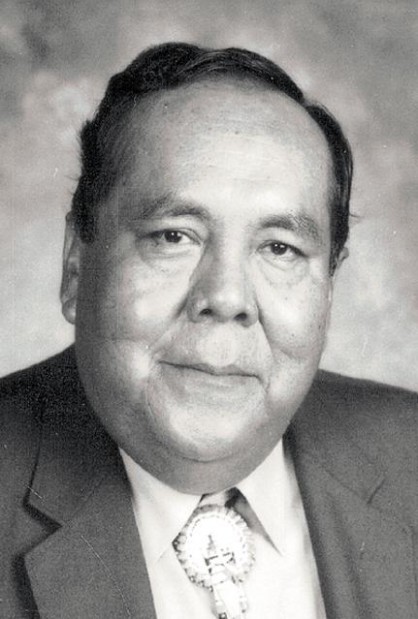
Hartman H. Lomawaima was a man of two worlds.
Equally comfortable among elite academics and members of his Hopi village, Lomawaima was a national voice for indigenous people who later became the first American Indian to lead the Arizona State Museum.
With a dynamic personality matched only by his dry sense of humor, Lomawaima worked to preserve the history of Indians in the United States while also redefining how museums represent native culture.
Lomawaima, 58, who taught at the University of Arizona and served on the board of trustees for the Smithsonian Institution's National Museum of the American Indian, died Tuesday after an 11-month battle with colon cancer.
"Hartman was one of the few people who knew how to work on something tirelessly for 30 years, ensuring that museums were places where Native American voices were heard and respected," said Nancy Parezo, a UA professor of American Indian Studies and longtime colleague of Lomawaima's.
People are also reading…
Lomawaima was raised by grandparents in a village on Second Mesa in Northern Arizona. His interest in different cultures began at an early age.
With Hopi as his first language, Lomawaima toured the country with his grandparents as they sold jewelry and art, along the way developing a deep compassion for all humanity, said his wife, Tsianina K. Lomawaima.
"He was a smiling person who loved interacting with people," she said. "His Hopi upbringing had trained him for leadership, and he was raised to be curious about the world."
After he graduated from Northern Arizona University, Lomawaima went on to conduct graduate research in anthropology and Indian studies at Stanford and Harvard universities.
Upon meeting Lomawaima at Stanford, Tsianina said it was clear that he was adept at balancing the rigors of academia with his culture.
"He was very cosmopolitan, but he was also very Hopi," she said. "He showed that those things are not mutually exclusive."
While his academic achievements helped break down both real and perceived barriers for American Indians, it was Lomawaima's humility and ability to retain his culture's ideals that made him unique, said Nancy Mahaney, director of the Huhugam Heritage Center in Chandler. The center is dedicated to preserving the cultures of what were once known as the Pima and Maricopa tribes.
"He always had a smile and was quick to laugh, and yet he also was unfailing in his own discipline," said Mahaney, who worked with Lomawaima as a curator for the Arizona State Museum. "I think he expected that people could achieve great things, and sometimes that's the most important thing."
At the Arizona State Museum, Lomawaima helped create the Pottery Project, which houses 20,000 ceramic vessels in a climate-controlled vault, a portion of which is open to the public.
Without Lomawaima's leadership, many of the artifacts would have deteriorated, said Beth Grindell, the museum's associate director.
Lomawaima was the type of leader who tried to work directly with all of his employees, making sure they were happy. If there was a problem, he would ease the tension by telling one of his signature dry jokes, Grindell said.
"You could always count on him for some good laughs," she said. "If you didn't get the joke, he would look at you and say, 'Hopi humor.' "
Beyond Lomawaima's smile and laughter was a person committed to bridging the gaps between indigenous cultures and the museums in which they were represented, said Harold A. Closter, director of Smithsonian Affiliations in Washington, D.C.
Always positive, Lomawaima was at the forefront of an effort to give American Indians more of a say in how museums portrayed them, Closter said.
"It's a real loss not only to the Tucson community, but to the museum community as a whole," he said. "He was a unique and unusual person who really made a big difference in the way we look at museums."
Another important facet of his work was helping Indians establish their own cultural centers and museums, Parezo said. The work required diplomacy, talent and sensitivity.
"It's a rare gift, and he had the credentials in both worlds," she said. "There's not going to be another one like him for a while."
On StarNet: Did you know Hartman H. Lomawaima? Add your remembrance to this article online at azstarnet.com/metro.