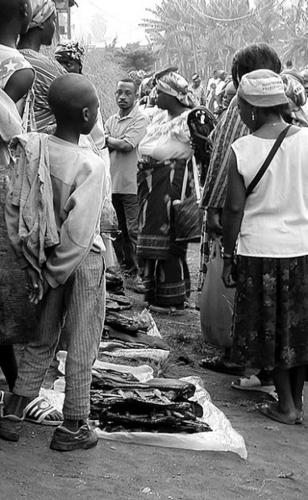
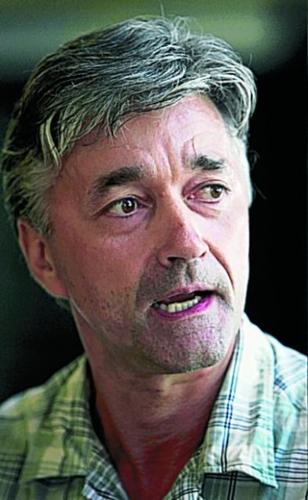
After years of walking through meat markets in villages across sub-Saharan Africa, UA geneticist Hans-Werner Herrmann knew he had to do something about the devastation caused by the bushmeat trade.
Bushmeat — the meat of gorillas, chimpanzees, elephants and other endangered and exotic species — is being consumed and sold throughout sub-Saharan Africa, fueled by extreme poverty that forces people to poach for the meat.
As he crossed the continent studying goliath frogs — which can grow up to 13 inches and live in rivers all over Africa — Herr-mann witnessed the complexities of a population ravished by poverty that is then forced to deplete natural resources in order to survive.
Now Herrmann has set out to identify species that are sustainable to hunt, in hopes that such information will curtail the poaching. To do this, he and researchers at the UA and in Africa will analyze the meat at village markets, track how it got there and study how the information could be used to better manage affected wildlife populations.
People are also reading…
The project will use the vast resources at the Arizona Research Lab, a UA institution that seeks to solve critical scientific problems by promoting inter- disciplinary collaborations.
The project is gaining momentum by the signing of a memorandum of understanding with the Institute of Agricultural Research for Development, a Cameroon governmental institution that will work closely with the researchers. They also are seeking a $1 million grant from the United Nations Environmental Programme.
"Having lived in small villages in Africa, I wouldn't always call it bad that people hunt bushmeat — they often don't have other choices sometimes," Herrmann said. "It's really about these people asking if their children have something to eat tomorrow."
Every year, 1 million tons of bushmeat are harvested from the already-ravaged forests of Africa, a report from the Center for International Forestry Research shows. The report says that bushmeat provides 80 percent of the protein and fat needed in rural African diets.
There is legislation in many African countries outlawing the bushmeat trade, but Herrmann said there's a lack of enforcement because of institutional problems in sub-Saharan Africa. The problem became particularly bad, he said, when the price of one of the region's only cash crops — coffee — fell and people were forced to hunt for food and extra income to cover essential expenses such as medical bills.
"It's very easy to say that it's bad, sitting in Tucson knowing that I can open my fridge and it's going to be full of food," said Matt Kaplan, project lead at the Human Origins Genotyping Laboratory, the division of the Arizona Research Lab where the DNA testing will be done.
Herrmann has come up with a three-tier system that will be used to understand, manage and control the bushmeat trade. He says it is very similar to forensic technologies used in criminal investigations, but adapted for wildlife.
The first step will be to identify the types of bushmeat sold at markets. Herrmann said it is hard to know exactly what kind of meat is being sold unless there's a distinguishing characteristic, such as a paw.
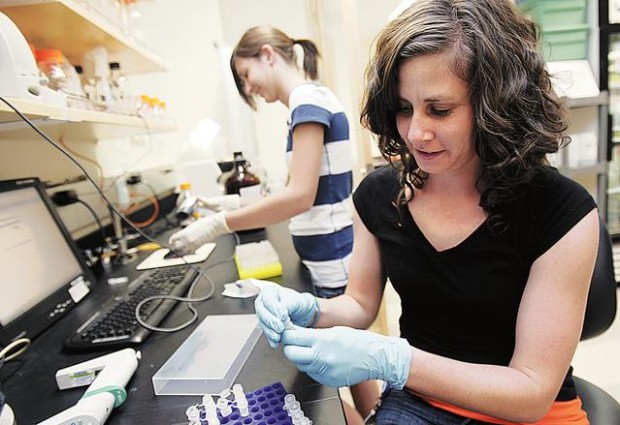
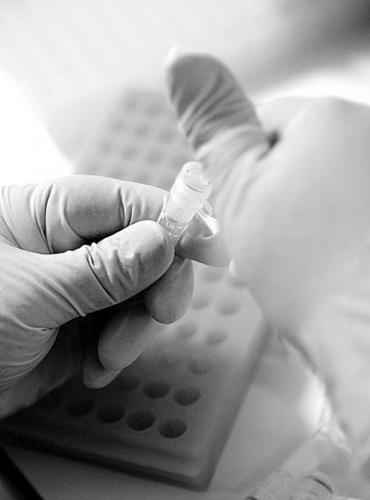
So collaborators in Africa will take DNA samples from the meat to be analyzed and identified. Herrmann said the project will need hundreds of these collaborators who come from the government of Cameroon and will be trained by the program.
There also will be as many as 15 researchers and undergraduate students working at the UA lab.
The second step will identify where the meat is hunted and where the trafficking routes are.
After the meat is poached in remote forests, it's typically taken to small villages to be distributed to larger urban centers. In one village, Herrmann noticed that the villagers would send off their meat in a taxi that came once every week.
The third step is the most important and innovative: The researchers will use the DNA information to understand and manage wildlife populations.
With it, they can understand how wildlife populations are expanding or contracting and then make recommendations on how to manage them. They also will be able to better identify what species are sustainable enough for hunting.
The project improves upon current wildlife management methods because, instead of taking costly trips to tranquilize and track wild animals to study their populations, researchers can just analyze the meat.
"We could go out and get Humvees and tranquilizers and all of that nonsense," Kaplan said. "The poachers are already doing that, but with lower-tech means."
Herrmann said he expects that if the grant funding comes through, the project will begin as early as January. Other funding to expand the program also will be sought.
If the $1 million U.N. grant comes through, it will help establish the initial infrastructure for the project, install a lab in Africa and take 5,000 bushmeat samples in the first year, Herrmann said. Researchers will start by developing stable biotechnology procedures so they can identify and monitor species immediately and then do more intensive testing at the UA.
After the initial lab is established in Cameroon, the researchers hope to get more grants to take the project to other African countries.
Kaplan said the days of Western biologists conducting research in Africa and not quickly sharing their findings with local researchers are over.
In an e-mail, Hermann said: "New DNA-based technologies have the power to shine light on this, and that's why we here at the Arizona Research Laboratories feel compelled to use these technologies for the benefit of the African people, wildlife and ultimately all of us."
DID YOU KNOW
The Arizona Research Lab was established in 1979 to solve critical scientific problems by promoting interdisciplinary collaborations.
It deals with a variety of complex issues, from the biology of complex diseases to nuclear research.
Lab Director Mike Cusanovich recently won the Arizona BioIndustry Association Jon McGarity Leadership Award.
Another major project from the lab is the DNA Shoah Project, which uses genetic technology to find families that were separated by the Holocaust.