


A radio glitch Tuesday between the Phoenix Mars Lander and a Mars orbiter delayed the start of planned science experiments on the red planet.
Mission leaders at the University of Arizona had hoped to begin deploying the lander's robotic arm Tuesday, in preparation for digging trenches in the Mars polar terrain. If the problem is fixed, that's expected to happen today instead.
The glitch is a "transient event" that could have been caused by a cosmic ray, and the problem is not believed to be with the lander, said Fuk Li, manager for the Mars Exploration Program at NASA's Jet Propulsion Laboratory in Pasadena, Calif.
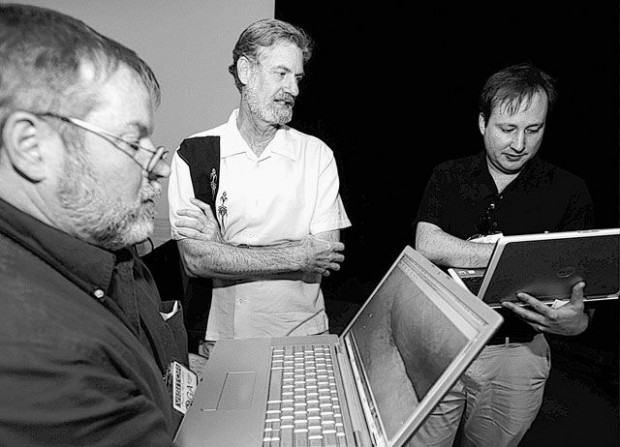
"At this point, I'm not worried at all," principal investigator and UA researcher Peter H. Smith said at a news conference Tuesday. The UA leads the mission's science.
The nearly 8-foot robotic arm, built by the JPL, has a backhoe-like device that scientists will use to dig and gather soil and water-ice samples.
People are also reading…
The mission is trying to verify the presence of water and habitable conditions in the Martian arctic, which may help future missions determine whether life began independently on Mars. And that could help answer the much broader question of whether we're alone in the universe.
Li pinpoints the issue to the UHF radio in the Mars Reconnaissance Orbiter, which is using the radio to communicate commands to the lander.
Communications go from Phoenix to the orbiter and then to Earth via NASA's Deep Space Network, which has groups of antennas at Goldstone in California's Mojave Desert; near Madrid, Spain; and near Canberra, Australia. The Reconnaissance has been orbiting Mars since 2006.
Backup is available: NASA's Mars Odyssey orbiter can relay communications, as can the European Space Agency's Mars Express orbiter.
The orbiter was communicating well until Tuesday, having sent signals of its entry, descent and landing. Its meteorological station has been able to measure the weather.
The orbiter's HiRise — High Resolution Imaging Science Experiment — sent back vivid images of the landed Phoenix taken from orbit, with its solar panels fully deployed.
Also, images of the parachute, back shell and heat shield — jettisoned from the lander during descent — can be seen lying on the ground near the spacecraft. The parachute and lander are roughly 1,000 feet apart.
The HiRise, actually a spy satellite, is led by principal investigator Alfred S. McEwen, a UA professor of planetary science.
Smith also showed a photo, taken by the lander's Surface Stereo Imager, showing the American flag and a mini-DVD on Phoenix's deck. The special DVD from the Planetary Society, designed to last hundreds if not thousands of years, contains a message to future Mars explorers, as well as science-fiction stories and art.
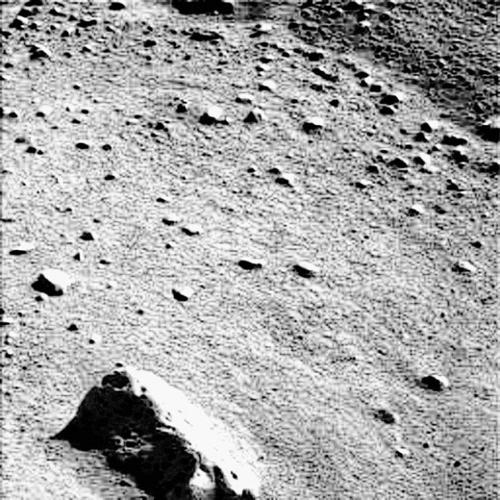
The spacecraft landed in a valley about 30 miles wide, which scientists have named "Green Valley." It's not green, however — it got its name because it was a safe spot to land.
The $420 million mission is set to last about 90 days or until the Martian winter sets in.
On starnet
Stay current with Phoenix Mars Mission news and information at azstarnet.com/ science
Martian weather
To see daily Martian weather reports from the Canadian Space Agency, go to www.space.gc.ca


