The company that bought Biosphere 2 four years ago is donating it to the University of Arizona.
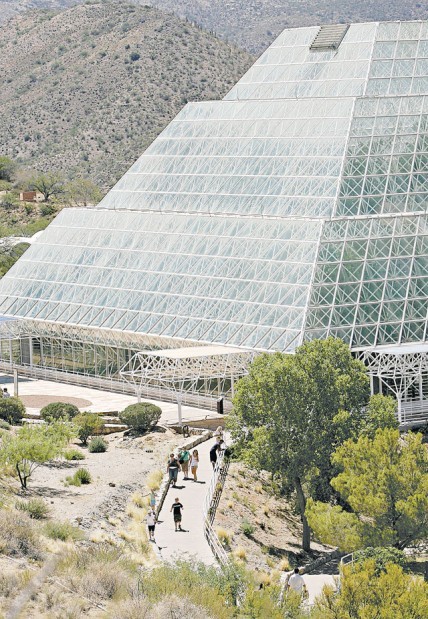
CDO Ranching & Development is giving the university 40 acres of land that hold the Biosphere 2 scientific facilities, a conference center and other buildings on the Biosphere campus north of Tucson near the town of Oracle.
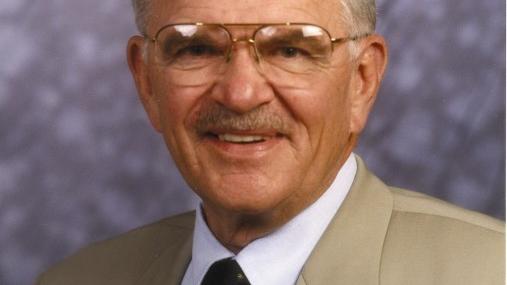
“We just hope it’s very successful and can be, after all these years, everything it was envisioned to be from the beginning,” said Martin Bowen, managing partner of CDO Ranching.
Although not an official appraisal, the gift is valued at at least $100 million. The replacement value is more than $1 billion.
A second gift of $20 million from Texas billionaire Ed Bass’ Philecology Foundation will be used as an endowment to help fund future research and outreach operations at the Biosphere.
People are also reading…
The two gifts are among the largest the UA has ever received.
Bass, one of the founders and original funders of the Biosphere 2 project, sold the property to CDO Ranching in 2007 but remains an active member of the Biosphere’s advisory board.
Both Bass and Bowen said they were impressed by the UA’s capable management of the Biosphere and praised science Dean Joaquin Ruiz’s leadership. Bowen said they had been in discussions with Ruiz’s team for several years and thought the timing for the gift was right.
CDO Ranching still owns the former ranch property surrounding the Biosphere campus and intends to develop it in the next 10 to 15 years in ways that are compatible with the science center and with the beautiful surroundings, Bowen said.
“It’s probably the most scenic, developable property in Southern Arizona,” said Bowen, who lives in Fort Worth, Texas, but considers Tucson his second home.
When the UA officially officially takes ownership on Friday, the property will become a state asset, and the UA College of Science will manage it as it has done for four years. The gift agreement has no long-term requirements and gives the UA flexibility, Bowen said.
Being the owner instead of the lessee will allow the College of Science to dream up long-term experiments at the unique center and will make those projects more competitive for grant funding, said Travis Huxman, Biosphere director and professor of ecology and evolutionary biology.
It will also let the UA invest more in key research areas, he said.
Huxman said the UA has carefully connected the Biosphere to research strengths of faculty on the main campus. The three major research projects at the Biosphere have to do with water, drought and how viruses spread.
An emerging project would use the entire site as a mini-city for engineering experiments, he said.
The College of Science has hired eight new research faculty at the Biosphere in the past four years. Already it has attracted $1.5 million in new grant funding, Huxman said. Additionally, a think tank at the conference center hosts an event each week, drawing scientists from around the world who want a unique place to hold scientific conferences.
The Biosphere is also a major tourist attraction, with more than 100,000 visitors this fiscal year. That’s up from 38,000 the first year the UA managed it.
Attendance grew as the College of Science offered more ways for the public to interact with scientists and college students in discussions and special events. The site also hosts school tours, K-12 teacher training and summer research projects for college students.
The activities help the UA fulfill its land-grant mission and make scientists more competitive for grants that require an outreach component, Huxman said. And revenue from tourism helps pay student researchers and also offsets the Biosphere’s energy costs.
Contact reporter Becky Pallack at bpallack@azstarnet.com or 807-8012.