Robison Elementary School is trying out a new way to get kids to like math — teaching their parents to love it.
The school is hosting free workshops for parents throughout the Tucson Unified School District, teaching the skills and techniques they need to know to help their children meet Arizona math standards.
Aaron Layton, 35, a real estate investor, has a math tutoring background, but that didn't stop him from attending one of the workshops. The seminars walk participants through the types of hands-on activities that teachers will use in the classroom, to ensure students don't develop the math phobia that grips too many of their parents.
"A lot of times, when I was tutoring, it was about getting around all that baggage that people carry about math," Layton said. "'Ugh, math,' has just been instilled in them from a really young age, so that's why it's nice to focus on better ways to do this."
People are also reading…
Layton said he wanted to learn some of those approaches to more closely dovetail with what his son, Noah, was learning in kindergarten.
"It's important that if teachers are teaching math differently, that parents understand what they're doing, rather than say, 'I didn't learn that way,' and work against what the school is trying to accomplish."
School improvement coach and workshop leader Phyllis Burks told 10 participants in the third workshop of the year that teaching math isn't about filling out worksheets.
Kids learn better through visualization, she said, showing parents movements they could incorporate into math discussions. When they talk about addition, and the concept of putting things together, they should make sweeping, gathering movements with their arms, she said. They could make a breast-stroke motion, for example, to show taking things away when discussing subtraction.
"Help them see what we're doing and see the operation," she coached, while parents copied her movements.
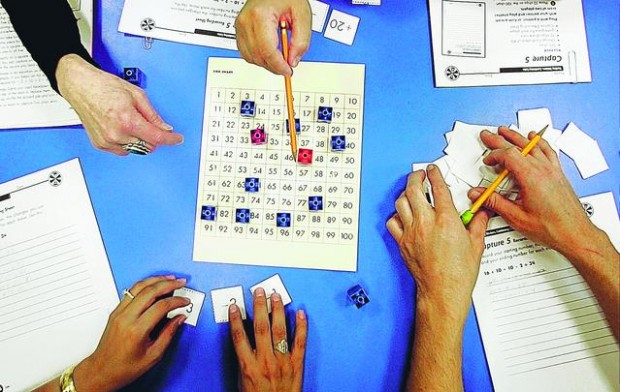
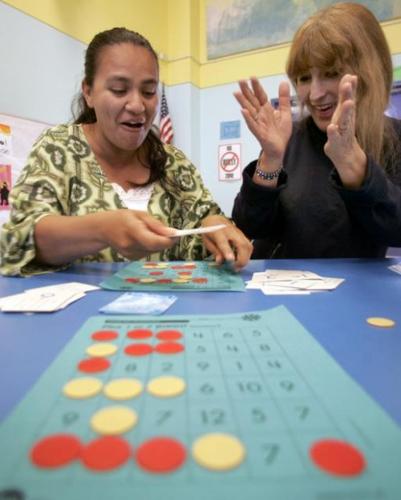
After going over some general concepts, parents moved from table to table, where they learned activities that strengthened math concepts being taught in each grade level. The group using cubes to work on subtraction at the first-grade table was focused and studious, unlike counterparts practicing addition and whooping it up at the second-grade bingo table.
Robison, at 2745 E. 18th St., has a particularly compelling reason to recruit any help it can get. It's in its second year with an "underperforming" label, wrestling with some academic weaknesses in math and reading. In an ideal world, Principal Robert Pitts said, parents could incorporate math games into their together-time with kids.
"Even if we can just build some of these skills with handfuls of parents at a time, it will make a difference," he said.
Celida Valenzuela, a 36-year-old homemaker with daughters ages 9 and 11 at the school, said through a Spanish translator that she signed up because while she was always good at math, she recently realized she wasn't going to be able to help her older daughter with math homework because she had forgotten some of the concepts.
"Now that I've taken a few of these classes," she said, "I'm able to help a little more."