The Arizona State Schools for the Deaf and the Blind will no longer directly provide on-site classes for students who are blind or have low vision and are not also deaf. Those students will instead be mainstreamed into local public-school districts.
The Arizona School for the Blind portion of ASDB-Tucson is transitioning “to an outreach/cooperative site model within local public-school districts,” ASDB Superintendent Annette Reichman wrote in a Feb. 16 letter to parents.
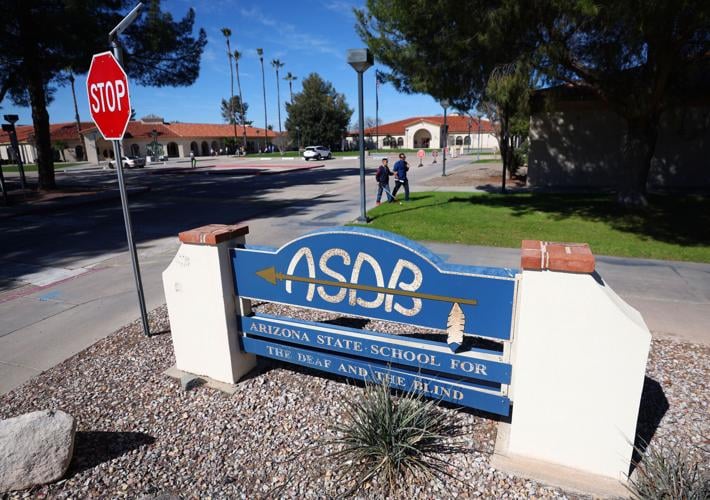
For more than 100 years, ASDB has provided day school and dormitories to students at its Tucson campus at 1200 W. Speedway. But it is closing that school in May and moving to an elementary school in Oro Valley, Copper Creek, that Amphitheater Public Schools is closing and will lease to ASDB. Dorms will no longer be provided.

The Arizona State Schools for the Deaf and the Blind's current, 104-year Tucson location at 1200 W. Speedway.
Parents of ASDB students have told the Star for several weeks that it appeared the state agency would not take blind or low-vision students to the Copper Creek campus but only deaf or hearing-impaired students.
People are also reading…
Reichman’s letter seemed to confirm that in part. Then, responding this week to follow-up questions from the Star, an ASDB spokesperson, Tricia Beckham, said she could not make a blanket statement about all visually impaired students due to their Individualized Education Programs, but she specified that students who are deaf as well as blind and use ASL (American Sign Language) or an intervener as their primary mode of communication will be moving to Oro Valley.
Meanwhile, visually impaired students living in Tucson Unified School District, for example, who have been going to ASDB “will receive similar specialized instruction and supports in the district’s cooperative sites,” Reichman wrote in her letter. “This change will ensure students receive appropriate peer interactions, and access to full academic opportunities and learning environments.”

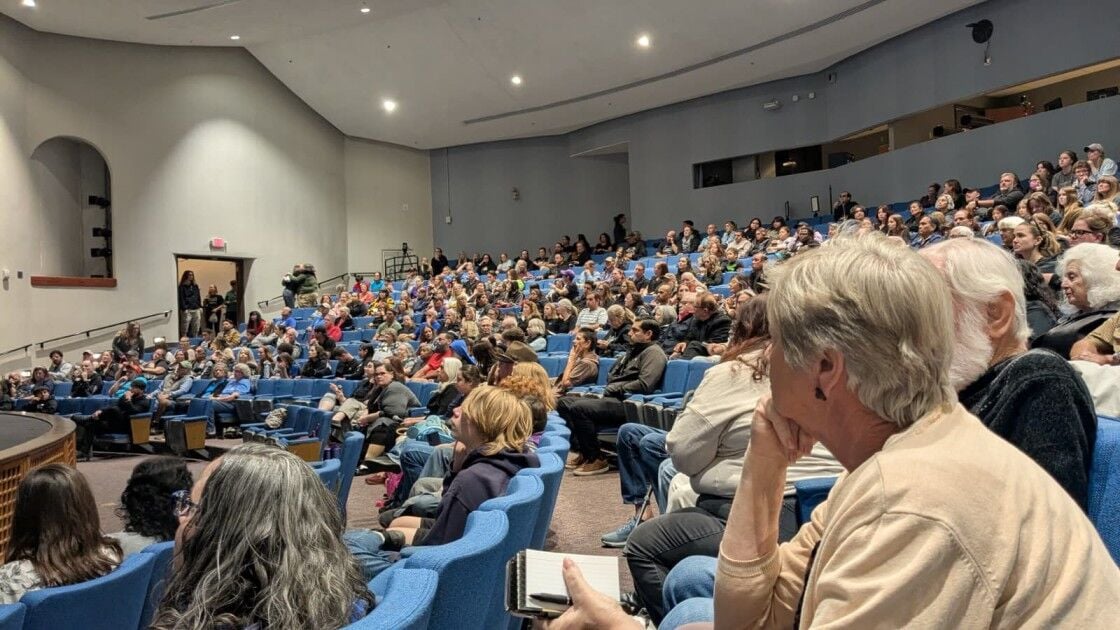
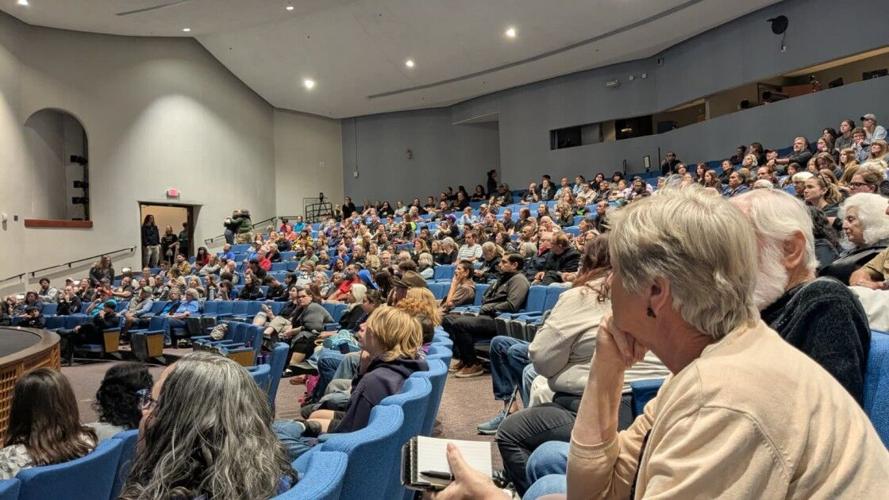
An audience of about 300 parents, students, staff and community members attended an Arizona State Schools for the Deaf and the Blind community meeting Jan. 19 about the campus' move and changes to education delivery systems starting this fall.
This will be handled through each student’s Individualized Education Program. IEPs, required by federal law, are legally binding, written documents for public school students with disabilities, designed to provide specialized instruction and related services to ensure classroom success, according to the Arizona Department of Education.
Too few students per grade level
The changes in ASDB’s system for delivering education are being driven by declining birthrates and lower student counts; an agency budget deficit for the third year in a row; and deteriorating buildings on ASDB’s campuses, Reichman wrote. The ASDB-Tucson campus’ population has declined to about 115 students in its K-12 classes, currently including 30-plus who are blind or low vision, the letter said.
Beckham further explained to the Star that with a total of only 10 visually-impaired students projected for grades kindergarten through 8th grade at ASDB, there won’t be enough blind or low vision students to make up a classroom for each grade level there.
“A grade level with a single student, for example, one student in the 4th grade, would not provide the collaborative environment students need to learn alongside their peers,” she said. “Considering there are 9 grade levels and only 10 students, single student grade levels would exist. This is not effective for our students.”
In TUSD, ASDB is working with the district to set up the first cooperative sites for students starting this fall, Reichman wrote in her letter.
“Through this model ASDB’s Outreach Program will be able to offer enhanced specialized instruction and support to students in the local schools, closer to home, while also giving students the opportunity to socialize with peers who have similar experiences,” she wrote. “This way, students who are Blind/Low Vision will have more options for coursework and educational opportunities, while still getting expert support from ASDB’s teachers.”
The outreach sites will also be an option for students with hearing challenges, the letter indicates.
“Detailed transition plans will guide each student’s process to a new or different placement, as determined by the IEP team,” Reichman wrote, adding: “I know change is difficult.”
Community concerns voiced
Jennifer Arenas-Cardenas, a school psychologist, said she is concerned about the changes. She pointed to a Feb. 5 ASDB board vote to approve a reduction in workforce that affected 64 employees at the ASDB Tucson campus.
She said this included three teachers of the visually impaired, one orientation and mobility specialist, one teacher specializing in multiple disabilities with severe sensory impairment or MDSSI, and five instructional assistants serving blind and visually impaired students.
These are professionals who deliver specialized instruction and related services required under the Individuals with Disabilities Education Act written into students’ IEPs, said Arenas-Cardenas, adding that they are not peripheral roles.
“Disabilities are not mutually exclusive,” she said. “There are students who are deaf-blind or who have both visual and hearing impairments. With the elimination of the MDSSI teacher and other specialized vision staff, how will these students receive appropriate services?”
ASDB spokesperson Beckham said TUSD, as the district of residence, will be “responsible for providing Free and Appropriate Public Education (FAPE), including special education and related services for students with multiple disabilities.”
“TUSD will offer the same continuum of services MDSSI students are currently receiving at ASDB,” she said in a written statement to the Star. “Starting with the ’26-’27 school year ASDB will be providing on-campus resources in a private resource room at the selected TUSD sites. The resources provided will include Teachers of the Visually Impaired (TVI), assistive technology (AT), training for the AT, Certified Orientation and Mobility Specialists, and braille production.”
'Heartbroken and stressed out'

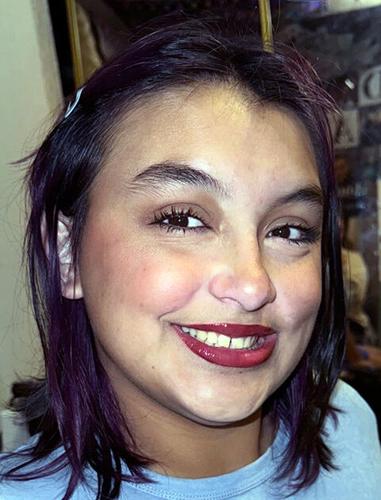
Monroe Stockton, a 17-year-old student at the Arizona State Schools for the Deaf and the Blind, says she fears getting bullied if she has to go back to a regular public school. ASDB is set to close its Tucson branch and move only those students here who are deaf or hard of hearing, or deaf as well as blind, to its new Oro Valley campus.
Arenas-Cardenas and some other community members, parents and students are disappointed with the decisions.
“It is unconscionable that ASDB Tucson is proposing to separate the blind from the deaf in this manner, especially when the new day school campus at Copper Creek can accommodate the visually impaired students from ASDB Tucson’s campus,” Arenas-Cardenas said.
“For many families, ASDB Tucson has been a specialized community intentionally designed around the needs of children with sensory impairments. Decisions of this magnitude require transparency and clear answers about how students’ rights and services will be protected,” she said.
Lyza Ahumada, mother to a 17-year-old visually impaired student at ASDB, wrote to the Star on Monday about Reichman’s letter.
“My daughter is heartbroken and stressed out about her next steps. She cannot understand why they allowed her to come this school year if this was their plan all along,” Ahumada said. “One thing these people forget is how resilient our children are! I will make sure they never forget our children!”
Monroe Stockton, Ahumada’s daughter, who transferred from a public TUSD school to ASDB last year, said she started hearing rumors around the impending move in December and hoped it wouldn’t happen.
“I was very, very frustrated,” Stockton told the Star. “I feel like the blind students are being discriminated against ... I felt all of the emotions. I was very angry, I was very emotional when I found out that all of this was happening,” and especially when “teachers started to get fired.”
Stockton said students weren’t getting accurate information directly and were hearing it from second-hand sources. While she understands there are budgeting issues, she said ASDB could have handled the situation in a better way. She questioned why they were moving just one set of kids instead of the other.
The teen said she really doesn’t want to go back to public school and that should be the last resort. The family will be looking into different options for her, Ahumada said.
“My top fears are to be bullied, because I was bullied a lot throughout,” Stockton said. “So, I’m just really scared that it’s going to go back to the way it was.”
Beckham said TUSD has “strong anti-bullying rules and policies in place which will be stringently upheld,” and that “ASDB will have extensive resource rooms at each TUSD site available for blind and deaf-blind students to go to at any time.” She said the resource rooms will be “open to support students and ensure they are not being bullied, and each resource room will be staffed with ASDB employees who specialize in teaching visually impaired (TVI), braille, orientation and mobility as well as assistive technology.”
From Stockton’s perspective, however, “The bullying never really stopped until I started coming to ASDB, because I felt like there’s no reason to be bullied. Everybody is understanding, and everybody has somewhat of the same challenges.”
The student said she used to get picked on a lot for her heavy glasses so she stopped wearing them and that didn’t help. She was scared of being picked on, she said, adding that she got into fights and a lot of kids would push her around and talk down to her.
“I was really singled out in public school,” Stockton said. At ASDB, by contrast, “I just felt accepted. Like I finally had accepted the fact that I was visually-impaired and that there was no reason to be scared anymore, to be bullied, because everybody was very understanding, and I don’t know, I just felt really at home when coming to the school.”
Reporter Prerana Sannappanavar covers higher education for the Arizona Daily Star and Tucson.com. Contact her at psannappa1@tucson.com or DM her on Twitter.

Prerana Sannappanavar
Higher Education Reporter