

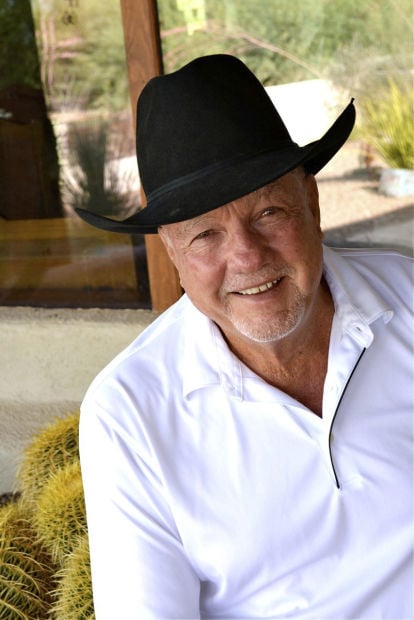
Oro Valley author H. Alan Day loves wild horses so much he dedicated a significant chunk of his time and resources to live with them and sustain them.
Day, a retired rancher who now lives in Oro Valley, took over a 35,000-acre ranch in South Dakota, which he used to create a wild mustang sanctuary.
The 1,500 horses were previously warehoused by the Bureau of Land Management.
Now, with the help of co-author and fellow Oro Valley resident Lynn Wiese Sneyd, he’s written the memoir “The Horse Lover: A Cowboy’s Quest to Save Wild Mustangs” about his years on the ranch, which spanned from 1989 to 1994.
The book, published by University of Nebraska Press, will come out Saturday.
Day, who owned two other ranches at the time, successfully lobbied Congress to make Mustang Meadows Ranch the nation’s first government-sponsored wild horse sanctuary.
People are also reading…
In the book, Day recalls the exhilaration and heartbreak of living on the ranch, as well as his connection to the animals. It’s not Day’s first sojourn into publishing. In 2002 he co-wrote the memoir “Lazy B: Growing Up on a Cattle Ranch in the American Southwest” with his sister, retired Supreme Court justice Sandra Day O’Connor.
We asked Day, 74, about “The Horse Lover.”
Q: What do you think about your time with the horses?
A: It was, by far, the most exciting and rewarding time in my professional career. Ranching and bonding with the horses. Coming up with ideas for the sanctuary and making it happen. Forming a bond with the horses and making my dream come true.
Q: What do you want people to get out of your book?
A: I would like people to first have a sense of enjoyment. I want the book to bring forth entertainment and elation. I want readers to get the feeling of what it would be like to be out with horses out there, dealing with them. I want to transport the reader to that place.
Q: How did you come to write the book with Lynn?
A: I had started the book years ago and wasn’t getting much traction. I knew Lynn. She had helped with promotion of my other book. I knew how talented she was. I knew I had a good story, but was just not telling it well enough. I asked her if she could help, and she agreed. She went through the book, paragraph by paragraph, discussing what I was trying to say with it, where we were going with it and how it tied together with the rest of the book. We found out we could work together really, really well. It was a good partnership. The end product was far better than what I could have done alone.
Q: Why did you get out of the ranching industry?
A: I reached a place where I didn’t have any heirs coming along. I have two daughters and a son, and they were not interested in ranching or keeping the heritage alive. I’ve seen too many old ranchers with children who became doctors and lawyers — not interested in ranching — and the old rancher kind of feels trapped.
Q: Are you working on any other projects?
A: My next book is outlined, but I’ve decided not to start the writing until I kind of reach a plateau with this book. This book appears to have quite a life.
Q: What excites you about the book’s prospects?
A: One major reviewer I can’t name because the review hasn’t published wrote, “this is an instant classic.” I am flabbergasted by the warmth and the good feeling of that review ahead of publishing. The publisher tells me this will be the best-seller it has ever published.


