PHOENIX — One Arizona lawmaker isn’t waiting for Robert Kennedy Jr. to pursue his promise of removing artificial ingredients from school lunch programs.
State Rep. Leo Biasiucci is writing legislation that would bar public schools from serving what he calls “ultra-processed foods’’ to students during the day, in the cafeteria but also through snack bars and school vending machines.
The Lake Havasu City Republican has a very specific idea of what fits that definition. His proposal includes everything from potassium bromate, which is used in making bread, to a host of food colorings including Blue #2, which is a synthetic version of indigo used on baked goods, cereals and candies, and Yellow #6, the dye that gives Cheetos their distinctive color.
Parents could still send lunches with their children that contain the targeted chemicals. And Biasiucci’s legislation apparently would allow such items to be sold at the snack bar at football games, under an exception for “events held on the school grounds after the school day.’’
People are also reading…

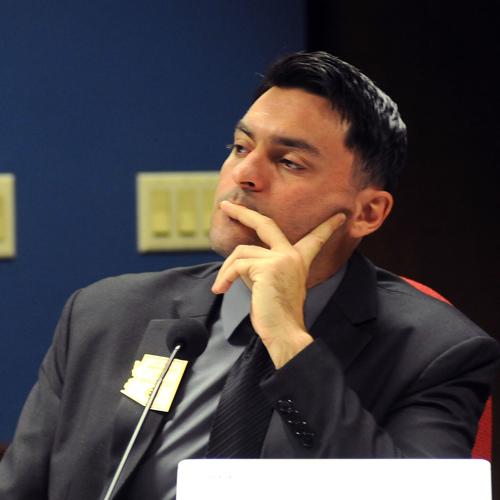
Rep. Leo Biasiucci
This comes amid heightened concern about food additives raised by Kennedy, who will have an outsized role in the issue as President-elect Donald Trump’s pick to head the U.S. Department of Health and Human Services. That is the parent agency of the Food and Drug Administration, which decides which additives are “generally recognized as safe.’’
There is precedent for at least some of the proposal. One of the items on Biasiucci’s list, for example, is titanium dioxide, a food color additive found in baked goods, puddings, frostings and coffee creamers. The European Food Safety Authority has concluded the chemical isn’t safe in food.
Many of the companies that manufacture items with these chemicals make a separate version designed to pass European standards.
So while Fruit Loops sold here have Red 40, Blue 1, and Yellow 5 and 6, what’s available in Germany relies on fruit and vegetable concentrates, with the only listed coloring coming from carotene.
Also, a California law that takes effect in 2028 will ban six specific artificial dyes from meals served at schools.
Biasiucci told Capitol Media Services on Monday he has been thinking about the issue for some time. During a trip to Italy, he began looking at the ingredients in prepared foods and how they differ from similar products in the United States.
“I think now, with RFK Jr. kind of getting in the spotlight and being in the position he is, I think this conversation has finally come to the forefront,’’ Biasiucci said. “The timing is perfect. This is now becoming something that people actually are paying attention to.’’
But Biasiucci said that, even with the incoming federal administration, he doesn’t want Arizona to have to wait for the FDA to get around to reviewing and deciding whether to ban these chemicals.
“I just never depend on the federal government,’’ he said. “I just don’t want to wait that long.’’

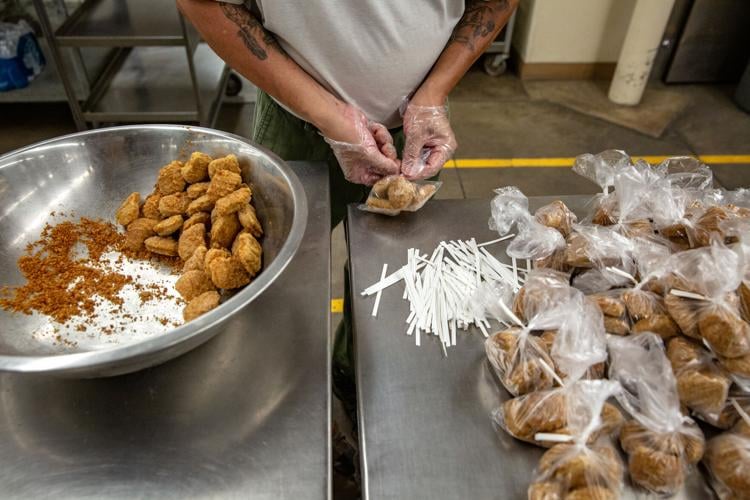
A Tucson Unified School District cafeteria worker sorts chicken nuggets into bags for grab-and-go meals.
He also pointed out that his proposal is far narrower than anything that would have to go through the federal bureaucracy, as it deal only with school lunches.
“If we’re providing this food for free to our children, which are the most vulnerable … I want to make sure that that food we are providing them on the government dime is actually safe and it is not something that’s toxic,’’ he said. “They’re the ones that are growing and need to make sure they’re getting the most nutrients.’’
Heidi Vega, spokeswoman for the Arizona School Boards Association, called what Biasiucci is trying to do “certainly a step in the right direction.’’
But she added a caveat. “It’s essential to ensure there’s sufficient funding and transitional support available to local education agencies,’’ Vega said. That funding is “crucial to prevent potential negative impacts on meal accessibility for Arizona’s most vulnerable students,” she said.
Biasiucci acknowledged the financial issue. But he said there appear to be some options.
During COVID, the U.S. Agriculture Department set up a program to help states deal with the challenges of supply chain disruptions.
The department now is using those funds for “Try It Local,’’ in which schools operating under the National School Lunch Program can be reimbursed for purchasing “unprocessed or minimally processed” locally or regionally produced food for their lunch programs. Arizona got nearly $4.4 million for the program.
Strictly speaking, the program does not mention artificial dyes or other additives. But the list of items eligible would seem to preclude or minimize their use. They range from fruits and vegetables to meats, beans and dairy foods such as cheese or yogurt.
Conversely, the program does not provide money for items such as breaded meats, muffins, cookies, frozen bread and ready-to-heat items like pre-made sandwiches and pizza.
Biasiucci said even if that program and its funding are shut down, he believes the feeding of proper meals to students is a higher priority than some other things now funded by the federal government.
State Superintendent of Public Instruction Tom Horne would like to do some research into the effects of these dyes and chemicals before taking a position, said an aide, Doug Nick.
But he said Horne has a history of trying to limit what can be available to kids on campuses, noting he was behind rules adopted a decade ago to ban sugared sodas at schools.
Howard Fischer is a veteran journalist who has been reporting since 1970 and covering state politics and the Legislature since 1982. Follow him on X, formerly known as Twitter, Bluesky, and Threads at @azcapmedia or email azcapmedia@gmail.com.


 Arizona lawmaker again targets transgender rights, citing election results