Despite President Donald Trump’s stated concern over fentanyl trafficking and national security threats, his Department of Justice is directing federal law enforcement and prosecutors to prioritize going after immigration-related offenses.
Researchers, advocates and Pima County’s top prosecuting attorney say the shift will end up diverting resources from critical enforcement areas like drug trafficking, violent crime, terrorism, child exploitation and white-collar crime, to instead focus on boosting criminal prosecution of illegal entry and re-entry cases, whether or not the defendant poses a public safety threat.
“It’s a huge deal,” said Austin Kocher, a Syracuse University research assistant professor who studies immigration-enforcement and federal-prosecution data. “These agencies and prosecutors don’t have unlimited resources. They can’t even prosecute all the cases they want to prosecute that I think most Americans would believe are a priority — violent criminals, serious drug traffickers and so forth. Pulling people off of those kinds of cases and putting them onto much lower-level immigration cases is a fairly serious decision, especially in terms of public safety.”
People are also reading…

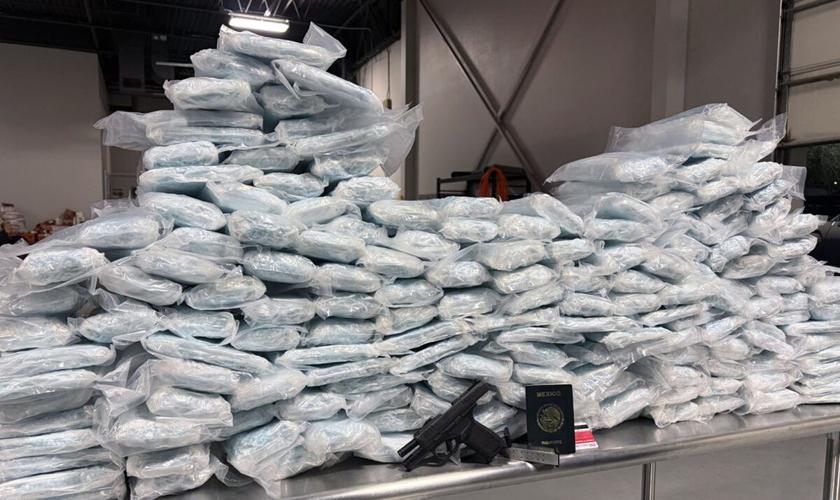
More than 1 million fentanyl pills were found inside a car pulled over in November 2024 on Interstate 10, Tucson police said. Researchers, advocates and Pima County’s top prosecuting attorney say the U.S. Department of Justice’s priority shift to emphasizing immigration prosecutions will end up diverting resources from critical enforcement areas like drug trafficking.
In a Jan. 21 memo, Acting Deputy Attorney General Emil Bove directs the Organized Crime Drug Enforcement Task Force and Project Safe Neighborhoods, which tackles violent crime, to prioritize immigration offenses. That includes by requiring assistant U.S. attorneys — lawyers who staff U.S. Attorney’s Offices — assigned to drug-trafficking task forces “to devote significant time and attention to the investigation and prosecution of these crimes.”
“Each U.S. Attorneys Office shall coordinate as appropriate with the federal courts to ... develop processes for handling the increased number of prosecutions that will result,” the memo said.
The memo, which also directs the FBI’s Joint Terrorism Task Force to assist in Trump’s immigration-related initiatives, does not provide for additional resources to carry out the directive.
The Organized Crime Drug Enforcement Task Force is the largest anti-crime task force in the U.S. and has been focused on transnational drug cartels, according to a Feb. 4 letter from ranking House Democrats to the DOJ, demanding answers about the “disturbing” memo.
“Removing prosecutors and federal agents from this work would allow cartels to bring more fentanyl and other dangerous drugs into our country, causing more lives to be lost to drug overdose,” the letter said.
Gary Restaino, U.S. attorney for the district of Arizona, declined to discuss the DOJ memo’s implications with the Arizona Daily Star last week.

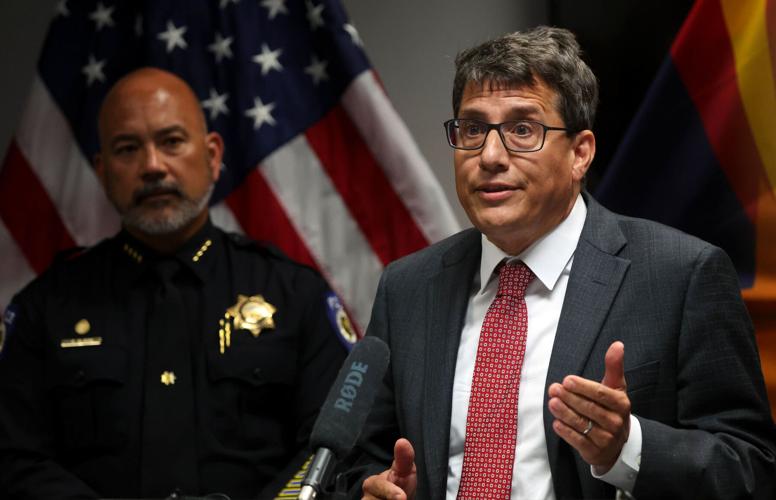
U.S. Attorney for Arizona Gary Restaino, right.
A spokesman for the Arizona U.S. Attorney’s Office said Restaino expects to be dismissed from his position — for which former President Joe Biden nominated him in 2021 — any day now, but he is still technically in the role until Trump nominates a replacement.
Neither the White House nor the DOJ responded to a request for comment.

The Jan. 21 memo echoes the shifting priorities outlined in new executive orders and guidance that have been issued at dizzying speed since Trump took office.
One of those executive orders makes it the “primary mission” of the U.S. Department of Homeland Security’s investigative arm, HSI, to enforce immigration violations.
As of Friday, HSI’s website still lists its mission as focused on complex global crime, including drug and weapons smuggling, child exploitation, cyber and financial crime and intellectual property crime, as well as preventing terrorists from entering the country.
“It is fair to say the Trump administration’s primary message to federal law enforcement is they should spend less time going after drug traffickers, pedophiles and terrorists and spend more time going after migrants,” whether or not they have a criminal record, said Aaron Reichlin-Melnick, senior fellow at the American Immigration Council, a research nonprofit that advocates for a fair immigration system.
On Jan. 30, Bloomberg Law reported that, during a conference call with all 93 U.S. attorneys, acting deputy AG Bove said line prosecutors will be recruited for border-enforcement work, due to an “invasion” at the southern border.
Migrant arrivals at the U.S.-Mexico border have been at four-year lows for months, and have dropped further since Trump took office.
Pima County Attorney Laura Conover, an elected Democrat, said her office has had a successful partnership with the Arizona U.S. Attorney’s Office in recent years, including pursuing transnational organized crime involving firearms and narcotics, identifying high-level targets for potential federal prosecution and working closely with tribal law enforcement. Restaino routinely visited with law enforcement leaders in Tucson and during his last visit in December, he expressed hope those collaborations would continue, rather than returning to “just churning prosecutions of migrants,” she said.

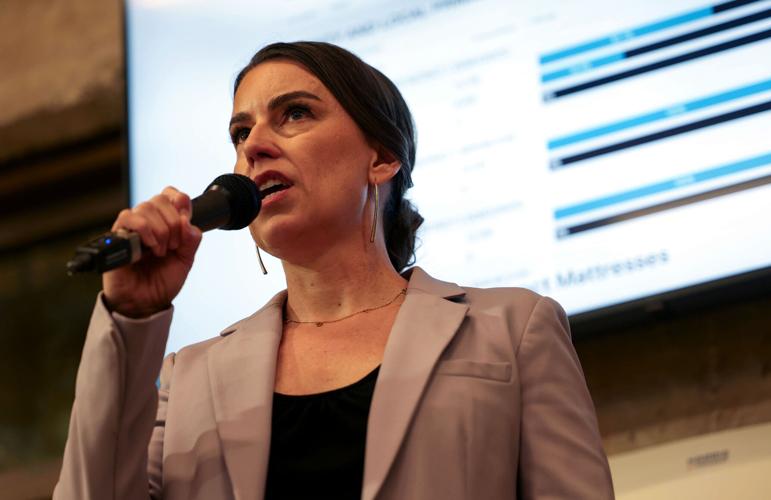
Pima County Attorney Laura Conover
But Conover said the Trump administration’s “myopic” focus on criminal prosecution of immigration violations harkens to “Operation Streamline,” the fast-track prosecution program launched under President George W. Bush in 2005 that continued at high intensity under President Barack Obama and in Trump’s first administration.
At its height, the program resulted in specialized prosecutors across the U.S., who were previously focused on white-collar crime, getting transferred to low-level immigration cases, Conover said. That likely contributed to the justice system’s failure to identify egregious violations in the financial sector leading to the 2008 housing market crash, she said.
“In hindsight, the question was, ‘Well, who was watching the banks and mortgage lenders?’ This huge cadre of white-collar prosecutors said, ‘That’s what I used to do, and now I do border cases,’” she said. “The question is whether you take your eye off the ball on major critical issues like that, if you’re focused myopically on one thing. That’s the fear.”
Tucson immigration attorney Mo Goldman pointed out criminal defendants have a right to an attorney, unlike those facing administrative deportation proceedings, so the U.S. will also sustain the cost of more court-appointed lawyers under Trump’s directives.

Despite President Donald Trump’s stated concern over fentanyl trafficking and national security threats, his Department of Justice is directing federal law enforcement and prosecutors to prioritize going after immigration-related offenses.
“It’s a question of whether this is a practical use of our resources. Is it the best way to utilize our finite judicial system and finite prosecutorial system?” he said. “Do you want to apply your resources to violent criminals and make that a priority, or do you want to potentially clog up the courts with so many more immigration cases?”
Dems question new priorities
On Feb. 4, Democrats from the House Judiciary Committee sent a letter to Acting U.S. Attorney General James R. McHenry, requesting information about the Trump administration’s directives to “divert critical crime prevention, counterterrorism, drug interdiction, and other law enforcement officials to its chaotic and inefficient obsession with arresting and detaining undocumented immigrants who pose no threat to public safety.”
“Previous Republican and Democratic administrations have rightly prioritized true public safety threats for apprehension and removal,” the letter said. “Unfortunately, this Administration has made it clear that it sees all immigrants as criminals and priorities for removal, making no distinction between an undocumented mother with no criminal record and a convicted murderer.”
The letter cited the Jan. 21 memo and a Jan. 22 DHS memo granting “immigration-officer authorities” to employees of the Drug Enforcement Administration; the Bureau of Alcohol, Tobacco, Firearms and Explosives; U.S. Marshals Service; and the Federal Bureau of Prisons.
“The Trump Administration has made clear it will task these individuals with rounding up undocumented immigrants who pose no threat to public safety, rather than the important work American taxpayers are paying them to do to reduce the availability of deadly illegal drugs, combat illegal gun trafficking, arrest violent criminals, and ensure the safety of our courts and prisons,” the letter said.
U.S. Rep. Juan Ciscomani, a Tucson Republican who has said tackling fentanyl trafficking should be a national priority, did not respond to the Star’s requests for comment on the DOJ memo.
In response to a Star inquiry, Arizona’s Democratic Senators Ruben Gallego and Mark Kelly both said enforcement work should remain focused on what they called real threats to public safety.
“Law enforcement should be focused on stopping and putting away drug traffickers and violent criminals,” Kelly said in a Thursday emailed statement. “This is another example of the Trump administration putting intimidation and headlines above real solutions to fix our broken immigration system and keep our communities safe.”
Gallego said the federal government should remain focused on pursuing “cartel activity in Arizona.”
“The Trump Administration must work on making communities safer instead of launching a stunt that diverts resources away from prosecuting violent criminals and drug traffickers,” he said in a Thursday emailed statement. “I’ll continue to push for increased border security and immigration reform.”
But both Gallego and Kelly supported the recently passed, GOP-led Laken Riley Act, requiring ICE detention of undocumented immigrants accused of shoplifting, among other controversial provisions. Critics say the legislation will result in mandated incarceration of people who pose no public safety threat.
In 2018, during the first Trump administration, a “zero-tolerance” policy, mandating criminal prosecution of all illegal-entry cases, led to widespread family separations, said Reichlin-Melnick of the American Immigration Council.
“Zero-tolerance” also meant drug-trafficking cases fell by the wayside, he said.
“Because we live in a world of limited resources, it led to a significant drop in drug trafficking prosecutions from border prosecutors, because they had to drop their normal cases and instead carry out these other prosecutions of migrants seeking asylum,” he said.
USA Today reported in 2018 that monthly drug-trafficking prosecutions had “plunged” to the lowest levels since at least 2001, as federal courts were flooded with “thousands of cases, most of them involving minor immigration violations that resulted in no jail time and a $10 fee.”
U.S. attorney in Arizona
Immigration cases already make up the bulk of federal prosecutions, said Syracuse University researcher Kocher, and Arizona leads the nation in human smuggling and immigration prosecutions.
Arizona’s U.S. Attorney Restaino told the Star in January that, under Biden’s Department of Justice, “We think we’ve hit the right balance now by increasing individual accountability but still having prosecutorial discretion to decide which people really need a criminal consequence and which can be handled administratively.”
In 2024, as Border Patrol agents’ encounters with migrants at the border declined from record highs in 2023, prosecutions of illegal entry and re-entry cases in Arizona went up by 71%, rising from 6,133 prosecutions in 2023 to 10,506 last year, according to U.S. Attorney’s Office figures.
Restaino told the Star in August 2024 that prosecutions were on the rise due to three additional attorneys lent to the Arizona office by DHS, and due to the Border Patrol having more capacity to process “the right cases” for criminal prosecution, as border encounters slowed.
“Most aliens coming across the border are not a danger to us, and are coming over for a better life for them and their families. But we still need accountability,” Restaino said in August. “We’re never going to prosecute everyone who comes across the border illegally. It’s a matter of trying to provide the right accountability, to deter people from doing it.”
Illegal entry on the first offense is a misdemeanor, and illegal re-entry after a previous deportation is a felony, with a five-year statute of limitations, Reichlin-Melnick said. Most undocumented immigrants in the U.S. have been here 15 years or longer, he said.
Simply being present in the U.S. without legal status is a civil violation unless one has a previous deportation order, he said.
“When we talk about how these policies are going to impact people, it’s important to acknowledge that most undocumented immigrants (in the U.S. interior) are not prosecutable for anything. They haven’t violated any criminal law,” he said. “They can be deported, yes, but they cannot be criminally prosecuted unless they were arrested within five years of their unlawful entry.”
The false characterization of immigrants as criminally inclined underlies the Trump administration’s priority directives, Kocher said. Research consistently finds immigrants, including undocumented immigrants, are less likely than native-born Americans to commit crimes.
“The misperception that immigrants are a problem, in terms of terrorism and crime and drug trafficking, unfortunately displaces the reality of where the data says the problem is,” Kocher said. “So pulling prosecutors, pulling law enforcement officers off of more serious criminal cases and putting them on immigration because there’s a political incentive, I think has the potential to really undermine the integrity” of the justice system.
For example, U.S. Customs and Border Protection says more than 90% of seized fentanyl enters the U.S. through official ports of entry, the vast majority of it smuggled by U.S. citizens.
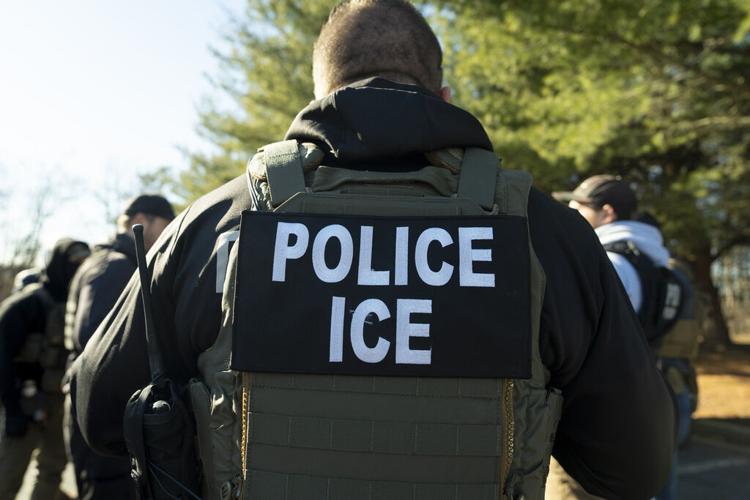
Advocates worry that, just as prosecutors are facing pressure to accelerate immigration prosecutions, ICE agents are now facing arrest quotas, which experts say will require apprehending people without any criminal record in order to meet those quotas.
“There simply, objectively are not enough people with criminal convictions in the country that they can deport,” Kocher said.
Since Trump took office, ICE had been publicizing daily arrest totals on X, formerly Twitter, but abruptly stopped on Feb. 1.
According to government data obtained and reported by ProPublica and The Texas Tribune, less than half of the 8,200 people arrested from Jan. 20 through Feb. 2 have criminal convictions.
“The internal tension within the Trump administration is, ‘Do we want to put our resources in a place that we think is going to trend better on Twitter, or that’s actually going to protect people and keep dangerous criminals off the street?’” Kocher said.
Contact reporter Emily Bregel at ebregel@tucson.com. On X, formerly Twitter: @EmilyBregel

Emily Bregel
Border reporter


 Trump immigration proposals could hurt public safety, experts say