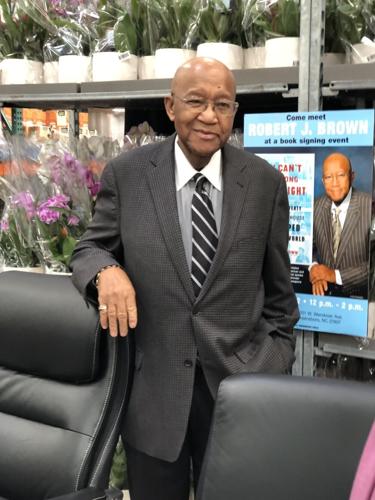
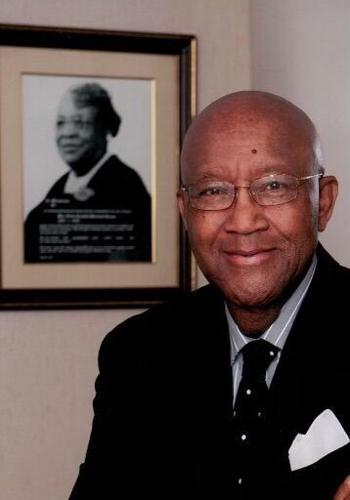
GREENSBORO, N.C. — His friend Martin, the man that he knew and mentored, was on the other end of the line.
There was mumbling among a group of activists about Martin’s way of dealing with a national dairy company. He vented to Robert “Bob” Brown, a longtime confidante and crisis manager from High Point, North Carolina. It was the 1960s, and the dairy company wouldn’t hire Black people as managers or deliverymen — both of which were good-paying jobs at the time and gave minorities access to a middle-class lifestyle.

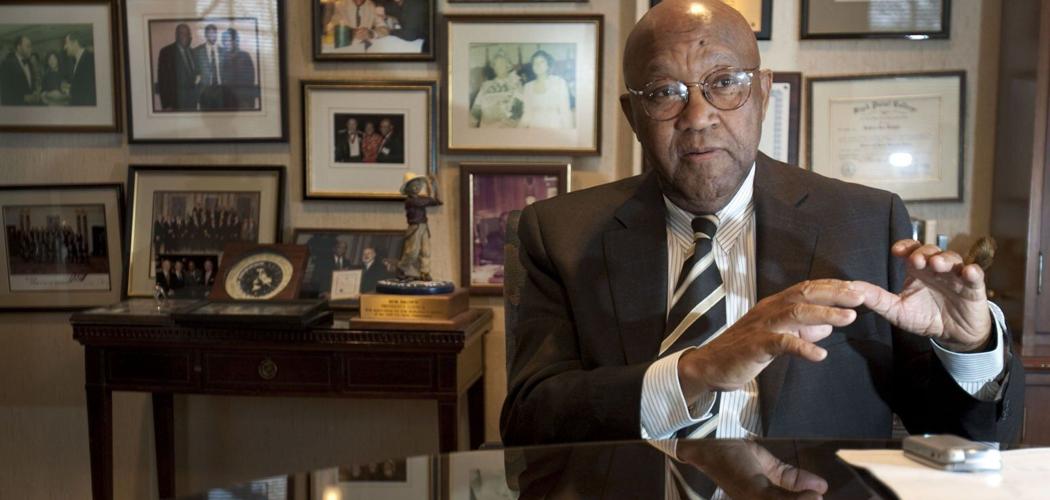
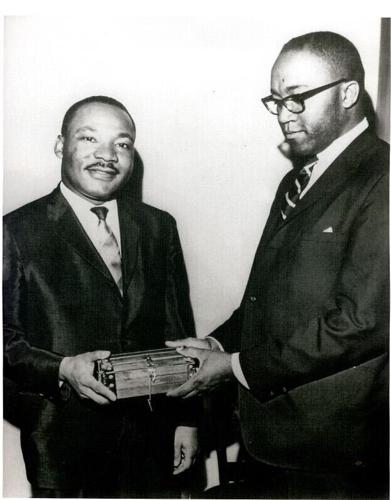
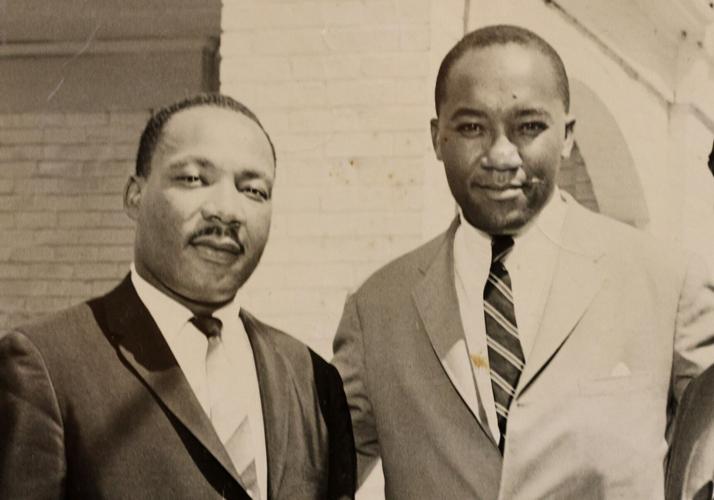
Bob Brown, who counted the Rev. Martin Luther King Jr. as a friend, was once described as “the only Black Republican” capable of working with both Jesse Helms and Jesse Jackson.
Martin — the Rev. Martin Luther King Jr., actually — continued to believe nonviolent protesting would work.
But for now, the Sealtest company wouldn’t budge.
Brown told his frustrated close friend to hold on. He had access to the CEO of the A&P food chain, which at the time was the largest grocery store in the country. Brown’s public relations firm specialized in crisis management for Fortune 500 companies and even foreign governments.
People are also reading…
Brown told the CEO: “You’ve got a problem coming to your stores.”
So A&P’s CEO reached out to Sealtest and threatened to take the company’s products off its shelves. Black people were “good customers,” the CEO told Sealtest, and Brown knew the company would want those shoppers. They brought in money.
Soon, Sealtest executives were calling King.
“And that’s Mr. Brown working behind the scenes,” said David Black, the president and CEO of the BridgeBuilders project, which tells the stories of Brown and other civil rights trailblazers. “He got no credit.”
****
He’s one of the most influential Americans you don’t know.
Or studied.
Or read about.
Even his name flies under the radar: Bob Brown.
But his list of accomplishments spans 60 years and have done much to lift up neighborhoods and a nation all while looking to the future but not forgetting the past.
He’s a fixer, bridge builder and mover-and-shaker.
Brown was born into poverty and became a world-class power broker.
He was raised by his grandmother. “She put cardboard in my rundown shoes and compassion in my heart,” Brown said.
In everything he’s done, he’s tried to follow his Grandmother Nellie’s example. She had a third-grade education, and her father had been a slave.
“She used to tell us, ‘All the good Lord wants to know is how much good you do,’” Brown recalled.
Brown watched her feed the hungry despite not having much herself.
He attended the segregated Leonard Street School and William Penn High School.
At 21, he was among the first generation of Black High Point police officers. It was the 1950s, and frustrated Black people were testing the confines of Jim Crow laws legalizing segregation.
“The Constitution was saying everybody should be treated the same, but everybody wasn’t treated the same,” Brown said. “If you drank out of a water fountain that said ‘white’ and you were Black, you could go to jail for that.”
And there he was — this native son — behind a badge.

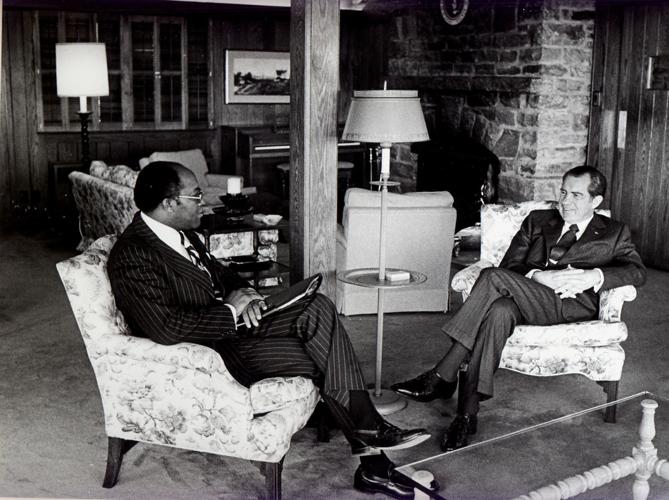
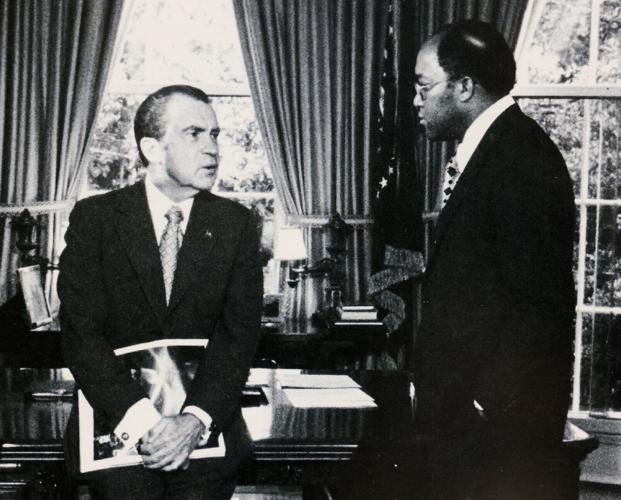
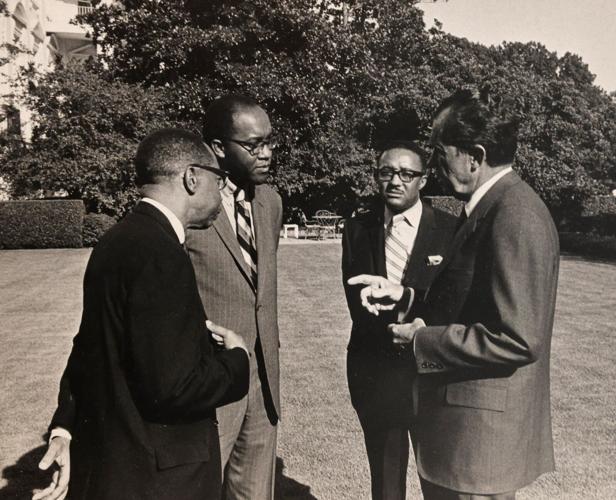
High Point-born Bob Brown served as special assistant to President Richard Nixon from 1968 to 1973. Nixon would sometimes stop by Brown’s office. “He would tell everybody that Bob is running the show.”
He and other Black officers faced an unwritten rule that they couldn’t arrest white people, although it sometimes happened by necessity, Brown recalled. “We were a society separated by race — where we ate, where we lived. Our schools. Our churches. If I’m a policeman, it’s the same thing.”
Later, he was hired as a federal agent for the U.S. Department of the Treasury.
He had married Sallie Walker, a former classmate who was always next to him as he rose to fame, and they worked to build a business.
The couple returned to North Carolina in 1960 and established B&C Associates Inc., a consulting, marketing research and public relations firm in High Point.
They started the business in a rented room on the second floor of an abandoned theater with nothing but a desk, borrowed chair, filing cabinet and telephone.
“She was my secretary, my confidant, my bookkeeper, my everything at that time,’’ Brown once told a reporter about his wife. “She served as vice president, secretary, treasurer and member of the firm’s board of directors.”
Even as the fight for civil rights was ongoing, Brown was able to attract Fortune 500 firms such as Johnson Wax, Nabisco and Woolworth by advocating for what he called “smart business.” Just as with A&P, that meant understanding the purchasing power of Black people and how being racially sensitive was not just the right thing to do, but also good for the bottom line — especially with integration on the horizon.
Brown had also developed a lot of friends among people who ran those companies. When he was sitting in the dining hall at the Woolworth corporate building with its CEO while Black people couldn’t sit at the store’s counters — yet — a larger purpose was in mind.
“His intentions were for the people,” Black said. “Changing standards and opening doors.”
****
A facet of those intentions was getting corporations to essentially underwrite the work of organizations looking to dismantle Jim Crow Laws, which essentially made Blacks second-class citizens.
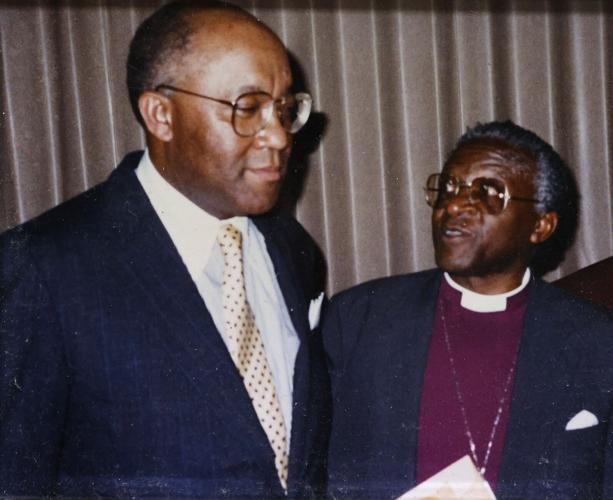
Over the years the icons of the Civil Rights Movement, whose legacies are in the history books, have told stories about Brown. Many of them are now gone, like the late Rev. Joseph Lowery, the former leader of the Southern Christian Leadership Conference, which was a base of the Civil Rights Movement.
“He’s always supported human and civil rights,” Lowery once told The Washington Post.
Lowery credited Brown with helping Black colleges with federal funding and pushing the Nixon’s administration “pro-Black” business policy. “He’s always been effective in getting us what we needed.”
Andrew Young, another powerful civil rights figure, testified when Brown was being considered as an ambassador to South Africa. Brown later withdrew his name from consideration.
Young said that Brown “was the only Black Republican I know who had the credentials to get along with and work with Jesse Helms and Jesse Jackson,” according to The Washington Post.

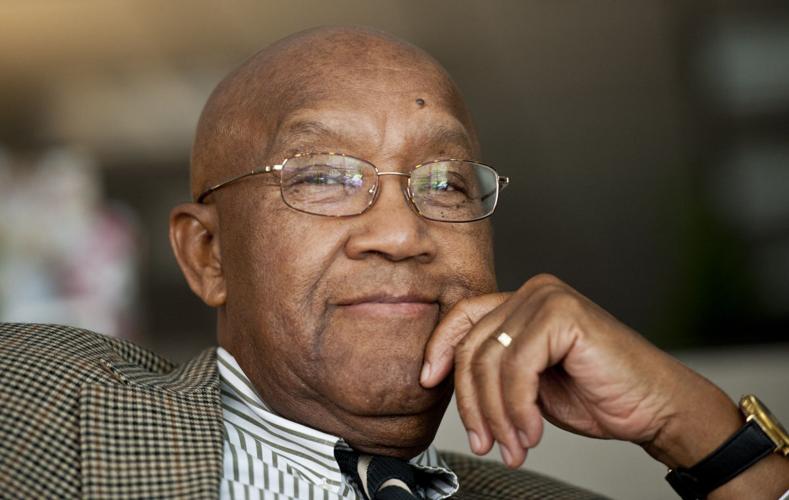
Not everyone saw Brown’s civil rights work as a good thing. He had previously worked on the political campaigns of both John and Bobby Kennedy. “I’d run into (Black) people who said, ‘You mess around with that racist Nixon,’” said Brown, 88. “That kind of hurt. But then I had others say to me, ‘We’ve got to be on all sides, and whoever gets in, we need to be in with them. We don’t need to be on the outside.’”
The companies Brown worked with often provided funds that would become the bail money used by protesters, payrolls for organizations like the NAACP and help for the hungry.
Brown had always been effective at getting groups in his sphere of influence what they needed — and then some. As an advisor to Woolworth, Brown told company executives that the lunch counters should be open without any arrests. And that’s what happened.
But he would face a personal setback in April 1968, when King was assassinated on a motel balcony.
Brown was to have met him a day later.
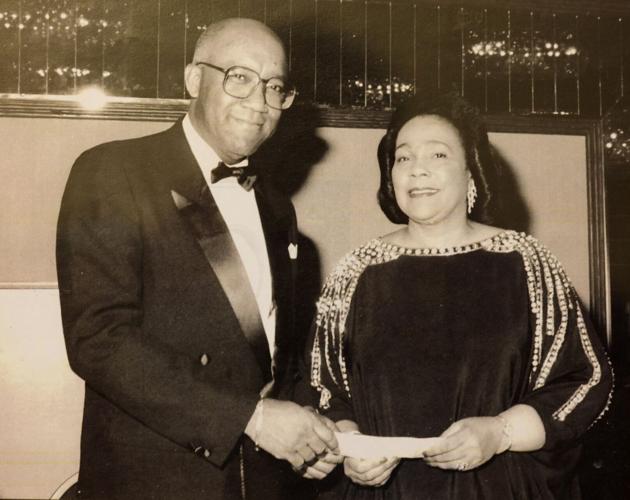
Brown helped get in touch with one of the members of the Rockefeller family, who loaned his private plane to take King’s body back to Atlanta. Coretta Scott King had requested Brown travel with her to Memphis.
“That was a horrible time,” Brown remembered.
The year 1968 also found Brown crisscrossing the country with then-presidential contender Richard Nixon — troubleshooting, keeping up with the press and supplying names from local businesses and Black communities to personalize the candidate’s interactions.
Brown also kept notes about the issues and problems that kept those people awake at night, and he pressed them directly into Nixon’s hands.

As a volunteer for Richard Nixon’s presidential campaign in 1968, Brown kept notes about the issues and problems affecting Black America and pressed them directly into the Republican’s hands.
Not everyone saw Brown’s work as a good thing. He had previously worked on the political campaigns of both John and Bobby Kennedy.
“I’d run into (Black) people who said, ‘You mess around with that racist Nixon,’” said Brown, 88. “That kind of hurt. But then I had others say to me, ‘We’ve got to be on all sides, and whoever gets in, we need to be in with them. We don’t need to be on the outside.’”
When the campaign was over and the 37th president prepared to take office, Brown figured he would return to North Carolina and his firm, which also included Fieldcrest Cannon, Sara Lee and others.
He told the transition team just as much.
“You have to talk to the old man, because that’s not in his head,” political aide Bob Halderman was said to have responded.
When Brown entered the room where Nixon was holding court, the president-elect introduced him to everyone as “one of my new assistants.”
When the others left, Nixon got down to business.
Brown recalled: “He said, ‘I know you weren’t looking for a job. I need you. There will be no impediments to our relationship … you will have access and in Washington everything is built around access.’ He said that if you want to get anything done, you’ve got to go to Washington. He said that if you want to get done all those notes you sent me, you’ve got to come to Washington with me.”
****
And from his office in the White House complex — with four secretaries and three assistants — Brown went about fulfilling some of those promises.
Nixon would sometimes stop by, but only briefly.
“He would tell everybody that Bob is running the show,” Brown said.

After helping Nixon become president, Brown thought he would return to his firm in High Point. Nixon, however, had other plans. He sought Brown’s expertise in bridging America’s divide with minorities. Brown recalled: “He said, ‘I know you weren’t looking for a job. I need you.’”
Brown once hopped on a Pentagon jet and traveled to Keesler Air Force Base in Mississippi after complaints that the military was turning a blind eye to the treatment of Black soldiers by local businesses.
“The (base commander) said, ‘Mr. Brown, we don’t have no problems here,’” Brown recalled. He even arranged a tour of the town’s main strip.
“As soon as we got outside the gates, at the edge of the base ... there were all these restaurants and joints,” Brown said. He was suspicious that they were not a part of the tour.
“I said ‘Stop this car.’ I walked right in (one of them) with all these people following me, and this lady came right over to me and said, ‘We don’t allow (N-word) in here.’”
Brown was furious.
“I said if these establishments are not off-limits (to all soldiers) by 5 there will be hell to pay,” he told the base commander.
Days later, businesses got together and became integrated.
Nixon, who Brown said got little recognition for efforts to improve race relations, always backed him up.
“He trusted my judgment,” Brown said.
Among the many stories in his arsenal, Brown was able to open a tap of federal funding to historically Black colleges.
He also helped Black businesses cross some of the barriers that others didn’t have in front of them. At his urging, Nixon signed an executive order empowering a minority business and enterprise program.
“Whatever barriers that were up, we wanted to tear them down,” Brown explained. “We wanted to open doors for everybody. We didn’t want to build a Black America, or a White America, we wanted an America for everyone to pass down to our children and our children’s children.”
Nixon, who Brown remembers as fair-minded, was not given credit for the work he undertook to integrate schools more than a decade after federal court mandates. Brown helped to spearhead that by going to the most important people in the community — those who owned the large companies, politicians and others — and told them that the president wanted no violence during the transition.
Before Brown left Nixon’s administration, various organizations he worked with planned a special dinner for him. Several thousand people, including his grandmother, members of the U.S. Supreme Court, Cabinet members and Sammy Davis Jr. and Jackie Robinson, showed up at the Washington Hilton Hotel. Brown also noticed the Secret Service checking out the stage. Nixon had congratulated Brown on the tribute but never said he would be there.
“And he walked up, came up to the mic and started speaking,” Brown remembered. “And he spoke about my grandmother and then my grandmother got up and hugged him. And he spoke about me and what I had done and our relationship and where the country was going and he was so happy to be there and all that. It was an unbelievable night.”
Brown wouldn’t change a thing about his time with Nixon.
“It was four years and two months of incredible,” he said.
****
When Brown left Washington, he focused his time on B&C, just as he planned, even as he served as an adviser to presidents over the years.
The work back in the private sector would also lead him to meet people like Nelson Mandela. Only the longtime prisoner’s immediate family could otherwise get access.
Brown arranged for Mandela’s daughter and grandchildren to live in the United States, where they spent some of their time at N.C. A&T’s summer enrichment camps.
With Brown’s help, Mandela’s daughter attended Boston University. Brown knew the university president and arranged for free tuition, but he paid for a home in Boston and for trips back and forth between there and North Carolina.

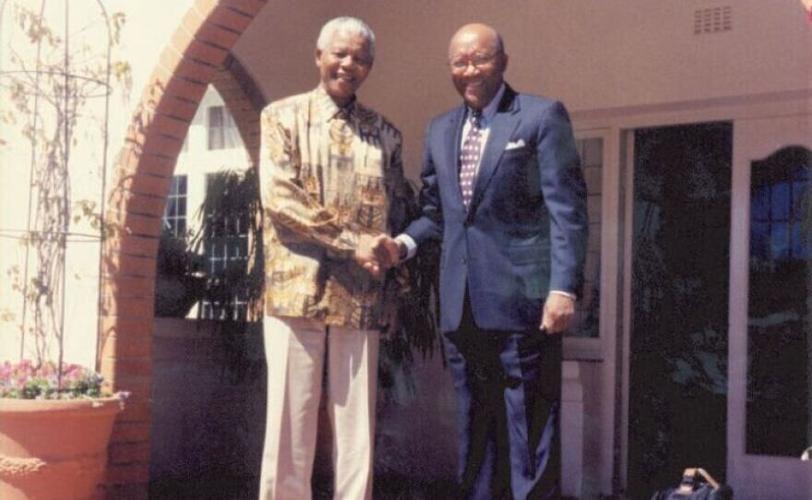
Brown with Nelson Mandela in the years after the first Black president of South Africa was released from prison. Brown arranged for Mandela’s daughter and grandchildren to live in the United States, where they spent some of their time at N.C. A&T’s summer camps.
“Thousands and thousands of dollars every month,” he said. “But I had made a commitment (to the Mandelas) and followed through.”
Brown also has shipped books, shoes and clothes to South Africa and gotten others to do the same. Even before he met Mandela, he had toured Black townships in the segregated country and left appalled at what he saw. He started collecting books, mostly those no longer being used by local schools, and sent them to educators there. Others joined him from nonprofits and school boards across the country.
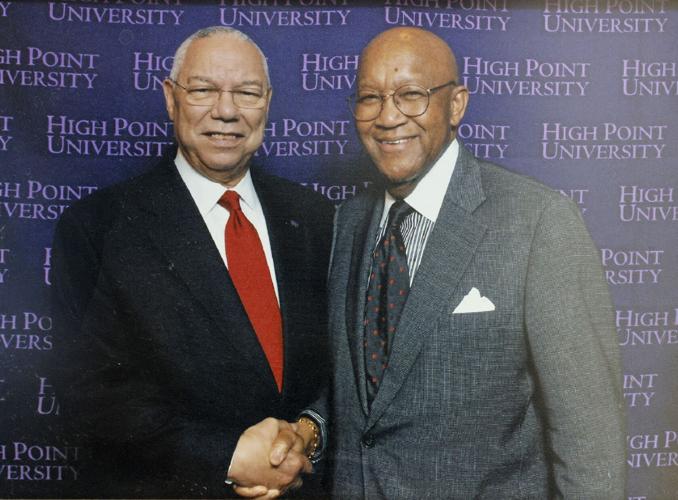
In 2021, High Point University honored Brown, a longtime member of the school’s board before retiring as its president in 2022, with an endowed scholarship. President Nido Qubein and Coca-Cola Consolidated Chairman and CEO Frank Harrison, along with business associates and friends of Brown, contributed $3 million to the scholarship to honor his legacy. Annually, the fund will provide between eight and 10 scholarships to minority students who attend High Point University.
“When God created humanity, he must have written a job description for the kind of person who is built from the inside out, and he must have put Bob Brown’s name on it, because Bob is a person whose entire focus is on caring for others, helping others and often beyond his immediate capacity to do it,” Qubein said. “In other words, he moves heaven and earth to make it possible for him to help others.”
Brown said we need to keep pushing forward.
“We have to continue to work on our society to be a better society, to treat people better whoever they are.”
Explore historic sites commemorating Black history in North Carolina
Explore historic sites commemorating Black history in North Carolina

The legacies of influential Black Americans have not always been acknowledged, so it’s not uncommon that modern-day residents may overlook the historic sites of their own cities.
While some historical Black figures in the U.S. are more well-known than others, there are in fact thousands of people dating back generations to 17th-century slavery who left traces of their visions and impacts all across the country. Whether prominent figures such as Robert Abbott, who founded one of the largest African American newspapers in the country, or more under-the-radar originators such as Obrey Wendell Hamlet, who cultivated unique vacation experiences in the Rocky Mountains, one thing’s for certain: There is far more uncharted Black history in this country than charted.
Stacker identified historic sites commemorating Black history across 47 states, using the National Register of Historic Places. North Dakota, Vermont, Hawaii, and Wyoming did not have Black historic sites listed on the registry. While some states, especially in the South, are home to many sites central to the civil rights movement, Stacker listed the total sites in every state and the names of three historic sites where available. You can visit the full registry of 232 historic sites and explore the Civil Rights Trail to learn about additional locations across the U.S.
Read on to explore and learn about the historic sites celebrating Black history in your state, or read the national story here.
North Carolina by the numbers
- Sites commemorating Black history: 188 (28 with state significance, 7 with national significance)
- Bennett College Historic District (Greensboro)
- Queen Anne's Revenge (Atlantic Beach)
- Union Tavern (Milton)
Union Tavern was the historic home of Thomas Day, a freed Black cabinet maker and businessman known for his architectural woodwork. Day purchased the tavern on Main Street as his workshop in 1848 and was highly successful at a time when African Americans faced restrictions. One of Day's most recognized works was the 1847-49 expansion of the libraries and halls at the University of North Carolina.
Continue reading to see which sites commemorate Black history in other states in your area.
Georgia
- Sites commemorating Black history: 157 (57 with state significance, 13 with national significance)
- Mount Zion Baptist Church (Albany)
- Collier Heights Historic District (Atlanta)
- King, Martin Luther Jr., National Historic Site and Preservation District (Atlanta)
The historic district of Collier Heights was founded in 1948 by African Americans in Atlanta and served as a refuge for middle-class Black Americans during the 1950s and 1960s. The district consisted of mostly brick ranch houses and had been home to civil rights activists such as Martin Luther King Sr. and Ralph David Abernathy.
South Carolina
- Sites commemorating Black history: 152 (41 with state significance, 27 with national significance)
- Dr. York Bailey House (Frogmore)
- Beaufort Historic District (Beaufort)
- Camp Saxton Site (Port Royal)
The Camp Saxton Site was where the Emancipation Proclamation was widely celebrated in the South in January 1863. The Emancipation Proclamation was an executive order given by President Abraham Lincoln to free enslaved people in the nation. The Camp Saxton Site was occupied from 1862 to 1863 by the 1st South Carolina Volunteers, the first acknowledged Black unit of the United States Army during the Civil War.