NILIN, West Bank — Count the rings of the gnarled olive trees dotting Mohammed Mousa’s land in the West Bank village of Nilin: They've been here centuries, far before the Palestinian family's livelihood came to depend on the whims of Israeli occupation.
When Israel established a checkpoint near the Mousas' land a decade ago, the family converted their ancestral farm into a parking lot for Palestinian workers entering Israel.
But the lot has been empty since Oct. 7, when Hamas militants attacked Israel from the Gaza Strip, and Israel, fearing more attacks, barred Palestinian workers from the West Bank from entering Israel.
People are also reading…
In the fifth month of the war, the family is out of savings, running up debt at supermarkets and selling heirlooms to put food on the table.
“I've sold my mother's gold, my phone, my bicycle,” Mousa said. “There's nothing more to sell.”
Israel’s campaign in Gaza has killed more than 28,000 Palestinians, unleashed an unimaginable humanitarian crisis and decimated the strip’s economy. But Israel's near-complete severance of economic ties with the West Bank also has had serious repercussions for Palestinians there.

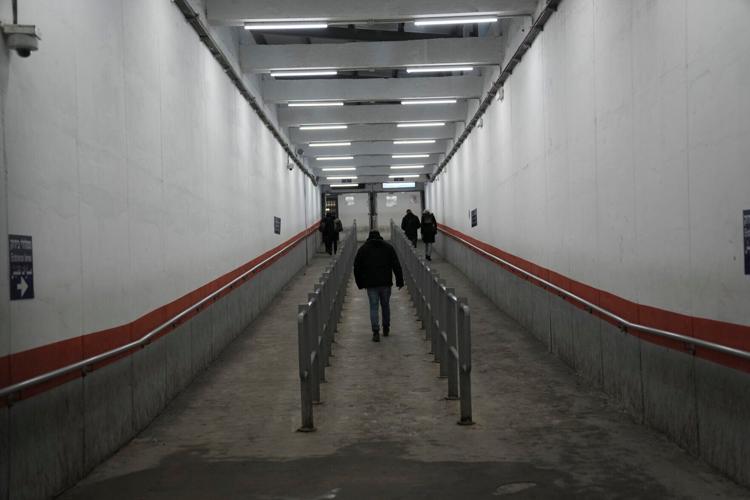
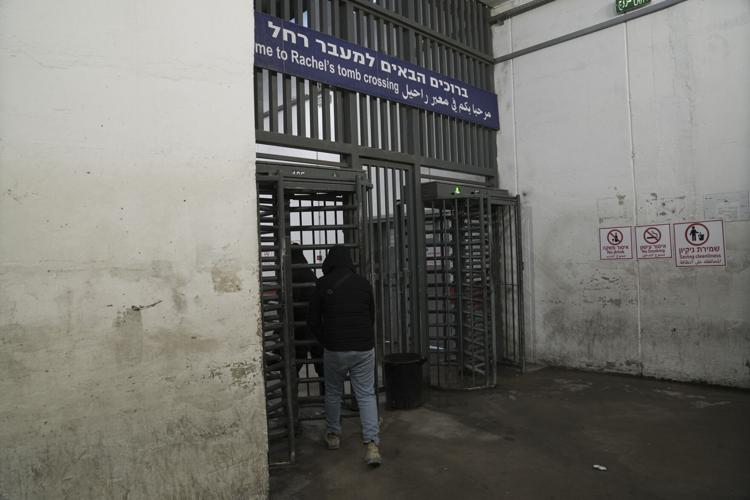
Palestinians cross into Israel through a checkpoint Feb. 7 in Bethlehem, West Bank. Israel, fearing more attacks after Oct. 7, has barred Palestinian workers from the West Bank from entering the country.
Economists and Palestinian officials say the territory faces a dire economic crisis that also weakens the Palestinian Authority, which administers autonomous pockets in the West Bank. Under interim peace deals from a generation ago, the self-rule government was meant to expand and eventually run a future Palestinian state.
The fallout from Israel's decision is felt keenly in Nilin. Before October, over 10,000 Palestinian workers crossed the checkpoint there daily, heading to Israeli construction sites and farms. Israeli shoppers used the crossing to enter the West Bank.
An estimated 200,000 Palestinians worked in Israel and Israeli settlements before the war, according to the Israeli workers' hotline Kav LaOved. The jobs pay much higher wages than what is available in the West Bank.
The checkpoint gate is now bolted shut, eyed by armed Israeli guards in a watchtower nearby.

Palestinians cross into Israel through a checkpoint Feb. 7 in Bethlehem, West Bank. Israel's near-complete severance of economic ties with the West Bank has had serious repercussions for Palestinians there.
A third of the village's 6,400 residents used to work in Israel, and all lost their jobs after Oct. 7, according to municipality official Nidal Khawaja. A fifth of the village’s university students have delayed their semesters, unable to pay tuition. The town’s commercial revenue has dropped 40%.

What’s true in Nilin is true across the West Bank, where a third of workers are now unemployed, up from 13% before the war, according to the World Bank. Salaries for government employees have been slashed, and intermittent closures of military checkpoints have stifled commerce.
Israel operates 400 checkpoints in the territory, the Palestinian Economic Ministry said, turning what should be short supply trips into hourslong journeys. When the checkpoints are closed, they can also prevent the passage of trucks. Israel says the restrictions are meant as a security measure.
The Palestinian economy in the West Bank contracted by over a fifth in the last quarter of 2023, according to the Palestinian economic ministry. A third of businesses in the territory either closed or reduced production and a third of jobs were lost. Daily losses run to $25 million.
“The question isn’t if there is a crisis,” said Khawaja, the official from Nilin. “The crisis is already here.”

The crisis is compounded by the inability of the territory’s largest employer, the Palestinian Authority, to pay full salaries. Under interim peace accords in the 1990s, Israel collects tax revenues on behalf of the Palestinians, transferring them to the Palestinian Authority, which uses them in part to pay wages. Since October, Israel's far-right finance minister, Bezalel Smotrich, has held up transfers to Gaza, prompting the Palestinian Authority to refuse to accept any of the money.
The U.S. has repeatedly urged Israel to release funds, to no avail.
Last week, the PA said it would transfer 60% of December salaries to workers — over a month late.
“If the crisis in the Palestinian Authority’s finances continues, it will lead to the collapse of the Palestinian Authority,” Palestinian Economic Minister Khalid Al-Esseily said.

“If paying salaries is the essential remaining raison d’etre of the Palestinian Authority, then it may as well collapse, as the situation calls for far more than that from it," said Khalidi.
The crisis comes as the U.S. doubles down on calls for a “revitalized PA” to govern a post-war Palestinian state, starting with the West Bank and Gaza.
Though Israeli officials have said workers from Gaza will never again enter Israel, Israeli media reported last week that officials are considering a program to allow workers over the age of 45 from the West Bank to return to Israel.
The government also has allowed some 8,000 Palestinians to return to work in Israeli settlements. But the future of the labor arrangement remains uncertain.
The lack of Palestinian workers also has hit Israel. Israel's Finance Ministry said in December that the economy was losing $830 million a month as a result. As of December, half the construction sites in Israel had shut down.
“The industry is at a complete freeze," Raul Sargo, head of the Israeli Builders Association, told Israel's parliament in December. “There is no immediate alternative. The state accustomed us to Palestinian workers.”
Israel-Hamas war at 100 days

Police officers evacuate a woman and a child Oct. 7 from a site hit by a rocket fired from the Gaza Strip in Ashkelon, southern Israel.

Palestinians wave their national flag Oct. 7 and celebrate by a destroyed Israeli tank at the southern Gaza Strip fence east of Khan Younis.

Fire and smoke rise Oct. 8 following an Israeli airstrike in Gaza City.

Israelis evacuate a site struck by a rocket fired Oct. 9 from the Gaza Strip in Ashkelon, southern Israel.

An Israeli firefighter kneels to compose himself Oct. 9 after he and his colleagues extinguished cars set on fire by a rocket fired from the Gaza Strip in Ashkelon, Israel.

Palestinians inspect the rubble of the Yassin Mosque on Oct. 9 after it was hit by an Israeli airstrike at Shati refugee camp in Gaza City.

An Israeli soldier walks Oct. 11 by a house destroyed in fighting with Hamas militants in kibbutz Be'eri.

Antonio Macías' mother cries over her son's body covered with the Israeli flag Oct. 15 at Pardes Haim cemetery in Kfar Saba, near Tel Aviv, Israel. Macias was killed by Hamas militants Oct. 7 while attending a music festival in southern Israel.

Mourners gather around the five coffins of the Kotz family during their funeral Oct. 17 in Gan Yavne, Israel. The family was killed by Hamas militants on Oct. 7 at their house in Kibbutz Kfar Azza near the border with the Gaza Strip.

Rockets are fired from the Gaza Strip toward Israel over destroyed buildings Oct. 19 following Israeli airstrikes on Gaza City, central Gaza Strip.

An Israeli soldier hugs his partner Oct. 20 near the border with the Gaza Strip, southern Israel.

Palestinians walk Oct. 20 by buildings destroyed in an Israeli bombardment on al-Zahra, on the outskirts of Gaza City.

Palestinians evacuate a building hit Oct. 22 in an Israeli bombardment of the Gaza Strip in Rafah.

Palestinians inspect the rubble of destroyed buildings Oct. 26 following Israeli airstrikes on the town of Khan Younis, southern Gaza Strip.

Israeli security forces on Nov. 1 inspect charred vehicles burned in the Oct. 7 cross-border attack by Hamas militants outside the town of Netivot, southern Israel.

Kenzi al Madhoun, a 4-year-old wounded in an Israeli bombardment, lies Nov. 1 at Al Aqsa Hospital in Deir al Balah City, Gaza Strip.

An Israeli soldier stands in an apartment Nov. 8 during a ground operation in the Gaza Strip.

Palestinians flee Nov. 11 to the southern Gaza Strip on Salah al-Din Street in Bureij, Gaza Strip.

Palestinians wounded in an Israeli bombardment of the Gaza Strip wait for treatment Nov. 15 at a hospital in Khan Younis.

Palestinians displaced by the Israeli bombardment of the Gaza Strip seek cover from a winter rainfall Nov. 19 at a U.N. tent camp in the southern town of Khan Younis, Gaza Strip. Hundreds of thousands of Palestinians fled their homes in northern Gaza as Israel moved ahead with a ground offensive against the ruling Hamas militant group.

Palestinians flee to northern Gaza as Israeli tanks block the Salah al-Din road Nov. 24 in the central Gaza Strip, as a temporary cease-fire begins.

A Red Cross vehicle carrying Israeli hostages drives by Nov. 25 at the Gaza Strip crossing into Egypt in Rafah.

An Israeli soldier looks at Palestinians fleeing south Nov. 26, the third day of a temporary cease-fire between Hamas and Israel, at Salah al-Din road in central Gaza Strip.

Israelis embrace Nov. 28 next to photos of people killed and taken captive by Hamas during militants' Oct. 7 rampage through the Nova music festival in southern Israel, at the site of the event near kibbutz Re'im.

A Palestinian woman gestures Dec. 7 following Israeli airstrikes in Khan Younis refugee camp, southern Gaza Strip.

Israeli soldiers on Dec. 8 stand by a truck packed with bound and blindfolded Palestinian detainees rounded up for interrogation in northern Gaza during a search for Hamas fighters.

Palestinians mourn Dec. 20 outside a morgue in Khan Younis for relatives killed in the Israeli bombardment of the Gaza Strip.

Palestinians line up for a free meal Dec. 21 in Rafah, Gaza Strip. International aid agencies say Gaza is suffering from shortages of food, medicine and other essential supplies as a result of the war.

A makeshift tent camp Jan. 1 where Palestinians displaced by the Israeli bombardment of the Gaza Strip are staying in the Muwasi area.

With the U.S Capitol in the background, demonstrators rally Jan. 13 during the March on Washington for Gaza at Freedom Plaza in Washington. The protest was part of a global day of action ahead of the Israel-Hamas war's 100-day mark.