

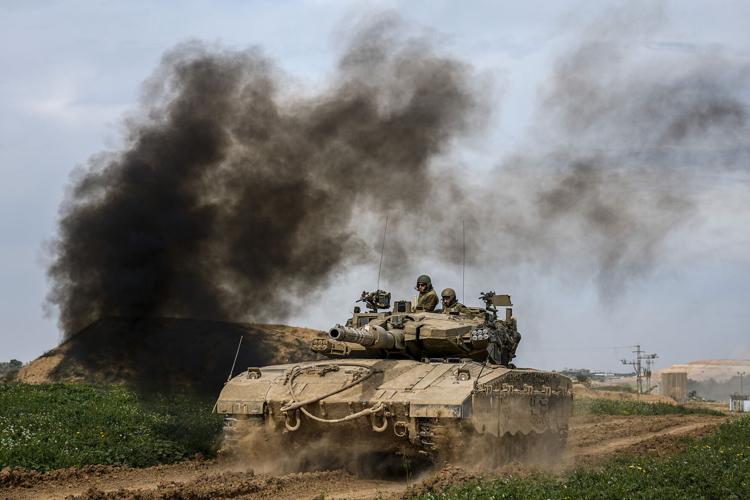
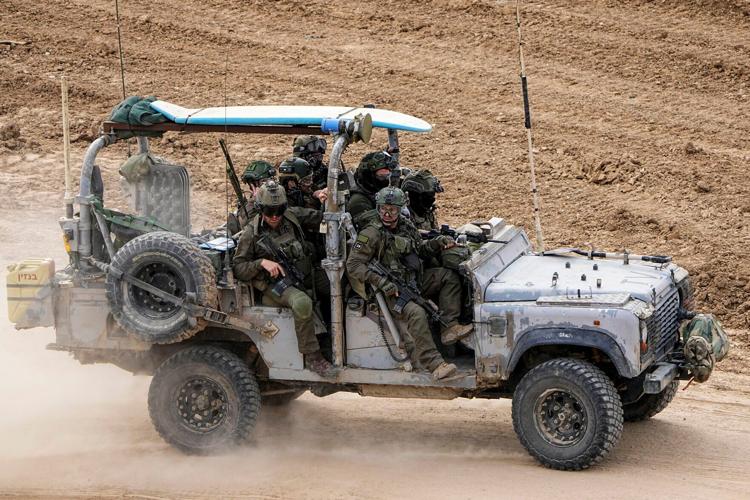
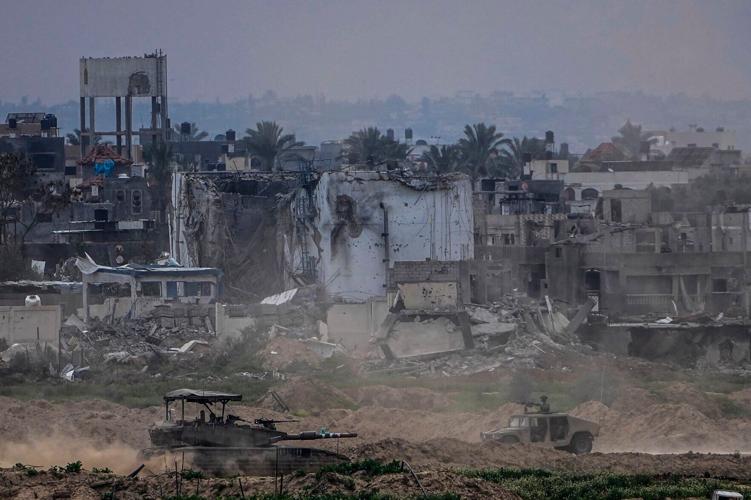
CAIRO — Israel and Hamas are making progress toward another cease-fire and hostage-release deal, officials said Tuesday, as negotiations went on and Israel threatened to expand its offensive to Gaza's southern edge, where some 1.4 million Palestinians have sought refuge.
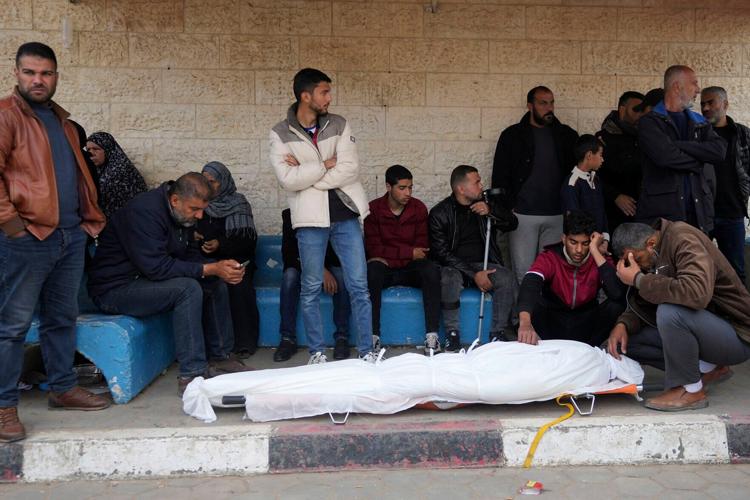
The talks continued in Egypt a day after Israeli forces rescued two captives in Rafah, the packed southern town along the Egyptian border, in a raid that killed at least 74 Palestinians, according to local health officials, and caused heavy destruction.
The operation offered a glimpse of what a full-blown ground advance might look like.
A cease-fire deal, on the other hand, would give people in Gaza a desperately needed respite from the war, now in its fifth month, and offer freedom for at least some of the estimated 100 people still held captive in Gaza. Qatar, the United States and Egypt seek to broker a deal in the face of starkly disparate positions expressed publicly by Israel and Hamas.
People are also reading…
Israel has made destroying Hamas’ governing and military capabilities and freeing the hostages the main goals of its war. In Hamas’ cross-border raid on Oct. 7, an estimated 1,200 people, mostly civilians, were killed, and militants took 250 people captive, according to Israeli authorities.
The war has brought unprecedented destruction to the Gaza Strip, with more than 28,000 people killed, more than 70% of them women and minors, according to local health officials. Israel's offensive flattened vast swaths of the territory, about 80% of the population has been displaced and a humanitarian catastrophe has pushed more than a quarter of the population toward starvation.
In other developments, South Africa, which lodged genocide allegations against Israel at the International Court of Justice, said Tuesday that it filed an "urgent request" with the court to consider whether Israel's military operations in Rafah constitute a breach of provisional orders handed down by the justices last month. Those orders called on Israel to take greater measures to spare civilians.
Israel denies the genocide allegations and says it is carrying out operations in accordance with international law. It blames Hamas for the high death toll because the militants operate in dense residential areas.
Israeli Prime Minister Benjamin Netanyahu vows to press on until "total victory," and insists military pressure will help free the hostages. But the rescued hostages, 60-year-old Fernando Marman and 70-year-old Louis Har, were just the second and third captives to be freed by the military since the war erupted.
Other Israeli officials say only a deal can bring about the release of large numbers of hostages.
More than 100 were freed in exchange for 240 Palestinians imprisoned by Israel during a weeklong truce last year. Israeli forces erroneously killed three hostages in December and one female Israeli soldier was freed in a rescue mission in the early weeks of the war. Israeli officials say about 30 hostages taken on Oct. 7 have died.
Bridging the gaps
A senior Egyptian official said mediators achieved "relatively significant" progress ahead of a meeting Tuesday in Cairo of representatives from Qatar, the U.S. and Israel. The official said the meeting would focus on "crafting a final draft" of a six-week cease-fire deal, with guarantees that the parties would continue negotiations toward a permanent cease-fire.
CIA chief William Burns and David Barnea, head of Israel's Mossad spy agency, attended the Cairo talks. Both men played a key role in brokering the previous cease-fire.
A Western diplomat in the Egyptian capital also said a six-week deal was on the table but cautioned that more work is still needed to reach an agreement. The diplomat said the meeting Tuesday would be crucial in bridging the remaining gaps.
Both officials spoke on condition of anonymity.
While the officials did not disclose the details of the emerging deal, the sides have been discussing varying proposals for weeks.
Israel proposed a two-month cease-fire in which hostages would be freed in exchange for the release of Palestinians imprisoned by Israel, and top Hamas leaders in Gaza would be allowed to relocate to other countries.
Hamas rejected those terms. It laid out a three-phase plan of 45 days each in which the hostages would be released in stages, Israel would free hundreds of imprisoned Palestinians, including senior militants, and the war would wind down, with Israel withdrawing its troops. That was viewed as a non-starter for Israel, which wants to topple Hamas before ending the war.
But President Joe Biden suggested Monday that a deal might be within reach.
"The key elements of the deal are on the table," Biden said alongside visiting Jordanian King Abdullah II, adding, "there are gaps that remain." He said the U.S. would do "everything possible" to make an agreement happen.
Death toll mounts
The signs of progress came despite ongoing fighting.
Palestinians were still counting the dead after Israel's hostage rescue mission as the death toll climbed Tuesday to 74. Residents and displaced Palestinians in Gaza searched through the rubble from Israeli airstrikes that provided cover for the rescue mission.
Al Jazeera, the pan-Arab broadcaster funded by Qatar, said an Israeli airstrike in Rafah wounded two of its journalists, with one having to undergo an amputation. The Israeli military had no immediate comment.


