Low test scores. Missing funds. Compromised student safety. Questionable medication practices. Deteriorating buildings.

The Bureau of Indian Education
The Bureau of Indian Education — a sprawling federal system responsible for educating some 45,000 Native American students at 183 government-funded schools across the country — has been plagued with problems that have been called out in government reports and news investigations.
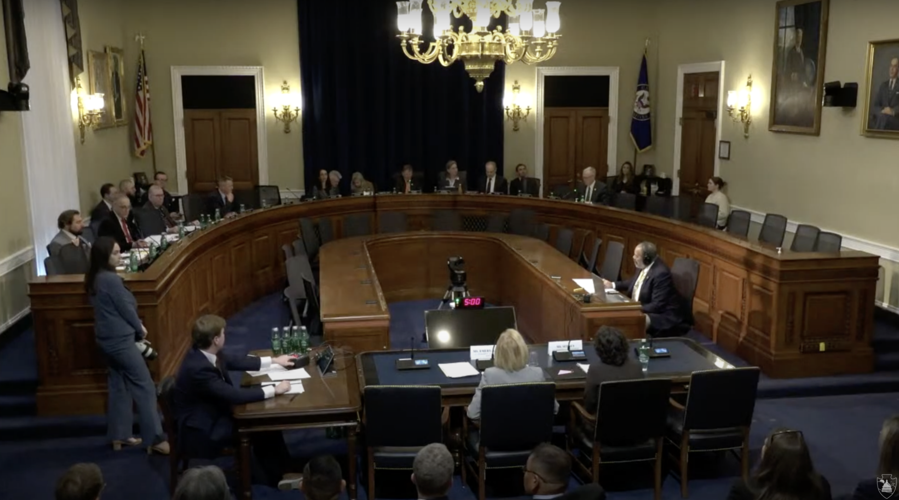
On Feb. 12, a Congressional subcommittee gathered to discuss a new Interior Department Office of Inspector General report that found oversight and efficiency failures at the BIE.
There, lawmakers debated whether the bureau requires an infusion of funding that might help correct its longstanding shortcoming — or whether its alleged “waste, fraud and abuse” of federal funds mean it needs fundamental reform first.
People are also reading…
Just two days later, before those congressional members had decided on a course of action, a third of the BIE’s already short-staffed administrative workforce was fired, according to reporting from ICT, as part of a much larger wave of cuts to the federal government.

The U.S. House Committee on Natural Resources’ Subcommittee on Oversight and Investigations met on Wednesday, Feb. 12, to discuss the Bureau of Indian Education.
The BIE’s lone four-year college, Haskell Indian Nations University in Lawrence, Kansas, also saw 35 employees lose their jobs, reducing the school’s workforce by nearly a quarter, according to the university’s board of regents.
In addition, the BIE’s only other post-secondary institution, the Southwestern Indian Polytechnic Institute, located outside Albuquerque, New Mexico, reportedly saw 20 employees — or a fifth of the staff — terminated.
Already, however, Rep. Maxine Dexter, of Oregon, and other Democrats who spoke at the Feb. 12 hearing were arguing that the solution to the bureau’s struggles is more money and staff, not less.
“We can't fix an underfunding problem by further underfunding,” Dexter said.
Republicans, however, invoked the work Elon Musk’s Department of Government Efficiency, or DOGE, is doing as they argued that the BIE should act as better stewards for the funding it does receive.
Rep. Paul Gosar, an Arizona Republican who chairs the House Committee on Natural Resources’ Subcommittee on Oversight and Investigations, which held the Feb. 12 hearing, lamented what he described as the BIE’s “refusal to insulate itself from fraud, waste and abuse.”
Despite their differences, though, lawmakers were united in their dismay at the state of the BIE.
‘Significant deficiencies’
Take, for one specific example, the state of the Tate Topa Tribal School, a BIE-funded, tribally operated school in Fort Totten, North Dakota, on the Spirit Lake Reservation, which is home to some 2,000 enrolled members of the Spirit Lake Tribe.
Like many of the other 182 schools in the Bureau of Indian Education system, Tate Topa was in bad shape.
Concrete blocks were needed to keep broken roof vents from blowing up in the wind. The school had no program for maintaining or testing its fire-alarm system. An unstable sidewalk in the bus loading and unloading area didn’t drain correctly, making it prone to freezing and creating a slipping hazard.
To fix these and other "significant deficiencies at the deteriorating school, BIE hired a contractor who reported correcting 236 issues at the facility over a two-year period.
But when government investigators took a look at a statistically significant sample of those supposed repairs, many of which were “related to safety or fire maintenance issues,” they found most of that work — 58% — was never done, according to a newly released report from the Department of the Interior’s Office of Inspector General.
It was never done, in part, the OIG found, because the contractor had never even visited the school and had only met with school staff once, via video conference.
‘Dangers persist’
The contractor’s seemingly shoddy work wasn’t limited to Tate Tope, though, as the BIE acknowledged in its formal response to the report.
After being awarded a nearly $3 million contract to help deal with the BIE’s massive deferred-maintenance backlog in 2022, the contractor, who was not named in the report, began closing tens of thousands of work orders through the BIE’s 183-school system at a suspiciously breakneck pace.
The OIG found that “between September 2022 and July 2024, the contractor reviewed a total of 85,276 work orders at 127 schools (69 percent of the 183 schools) and closed 76,122 (89 percent) of the reviewed work orders. In other words, the contractor closed work orders at a rate of 113 per day.”
“Given our findings at Tate Topa Tribal School and the volume of the work order closures nationally, we are concerned that the contractor is improperly closing work orders at schools throughout the country,” the OIG report says. “The inaccurate status of work orders prevents issues from being fixed … and projects a safe environment while dangers persist that may jeopardize the well-being of school children and staff.”
‘Numbers tell the story’
The BIE received $1.6 billion in 2024, including $160 million for facility operations and maintenance and $234.7 million to repair and replace school facilities and address deferred maintenance needs.

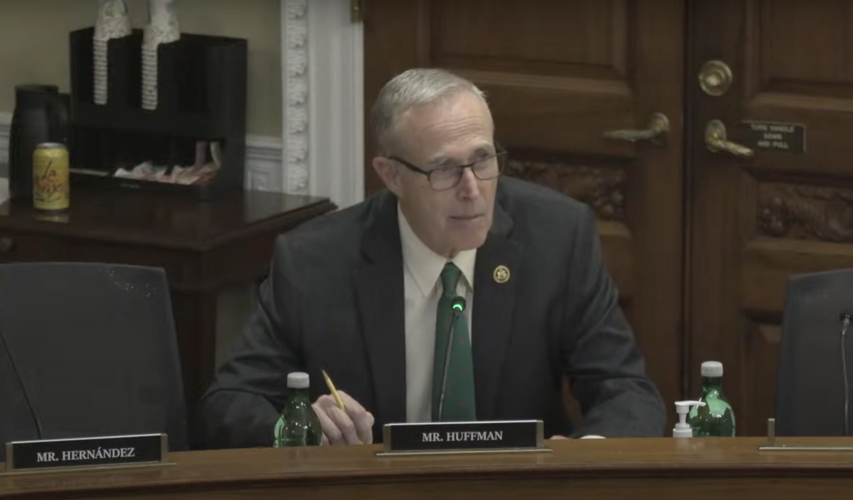
Rep. Jared Huffman, a California Democrat, speaks during a House Committee on Natural Resources’ Subcommittee on Oversight and Investigations hearing about the BIE on Feb. 12, 2025.
Like other Democrats, Rep. Jared Huffman, of California, argued that money is a fraction of what is needed.
“The numbers tell the story,” he said. “The Tribal-Interior Budget Council estimates the need for school facility replacement and construction in fiscal year 2025 is about $6.2 billion.”
By giving them a small fraction of that amount, Huffman said, Congress has failed “to fund these schools at the level required to meet even basic safety standards and needs.”
Republicans, however, said that the BIE’s failure to effectively deploy the money it does receive made them question the idea of giving them more.
Case in point, Gosar said, was that the BIE not only allowed the contractor called out in the new OIG report to perform such shoddy work – but also rewarded it.
“Instead of checking the contractor’s work and terminating the contract as soon as the contractor’s shoddiness became apparent, BIE inappropriately modified the contract and awarded an additional $535,420,” Gosar said. “You can't make this stuff up. This waste, fraud and abuse must not be allowed to be continued.”
In their formal response to the OIG report, the BIE agreed to “create and implement a plan to analyze and verify the accuracy of the work orders that the contractor has closed in the facility management system” and to “establish assessment standards and clarify the evidence required to properly close work orders.” But the Bureau defended its decision to give the contractor the additional $535,420.
In response to questions about the OIG report, the House hearing and BIE funding, a bureau spokesperson said, “The BIE does not comment on OIG reports beyond the formal response included within the report.”

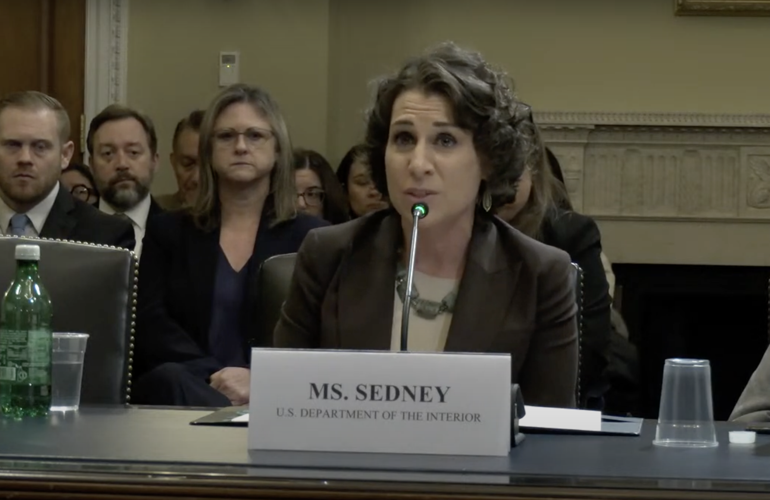
Kathleen Sedney, assistant inspector general for audits, inspections and evaluations at the Interior Department, testifies before the House Committee on Natural Resources’ Subcommittee on Oversight and Investigations on Feb. 12, 2025.
‘Persistent challenge’
At the Feb.12 hearing, Kathleen Sedney, assistant inspector general for audits, inspections and evaluations at the Interior Department, said problems and errors with BIE’s data makes it difficult to know exactly what work actually needs to be done at BIE schools, how much it will cost and what to prioritize.
She said the BIE has failed to close many work orders after work was completed — and has not completed work that was marked as complete in the bureau’s facility management system.
As a result, she said, it’s difficult to know exactly how much money the BIE needs and for what.
“We cannot be sure that BIE is making appropriate determinations with regard to funding, repairing or replacing Indian schools,” Sedney said.

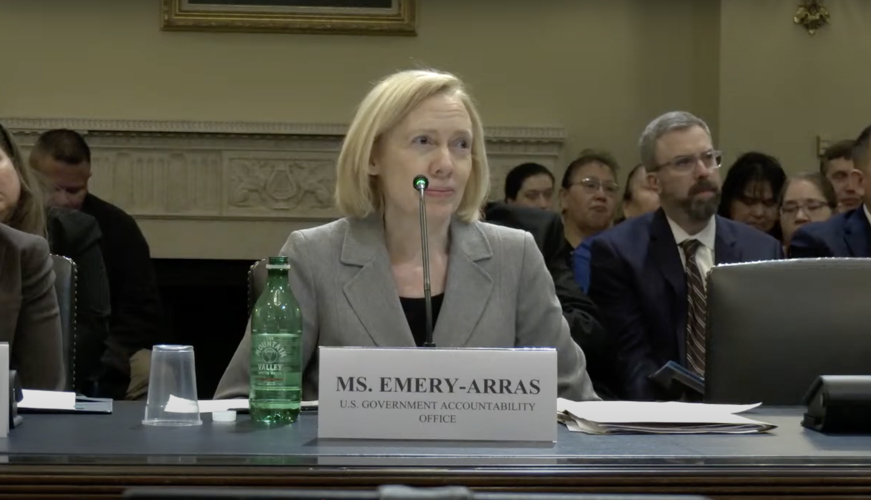
Melissa Emery-Arras, director of education, workforce and income security at the GAO, testifies before the House Committee on Natural Resources’ Subcommittee on Oversight and Investigations on Feb. 12, 2025.
The BIE has also had “a persistent challenge” keeping track of the money it receives, said Melissa Emery-Arras, director of education, workforce and income security at the GAO.
In her testimony, Emery-Arras described “a variety of issues with BIE's oversight of school spending,” including its handling of COVID funds.
When the GAO looked at the $1.5 billion in COVID funding that the BIE received, it found that “staff did not consistently follow” processes designed to monitor how that money was spent.
And when the GAO examined the nearly $16 million of COVID funds spent with purchase cards between March 2020 and August 2022, they found that more than $7 million “involved elevated risk transactions,” such as buying gift cards, putting money in apps like PayPal and Venmo, and splitting purchases in an apparent attempt to evade the $10,000 limit on single transactions.
Emery-Arras testified that despite these suspicious payments, the “BIE did not provide evidence that had investigated these transactions for fraud or misuse.”
In one case, the GAO found $1.2 million was transferred to an offshore account.
“It went away and it never came back,” Emery-Arras said.
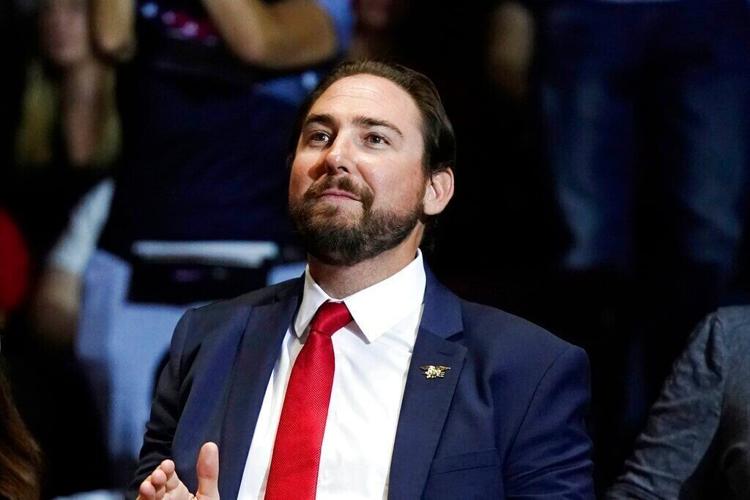
When Rep. Eli Crane, an Arizona Republican, asked whether anybody was ever arrested or held accountable for those missing funds, Emery-Arras told him, “Not to our knowledge.”

REP. ELI CRANE
Crane represents an Arizona district. He is also a former Navy SEAL who served in the military for 13 years. In November, he defeated a Democratic incumbent, Tom O’Halleran, who had held the seat since 2017. He was the lone Republican freshman back in January to come out against McCarthy's bid to become speaker.
“Each time our majority has had the chance to fight for bold, lasting change for the American people, leadership folded and passed measures with more Democrat support than Republican,” Crane tweeted Tuesday.
While Crane acknowledged that it “may well be true” that the BIE is underfunded, he said such issues make it difficult to justify providing it.
“Given some of the testimony that we've heard in this hearing today,” he said, “many taxpayers are concerned that if we were to give BIE more money, there would be more fraud, waste and abuse and more — and nobody held accountable.”
‘Significant education disparities’
Democrats echoed some of these concerns about the BIE’s apparent difficulties keeping track of money and work orders, but they argued that the BIE can only improve if it gets more funding.
Dexter lamented the BIE “unacceptable delays” in repairing schools and said the “consequences of inaction are dire.”
“The conditions of school facilities have a direct impact on student achievement, attendance and overall well-being,” Dexter said. “Native students already face significant education disparities, including lower graduation rates, higher rates of absenteeism and higher teacher turnover when their schools are in disrepair.”

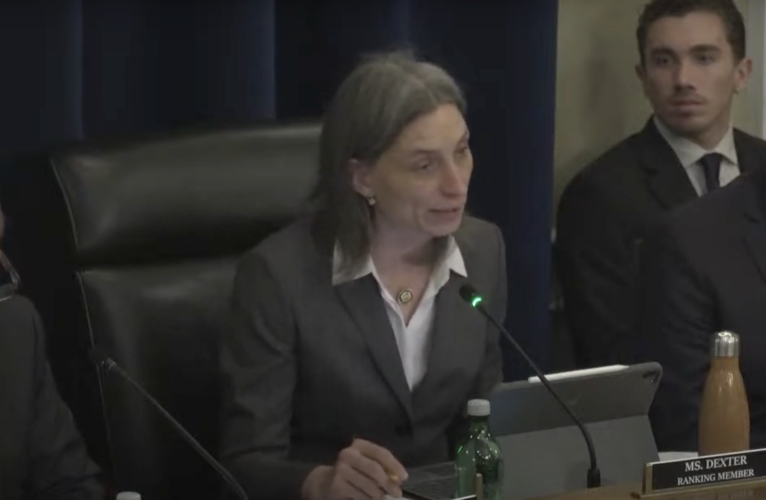
Rep. Maxine Dexter, an Oregon Democrat, speaks during a House Committee on Natural Resources’ Subcommittee on Oversight and Investigations hearing about the BIE on Feb. 12, 2025.
But, Dexter argued, “resolving deferred maintenance starts with ensuring these schools and the Bureau itself have the funding and staffing necessary to properly track and address maintenance needs. Schools do not have enough personnel to conduct regular inspections, apply for necessary funding or oversee critical repairs. Without adequate staffing, oversight problems that should be addressed immediately continue to linger for years, worsening the crisis.”
And further reductions to the BIE’s budget may be on the horizon.
Huffman and Dexter both said that Senate Republicans have eyed cuts to $95 million in funding for BIE school construction and maintenance that comes from the Great American Outdoors Act.
That, they argued, would only make a dire situation worse.
The GAO found in 2022 that the “BIE’s overall staff vacancy rate is about 33 percent” and that “BIE’s School Operations Division, which provides vital administrative support to schools, has a vacancy rate now of about 45 percent. We believe that high staff vacancy rates significantly inhibit BIE’s capacity to support and oversee schools.”
The recent BIE staffing cuts are expected to increase those vacancy rates.

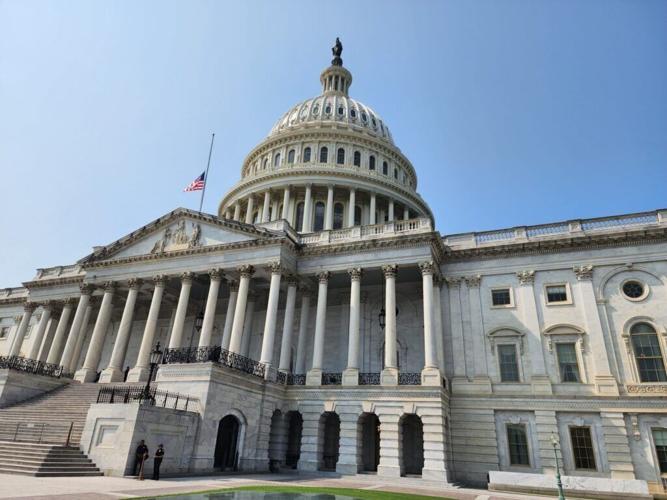
U.S. Capitol