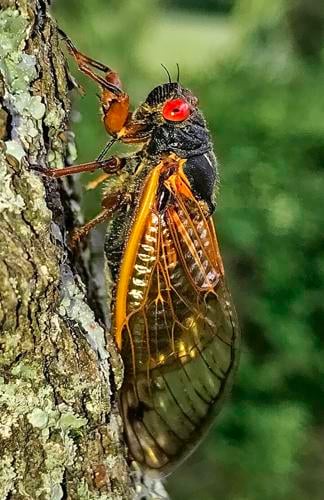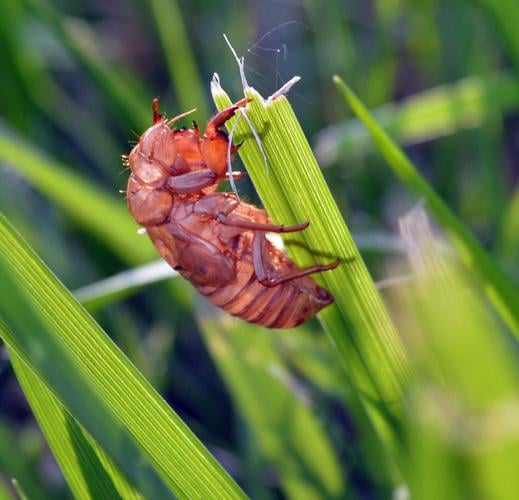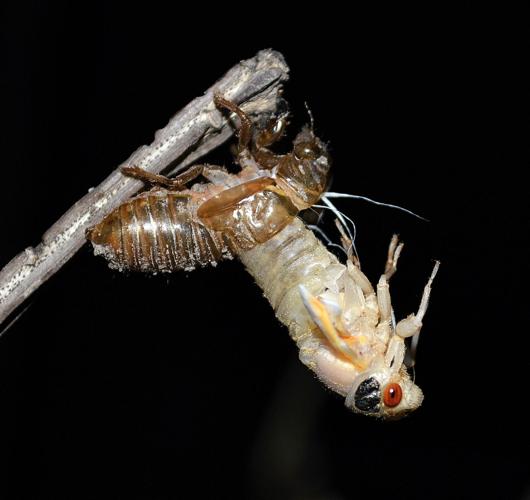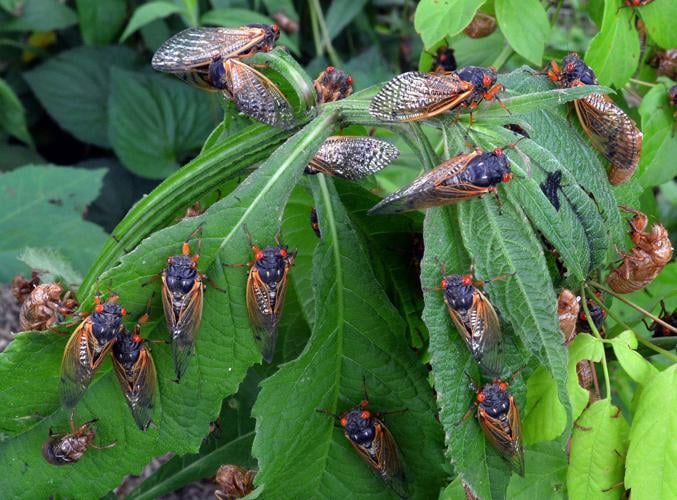

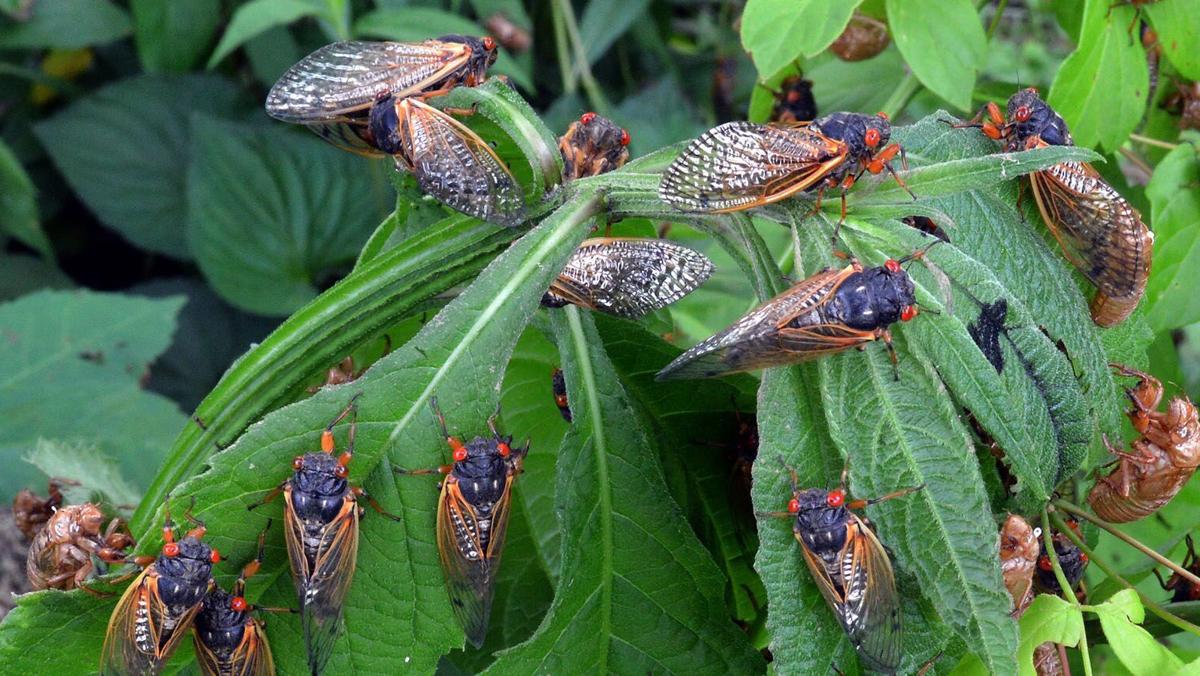

When cicadas emerge from the ground, one of the first orders of business is shedding their exoskeletons, leaving behind insect skin, or shell, when they become adults.
Are you ready for the 'Cicadapocalypse'?
For the first time in 221 years, more than a trillion of two particular periodical cicada broods are set to surface this spring. The last time this emergence happened was in 1803, when Thomas Jefferson was president and busy finalizing the Louisiana Purchase.
The largest periodical brood set to swarm, crawl and chirp this spring is Brood XIX, which surfaces every 13 years across the southeastern United States — Missouri, central and southern Illinois, Louisiana, North Carolina, Virginia and Maryland included.
Brood XIII, emerging every 17 years, has its base in the northern half of Illinois and parts of Wisconsin, Ohio and Iowa.
Together, they will provide a super-charged invasion of alien-like bugs with a pronounced and immersive sound, in some cases equivalent to the decibels of a motorcycle engine.
People are also reading…
There are cicadas that surface annually, but periodical cicadas spend most of their lives underground. They unearth when soil temperatures hit 64 degrees to mate and lay eggs — marking the start of a new generation of that particular brood.

Once out in the world, adult cicadas ditch their nymphal skin. The skin splits and the cicada comes out — head first, then back. Once they pull their abdomen free, they are white in color. It takes about an hour and a half for cicadas to transform to black with red eyes.
Dr. Gene Kritsky, a cicada expert and professor emeritus of biology at Mount St. Joseph University in Ohio, said despite all his years studying periodical cicadas, the insect’s knack for this synchronized unearthing remains quite the mystery.
How does a particular brood know when it's time to dig themselves out from underground to mate?
“It’s got to be some kind of internal clock," Kritsky said. "We do know that they are able to detect fluid flow from the roots to the leaves in the spring (to determine another year has passed). One of the great biological mysteries is: How do they remember what year it is?”
Cicadas molt, or shed their skin, four times during their life underground, so that may help them keep track of the years, he added.
Kritsky is behind the cellphone app, Cicada Safari, a powerful crowd-sourcing tool that was first tested in 2019. The app lets anyone with a cellphone turn into a citizen scientist during the emergence.
Users can submit video and photos of periodical cicadas to the app. Once verified, they will be added to an online map. The app greatly assists Kritsky in his research.

The Cicada Safari cellphone app was created by Dr. Gene Kritsky and Mount St. Joseph University. The powerful crowd-sourcing tool, first tested in 2019, lets anyone with a cellphone turn into a citizen scientist during the emergence.
To learn more, check out cicadasafari.org.
Here’s what you need to know about periodical cicadas as they emerge this spring:

Periodical cicadas spend most of their lives underground, unearthing every 13 or 17 years when soil temperatures hit 64 degrees to mate and lay eggs — marking the start of a new generation of that particular brood.
The big unearthing will likely occur sometime in May and last several weeks.
During this time, male cicadas will produce a rather loud mating call to attract female partners. They achieve this with “sound-producing structures” called tymbals on either side of the abdomen, according to CicadaSafari.org.
Some will become victim to predators, but the sheer number of cicadas make it next to impossible to wipe out an entire brood.
- Females will die not long after laying their eggs. Males die shortly after mating.
The male's mating call can reach 100 decibels — a near-equivalent to a chainsaw or motorcycle. According to the CDC, news reports that highlight those sound comparisons alone can mislead people into believing the common myth that cicadas easily cause permanent hearing damage. The CDC says exposure duration and distance also matter.
Adult cicadas do not bite or sting humans, nor do they carry disease. They can harm young trees during the egg-laying process, so families with young trees should loosely wrap branches with cheesecloth to prevent females from laying their eggs there.
Periodical cicada years are “quite beneficial” to the ecology of the region, according to CicadaSafari.org. Emergence tunnels act as a natural aeration of the soil, and the sheer volume of cicadas make quite the meal for all sorts of predators, positively impacting animal populations. “The females’ egg-laying in trees is a natural pruning of the trees that results in the tree producing more flowers and fruit in the following year. Finally, after the cicadas die, their decaying bodies contribute a massive amount of nitrogen and other nutrients to the soil,” according to CicadaSafari.org.
Periodical cicadas were first recorded by the Pilgrims at Plymouth Colony in 1634, but they were known to the Native Americans for centuries prior to European contact.
Is your stomach rumbling? If you’re feeling adventurous, you should know cicadas are safe to eat — for most people! You can even find recipes online for tempura cicada with sriracha aioli, cicada cocktails and a spicy popcorn cicada recipe. They are best eaten when they are still young. They taste like “cold canned asparagus,” according to CicadaSafari.org. Because of their similarities to crustaceans, people with shellfish allergies might want to avoid them altogether.
Lauren Cross is a reporter for Lee Enterprises' Public Service Journalism team and can be reached at lauren.cross@lee.net.

Cicadas are harmless to flowers, shrubs, and older mature trees, but tender, young trees can suffer damage when female cicadas lay their eggs on branches.