

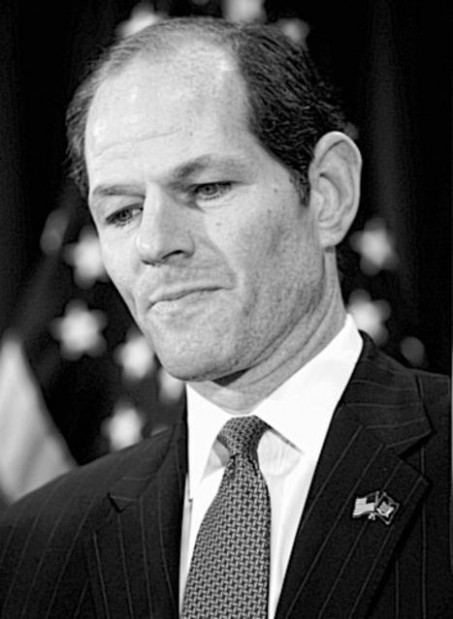
NEW YORK — Federal prosecutors said Thursday that they will not bring criminal charges against Eliot Spitzer for his role in a prostitution scandal, removing a legal cloud that has surrounded the former New York governor since his downfall eight months ago.
U.S. Attorney Michael Garcia said investigators found no evidence that Spitzer or his office misused public or campaign funds for prostitution. Investigators found that Spitzer solicited high-priced call girls, but federal prosecutors typically do not prosecute clients of prostitution rings.
"In light of the policy of the Department of Justice with respect to prostitution offenses and the longstanding practice of this office, as well as Mr. Spitzer's acceptance of responsibility for his conduct, we have concluded that the public interest would not be further advanced by filing criminal charges in this matter," Garcia said in a statement.
People are also reading…
A remorseful Spitzer issued a statement in which he expressed relief that he will not face charges.
"I appreciate the impartiality and thoroughness of the investigation by the U.S. Attorney's Office, and I acknowledge and accept responsibility for the conduct it disclosed," he said. "I resigned my position as governor because I recognized that conduct was unworthy of an elected official. I once again apologize for my actions."
He resigned in March after it was disclosed he was referred to in court papers as "Client-9," who spent thousands of dollars on a call girl at a swanky Washington, D.C., hotel on the night before Valentine's Day.
Garcia said Spitzer later revealed to investigators that on multiple occasions he arranged for women to travel from one state to another to engage in prostitution.
Authorities could have charged Spitzer with violating the Mann Act, a federal law that bans carrying women or girls across state lines for "prostitution or debauchery, or for any other immoral purpose." But the legal experts say the law is rarely used to prosecute johns.


