

FAIRPLAY, Colo. — Keep your bison off my property or risk having them hunted, software developer Jeff Hawn warned his neighbor outside this old Colorado mining town.
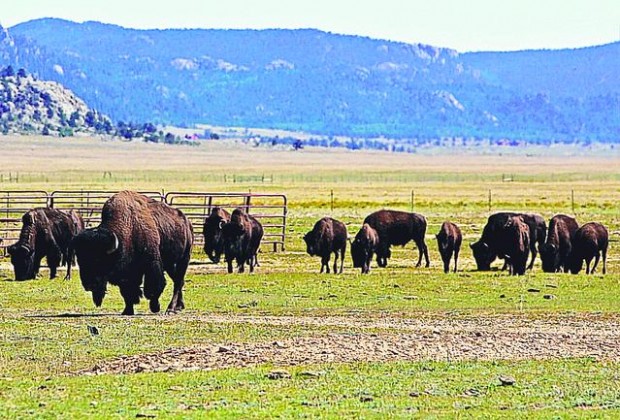
In a lawsuit, he said the animals knocked his satellite television dishes off line and left dung, tracks and hair on "pristine pasture on rolling hills."
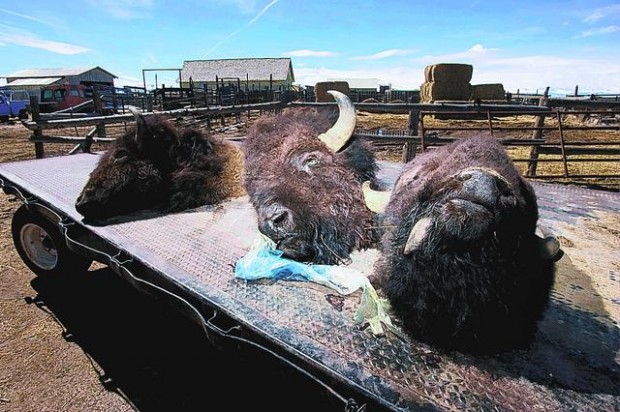
Nine days after the suit was filed, shots rang out. The remains of 32 bison were strewn across Hawn's property and nearby land. Deputies learned that 14 hunters received a letter from Hawn giving them permission to hunt bison on his property.
Now Hawn — the president and CEO of Seattle-based Attachmate who lives in Austin, Texas — finds himself in criminal court, charged with theft and 32 counts of aggravated animal cruelty following the March shootings.
The case has outraged many in Fairplay, a town of about 700 in the central Colorado plains founded by gold prospectors in 1859. It's also drawn attention to Colorado's "open range" laws.
People are also reading…
Hawn has waived his right to a preliminary hearing to see if there's enough evidence for the case to proceed, asking instead to skip to a hearing to enter a plea, Park County court clerk Debbie McLimans said Friday. That hearing has not been scheduled. Hawn didn't respond to two messages left by The Associated Press on his cell phone or another left with a spokeswoman at Attachmate.
One of Hawn's defense attorneys, Pamela Mackey, didn't return phone calls or an e-mail seeking comment, while another, Steve Csajaghy, told the AP he couldn't discuss the case. But Csajaghy told the Rocky Mountain News in March that Hawn "had no other choice" but to get rid of the bison to protect himself.
In his Feb. 25 letter inviting the hunters, Hawn said they could hunt animals on his property or remove them live. Investigators believe Hawn may have shot some himself.
According to court documents, 10 of the carcasses were in plain view of his house and some of the bullets they recovered were similar to test rounds fired from a rifle found inside the home.
It's hard to find anyone sympathetic to Hawn in South Park. The family of the rancher involved, Monte Downare, is well-established, and people in Fairplay, the county seat, and tiny Hartsel, the closest town to his ranch, are quick to defend him. They bemoan the waste of so much bison meat and talk about one of the feud's central issues — fences.
Miles of barbed-wire fences line local roads and property boundaries. Unlike rural areas in other parts of the country, Colorado and most other Western states are "open range," meaning livestock can roam wherever they wish. If land-owners don't want animals on their property, they are urged to build a fence to keep them out. Ranchers don't have to fence in their animals.
Given the state's population growth and traffic, Colorado's brand commissioner, Rich Wahlert, who works to prevent livestock theft and regulates stray livestock, said most ranchers still try to fence their livestock.
Because buffaloes are stouter than cattle, he said, they can break through the minimal three-barbed-wire fencing required by Colorado law.
Many buffalo producers build taller, stronger fences to keep animals in even though it isn't required.
Wahlert said livestock are bound to escape from any kind of fence and that Downare has a good track record of responding quickly to calls of stray buffaloes, which can weigh a ton and jump a 6-foot fence.


